Sauter au contenu principal
actuellecd

Blogue

4946 résultats
  • 798
  • 799
  • 800
  • 801
  • 802
  • 803
  • 804
  • 805
  • 806
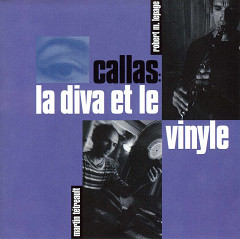
  • Callas: La diva et le vinyle dans Rubberneck

    «Review», Rubberneck, no 28, 1 février 1998
    dimanche 1 février 1998 Presse

    The 15 pieces on La diva et le vinyle combine clarinet and record player in an affectionate excavation of the recorded works of Maria Callas. Lepage’s clarinet executes slow, melancholic curlicues against the locked grooves, speeded-up and slowed-down worn records, and general rough-house vinyl fetishism of Tétreault It’s billed as a collision between new and old, composed and improvised, opera and sound art, but the distinctions collapse into one another: it’s the sounds recorded decades ago, put through Tétreault’s sonic shredder, that grab the attenton. Callas’ voice was once described as midway between clarinet and oboe, but I found Lepage’s undeniably graceful contributions went nowhere special hovering and undulating in the air between my ears. Tétreault’s poignant collages, on the other hand combining Callas wiLh coarse swatches of sound proved far more thought-provoking listening.

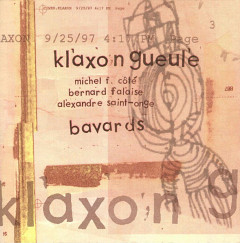
    Bavards dans La Presse

    «Décapant», Jean-Christophe Laurence, La Presse, 3 janvier 1998
    samedi 3 janvier 1998 Presse

    Bon, évidemment ce n’est pas un disque pour toutes les oreilles. Encore moins s’il y en a deux, des disques. Klaxon Gueule, c’est du jazz actuel de forte inspiration rock avec tout ce que cela implique de paysages accidentés, de dissonance, de délires free, de contre-rythme: et de textures sonores en laine d’acier. Le groupe montréalais joue en trio sur le premier cd. Michel F Côté est à la batterie, Alexandre St-Onge à la basse et Bernard Falaise à la guitare éléctrique. Un musicien additionnel, le saxophoniste Christopher Cauley, fait sentir sa furieuse présence sur le deuxième disque. Bavards? Ies gars de Klaxon Gueule le sont effectivement. Comme dans conversation à bâtons rompus. Ici tout le monde discute. Et souvent en même temps. Parfois on élève le ton. Parfois on en vient furieusement aux coups. Parfois on parvient à s’entendre — sans mauvais jeu de mot. Construit sur des improvisations, Bavards est un festival de musique libre et «lâchée lousse» qui vous décape sévèrement l’intérieur des oreilles.

    Bavards est un festival de musique libre et «lâchée lousse» qui vous décape sévèrement l’intérieur des oreilles.

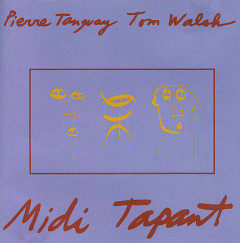
    Midi tapant dans Infraction

    «Review», Tom Schulte, Infraction, 1 janvier 1998
    jeudi 1 janvier 1998 Presse

    Drummer / percussionist Pierre Tanguay has worked with trombonist and programmer (samplist) Tom Walsh for over six years. On Midi Tapant the pair present seven original compositions. The cuts are mood pieces featuring mostly found objects and cymbal percussion behind eerie samples and Doppler effect, lachrymose trombone legato. These pieces take us to several locations each. For instance, the singular Une Petite Douleur begins with a pipe organ in conversation with a duck call to a mid-piece space of a cavernous union of girlish vocalizations and children’s room chimes. We are left with those voices aged and disappearing into a siren drawing near. The organic harmony of xylophone and plastic balls in Ping Pong makes a bubbly and warm coating for the sonorous exhalations of a foghorn. Loosely composed, these largely improvised tracks become episodes in a boundless exploration of technology and the duo’s instrumentation. Minimalist in its simplicity and airiness, Midi Tapant is richer and more thought provoking than most spare constructions of the genre. Take the title track for instance, with its clamorous contest between free jazz and a corral of captured sounds. On the closing Madame Duluth an amorphous crowd of French voices contains treated harmonica that varies from familiarity to electronically transmogrified oddity. As with each piece here, the elements are simple, maybe even mundane, but the experiment’s results are memorable and surreal. These pieces affect a room, populating with sudden sonic visitors that dash upon the walls new color.

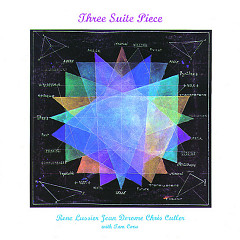
    Three Suite Piece dans Margen

    «Discos», Rafa Dorado, Margen, no 12, 1 janvier 1998
    jeudi 1 janvier 1998 Presse

    Tres compositores de personalidades musicales muy acusadas y diferentes se plantean aqui la composición de tres variadas suites.

    La primera, La suite des trois pommes, es de 1987 y corresponde a la banda sonora de la pelicula de Jacques Leduc, Trois pommes a coté, y fue inspirada por las suites para cello de Bach. La música de esta obra dividida en 8 partes, y en la que participa tambien Tom Cora al bajo, mezcla desde el folk al rock y la electrónica, dando como resultado una original miscelánea no exenta de humor.

    La segunda suite, The Don’t Worry Suite, se compone de una única parte de 9 minutos y es más experimental e improvisada.

    The Cold Storage Suite es la tercera y última de estas obras, y asimismo la más ecléctica de las tres, desarrollando a lo largo de sus 10 partes todo un variado abanico de estilos, desde el tipico sonido rock del canadiense Lussier en Avion, hasta todo tipo de experimentaciones e improvisaciones electrónicas y acústicas.

    Un álbum variado en contenidos e intenciones que aúna a tres de los grandes compositores del momento.

    La plante humaine dans SOCAN — Paroles & Musique

    «L’année en film», Eve Méthot, SOCAN — Paroles & Musique, no 5:1, 1 janvier 1998
    jeudi 1 janvier 1998 Presse

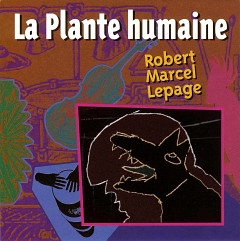
    As de l’impro et de l’innovation, Robert Marcel Lepage a eu l’honneur de voir sa musique du film La plante humaine, du réalisateur Pierre Hébert, inscrite au Gala Génie. En plus d’avoir signé la musique de la téléserie Urgence 2, des auteurs Fabienne Larouche et Réjean Tremblay, Lepage a conçu de nombreuses trames musicales pour le cinéma, dont celle du film La Nouvelle Babylone.

    Ayaya Moses dans The Wire

    «Soundcheck Review», Mike Barnes, The Wire, no 167, 1 janvier 1998
    jeudi 1 janvier 1998 Presse

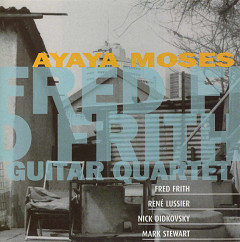
    Formed seven years ago the Fred Frith quartet finally releases its first CD. The music within is a dazzling display of… well,virtually everything that electric guitars can produce in the right hands. The pieces run the gamut from clean strumming and delicate melody through to blocks of atonal noise and all points in between. The electric guitar was originally, and will always essentially be a rock instrument -at least to these ears- and there’s something of the spirit of rock’n’ roll in this chamber ensemble playing certainly in its energy and hands on and amped up visceral power.

    Although ostensibly his group, Frith’s quartet isn’t merely a platform for his ego. The other members René Lussier (who also played in Les 4 Guitaristes de l’Apocalypso Bar), Nick Didkovsky and Mark Stewart each chip in a piece.

    The tracks range trom strict composition to spontaneous exclamations. The delicate oriental style unison passages in Vivier’s Pulau Dewata are intermittently broken up by stabs of feral power. The group composition The Stinky Boy Suite throws up huge blocks of noise which sandwich insect scratches and single bent notes. Here, Frith’s trademark strummed brittle chord h sixteenths is laid over what sounds like the three other guitars being dismantled. The hour or so of music is staggering.

  • 798
  • 799
  • 800
  • 801
  • 802
  • 803
  • 804
  • 805
  • 806