Ayaya Moses in Le Devoir
On ne pouvait imaginer mieux comme cerise sur le sundae de cette cuvée magnétique que ce quatuor à cordes qui réinvente l’expression

On ne pouvait imaginer mieux comme cerise sur le sundae de cette cuvée magnétique que ce quatuor à cordes qui réinvente l’expression
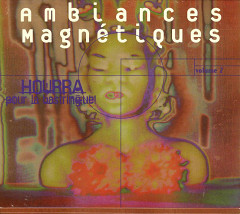
Pour ceux et celles qui n’ont pas encore pris pied sur le coloré continent d’Ambiances Magnétiques, voilà une occasion en or. Une heure de musique et une quarantaine de musiciens qui interviennent en solo, duo, trio, quatuor et grands ensembles
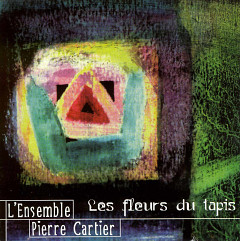
Cet inédit d’un enregistrement réalisé dans une église en 1989 réunit Jean-Denis Levasseur, sax soprano, Jean Derome, sax alto, Pierre Cartier, basse et direction musicale. L’écriture de Cartier sait voyager de façon raffinée à travers un jazz aux tons pastel. Usant au maximum des qualités exceptionnelles des musiciens du quatuor, notamment lors des magnifiques échanges de saxos, cette musique, la pièce titre et Kimm entre autres, annonce déjà les plus belles pages du compositeur, celles de Chansons de Douve. […] Les fleurs du tapis séduit subtilement. L’enregistrement ne trébuche à aucun moment dans la banalité ou le cliché. Pierre Cartier possède une voix où pointe une solennelle mélancolie accentuée par les habiles spirales que décrivent ici les instruments des sieurs Derome et Levasseur.
La maison de disques Ambiances Magnétiques continue son travail inlassable de promotion de la musique actuelle québécoise, incontournable, urgente, de plus en plus ouverte, tentaculaire. Au début de l’été, la petite étiquette indépendante dirigée avec flair et de main de maître par Joane Hétu nous a proposé un éventail éloquent de son savoir-faire, une panoplie éclatée et éclatante des sentiers multiples explorés depuis plus de dix ans par les créateurs québécois de sonorités inventives et inusitées. Cinq disques
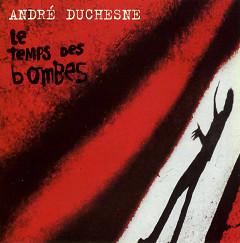
Jamais à la mode, jamais démodé, pourrait-on dire d’André Duchesne en écoutant ce disque pré-Locomotive et post-Conventum. Sorti en 1984, Le Temps des bombes n’a pas perdu de sa pertinence à une époque où l’absurde tue toujours
Lussier serves as the major sideman
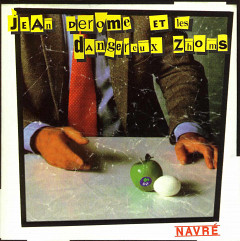
With Jean Derome’s sextet, Les Dangereux Zhoms, on Navré. This group, playing compositions by the leader, specializes in odd sounds. The opening notes of the first tune, Anchive, resemble the cacophony of various farm animals. Such sounds continue more or less throughout the piece being solos by the leader on altosaxophone and by bassist Pierre Cartier. The next selection begins with flatulent sounds which may or may not have an anti-Nazi meaning— because of the title, Munich —akin to that by Spike Jones on
Pantin evokes a Spanish feeling, while Lindau brings to mind Scottish music. The leader excels on the most traditional of his compositions. The shifting moods and tempos of the impressionistic and occasionally ruminative Navré remind me of some of Carla Bley’s compositions for the
I applaud this group’s effort because Derome succeeds in creating new sounds. If I had to express reservation about this music, however, I would say that some of it does not seem entirely serious.
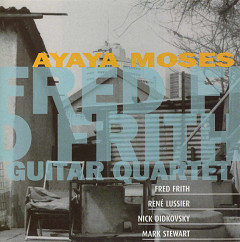
For his enlire career, Fred Frith has effectively bridged (or maybe just turned his back on) the gaps between rock, improvisation, composition, folk musics, and anything else that caught his fancy. He has continually forged intriguing combinations and syntheses, whether in his own playing, or in compositions he has written for olhers. Though released under his leadership, for this recording Frith has joined with three equal, like-minded guitarisis for a meeting that draws on antiphonal compositions, free improvisations, skronking guitar blasts and delicate interactions. Compositions by Olivia Bignardi and Claude Vivier, along with pieces by each of the members are woven into a suite-like whole with short collective interludes. The notion of an eleciric guitar quartet brings immediate visions of a bombastic blowout, but each of these players brings both a personal voice and sensitivity to the proceedings. The four effectively wend their way through the 7 pieces and 7 entree acts, moving from intricate counterpoint to slashing bluster with concentrated precision. Each of these players has developed an improvisational voice that blends rock vocabulary and electric squalls with flowing articulations, free electronic abstractions, and a strong Iyrical sense. The centerpiece here is certainly Claude Vivier’s Pulau Dewata. “Vivier is a Québécois composer whose work incorporates massed voicings, insistently repeated rhythms, quirky melodic fragments, and textural juxtapositions for a music that builds elegant structural depth from what seems disarmingly simple on the surface. The four decipher the piece with poised energy, stepping quietly through hushed sections of simple looping, rhythmic paltems that ring like gamelan music, then attack percussive punctuations with chiming vigor. In the hands of these four, the grouped electric guitars move from organ-like, hovering chords, skittering collective interplay, and massed rock squall as the pieces are threaded together, flowing from one to the other. These four are opening up the possibililles for electric guitar through intriguing compositions, thoughtfull improvisations, and keep group interaction.