actuellecd

Blog

116 results
  • 1
  • 2
  • 3
  • 4
  • 5
  • 6
  • 7
  • 8
  • 9
  • Bruit court-circuit in Monsieur Délire

    “Listening Diary”, François Couture, Monsieur Délire, December 22, 2012
    Saturday, December 22, 2012 Press

    This is, recorded in the studio in the fall of 2012, the music of Ensemble Supermusique’s latest program, Bruit court-circuit, premiered at FIMAV 2012 and reprised in Montréal last October. Six noise-based works for a nine-piece ensemble — compositions involving graphic notation, chance operations, and extended techniques of all kinds. The noise part is both of acoustic and electronic origin. Martin Tétreault’s two pieces wittingly oppose rhythm and deconstruction. SM: re-trait de l’abjection by Alexandre St-Onge is a VERY strange thing (yes, strange even for me), and it’s not more convincing on record than it was on stage. Danielle Palardy Roger’s Acouphènes en partage is the album’s highlight, due to the quality of the writing and the careful execution. The other two compositions are by Joane Hétu and Jean Derome. With this CD, Ensemble Supermusique has pushed back its own limits, taking its conceptualization of musique actuelle even further. The works are destabilizing, often unpredictable, and they provide ample food for thought.

    Ensemble Supermusique has pushed back its own limits, taking its conceptualization of musique actuelle even further. The works are destabilizing, often unpredictable, and they provide ample food for thought.

    La femme territoire ou 21 fragments d’humus in Monsieur Délire

    “Listening Diary”, François Couture, Monsieur Délire, December 20, 2012
    Thursday, December 20, 2012 Press

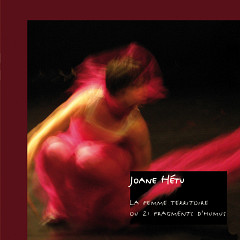
    La femme territoire is both the logical next step and the complete opposite of Joane Hétu’s previous work Filature. While Filature was a large-scale production with lots of people involved, lots of rhythm too, La femme territoire is limited to five performers and plays out in a Spartan, highly-conceptualized setting. Both are multimedia works, but while Filature was trying to overload your senses, La femme territoire is offering less in order to say more, and music, poetry, dance, video art, and performance art are all more tightly intertwined. Obviously, this CD does not document the whole project (though the booklet contains several photos of the production), and I was worried about that, since I have had the pleasure of seeing the full production of La femme territoire in October 2010. Well, the music does well on its own. I’d even say it imposes itself. These 21 fragments of humus are not easy to absorb, but beyond their stripped-down nature, the deconstruction, the atomization of musical elements, I reconnect with everything that makes Joane… Joane: a series of dichotomies like melody/noise, organization/improvisation, tenderness/desire, reflection/craziness. A record of troubling beauty. With Susanna Hood, Alice Tougas St-Jak, Jean Derome, and Isaiah Ceccarelli.

    A record of troubling beauty

    Wow! in Monsieur Délire

    “Listening Diary”, François Couture, Monsieur Délire, December 19, 2012
    Wednesday, December 19, 2012 Press

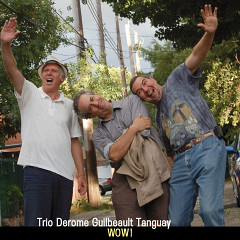
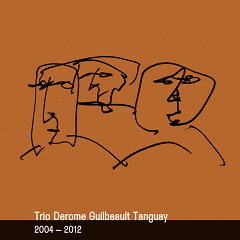
    In my mind, that “wow” in the title means “Wow, Ambiances Magnétiques is still alive and kicking!”. After 12+ months of silence, the venerable Montréal musique actuelle label is releasing three new albums on the verge of 2013. Starting with this Wow!, Trio Derome Guilbeault Tanguay’s fourth (their fifth if you include the live DVD). For this CD, the avant-jazz trio is recycling the recipe used on their previous effort Danse à l’Anvers, i.e. a blend of standards, quasi-standards, and Derome originals. Lennie Tristano and Eric Dolphy get added to their repertoire, along with The Best Things in Life Are Free, which continues the band’s tradition of having Jean Derome sing on one track per album. Derome’s Palestine and La danse de Raphaëlle are highlights, along with a medley of You Can Depend On Me & Wow. Derome plays a very warm baritone sax and cheeky flute — no bird calls or other noise-makers, this album sticks to a traditional jazz instrumentarium. Bassist Normand Guilbeault is in particularly good shape on this recording, and drummer Pierre Tanguay brilliantly hijacks his ideas instead of simply falling in line with them. But that’s what you come to expect from these guys.

    Wow

    Bruit court-circuit in Cult#Mtl

    “Review”, Lawrence Joseph, Cult#Mtl, December 18, 2012
    Tuesday, December 18, 2012 Press

    The spark plugs at Ambiances Magnétiques have been energizing the musique actuelle field since René Lussier conducted 1983’s Fin du travail, and the label’s current catalogue is now overloaded with 229 releases. Long in sync with Victoriaville’s annual Musique Actuelle festival, it is no shock to learn that their latest project, whose title translates to “short circuit noise,” premiered at last May’s FIMAV.

    Although core musicians remain, the Ensemble SuperMusique has transformed itself since its founding in 1998, spinning in new members with great potential. Joining stalwarts Joane Hétu (sax, voice, objects), Jean Derome (sax, flute, objects), Martin Tétreault (turntables) and the double-A battery team of Michel F Côté and Danielle Palardy Roger are relative newcomers Alexandre St-Onge (bass and electronics), Émilie Girard-Charest (cello), Guido Del Fabbro (violin) and Vergil Sharkya’ (synths). The latter recruits are equally able to coax sounds out of their instruments, and the ensemble remains grounded in free improvisation relayed by graphic, oral or written scores.

    The CD features six tracks from five different composers. Previous projects included canoe trips and works about the seasons, recalling the earthier times before we all got lost in an electronic flux. Bruit Court-Circuit charges towards more modern developments, and, given past themes, can perhaps be heard as a warning as much as it is an embrace of technology.

    This is most clearly suggested in Tétreault’s Malgré tout, face A, which starts out with a simple drum meter, quickly followed by bursts of impulsive and dizzying noise from the rest, but ends with Hétu’s vocalization of basic human physical and psychological qualities. Thus we cycle from corporeal beats to industrial noise and back to our natural characteristics, from which we cannot escape, regardless of progress.

    It is sometimes difficult to source the sounds. Careful listening can provide clues based on placement in the mix, as each member is given their own corner, but puzzles remain. Is that drumbeat from Tétreault’s vinyl or Côté/Roger? Is the Beethoven cello sonata quote live or Memorex? Is that high-pitched wavering sound flute, sine wave electronics, amp/mic feedback or a fuse of all three?

    This is classic actuelle from the inventors of the genre. Fighting against technology’s tendency to black out human ideals, a ceaseless spirit of positive fun pervades the disc. Electrifying music and a thoughtful message upon which to end the year.

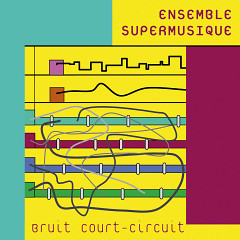
    This is classic actuelle from the inventors of the genre. Electrifying music and a thoughtful message upon which to end the year.
    Ailleurs in Monsieur Délire

    “Listening Diary”, François Couture, Monsieur Délire, December 18, 2012
    Tuesday, December 18, 2012 Press

    … that being said, this new CD by St-Onge sounds nothing like the one by Xanthocephalus. On Ailleurs, the Montréal-based bassist aligns tracks of computer-assisted electric bass. Each note triggers a digital sound action. Less noise-based, more electroacoustic-like than his previous solo albums. Ailleurs is dry, cerebral, and some of St-Onge’s choices in digital sound palette are questionable.

    Less noise-based, more electroacoustic-like than his previous solo albums
  • 1
  • 2
  • 3
  • 4
  • 5
  • 6
  • 7
  • 8
  • 9