Sauter au contenu principal
actuellecd
  • This website is also available in English.

Blogue

4946 résultats
  • 19
  • 20
  • 21
  • 22
  • 23
  • 24
  • 25
  • 26
  • 27
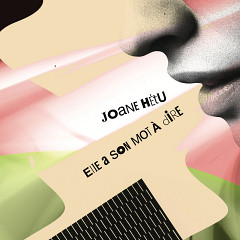
  • Joane Hétu dans That Canadian Mag

    «Joane Hétu: Building Territory in Québec’s Experimental Music Scene», Lawrence Peryer, That Canadian Mag, 18 juillet 2025
    vendredi 25 juillet 2025 Presse

    How one composer spent four decades forging a distinctly Québécois path through the experimental music landscape

    When Joane Hétu picks up her alto saxophone, she claims territory. At sixty-six, the Montréal composer, vocalist, and saxophonist has spent forty years carving out space for experimental music in Québec, building institutions and communities that define the province’s musique actuelle scene.

    Her latest recording, Elle a son mot à dire, captures Hétu leading Ensemble SuperMusique through thirteen of her compositions from across two decades. The album opens with “Elle n’a pas de mot” (She has no words) —a brief ambient piece that stacks wordless singing atop a chorus of “whirly tubes,” ribbed hoses spun above players that pirouette through the harmonic series. An apt introduction to an artist who has spent her career finding new ways to give voice to the unspoken.

    Finding Her Voice in the Underground

    Hétu’s path began in the early 1980s with avant-pop groups like Wondeur Brass, Justine, and Les Poules. These bands merged the pluralist ethos of New York’s downtown scene with European progressive sensibilities while maintaining something distinctly Québécois. “I was very young, in my twenties, and this fusion happened quite instinctively, without real premeditation,” she recalls. Through connections to figures like Zeena Parkins, Ikue Mori, and Fred Frith, and the Recommended Records network, these groups found their place in an international experimental music community.

    Even while performing with these bands, Hétu was thinking beyond individual artistic expression. In 1980, she co-founded SuperMusique with Danielle Palardy Roger and Diane Labrosse. Eight years later, they organized a Festival of Innovative Women Musicians, devoted entirely to women’s groups working in avant-garde music—a radical curatorial gesture that signaled Hétu’s growing interest in building infrastructure alongside making music.

    “We were connected to the New York scene,” Hétu explains, “but we wanted to create something here, something that would support the community we were building in Montréal.”

    From Performance to Institution

    The instinct to support that community would shape Hétu’s career as much as her compositions. By 1998, she had taken on co-direction of Ensemble SuperMusique, transforming the organization into one that explicitly welcomes “emerging artists, mid-career artists, and major figures alike.” Where many experimental music scenes fragment along generational lines, Hétu has consistently worked to bridge those gaps.

    “This intergenerational cohabitation is a great richness for us,” she explains. “It opens perspectives, stimulates listening, and provokes essential exchanges.”

    On Elle a son mot à dire, this collaborative philosophy becomes musical practice. In Mot elle a, vocalist Sarah Albu’s written part interweaves with improvised percussion, creating what Hétu calls “flexible, malleable” pieces that depend on interpretation. “For now, I only have one recording, but I hope it will live through other recordings and interpretations,” she says. “This is one of the objectives of open scores: to encourage multiple and living interpretations.”

    The Economics of Experiment

    Running an experimental music organization led Hétu deeper into the infrastructure questions that determine which music gets heard and preserved. As founder and longtime president of DAME Records (Distribution Ambiances Magnétiques Etcetera), she took on the less glamorous work of documenting and distributing Canadian experimental music—a role she maintained for three decades.

    “I’ve always had a passion for sound recording,” she reflects. “From 1985, I got involved in Ambiances Magnétiques, then DAME took over.” The work came with unexpected costs. “After my daughter’s birth in 1990, I was looking for a certain stability, knowing that tours would be more difficult. Naively, I believed that having a record label would offer a form of security. It was quite the opposite. This enterprise cost me a lot in creative time. Looking back, it’s perhaps what I regret most: having carried it for so long, for thirty-three years.”

    Despite the personal sacrifice, DAME has documented a vital chapter in Canadian music history, providing a platform for artists like Jean Derome, Pierre-Yves Martel, Tim Brady, and dozens of others who might otherwise have remained unrecorded. “DAME documents this precious musical heritage and ensures that these musics are represented, supported, available, and that this artistic history is accessible,” Hétu explains.

    Claiming Creative Territory

    The questions of space and belonging that drove Hétu’s institutional work find their most direct artistic expression in her concept of territory. The idea runs through much of her work, most explicitly in her piece La femme territoire ou 21 fragments d’humus. For Hétu, territory encompasses everything from the intimate to the political: “the Earth, my room, Quebec, my soul—a woman who becomes vastitude.”

    “In it, I take a position, as a woman, on my territory—intimate and collective,” she explains. “I doubted while writing it; I had trouble trusting myself. Today, I’m happy with the path traveled and with this work.”

    The territorial thinking extends to her approach to voice and instrumentation. Hétu never formally learned to sing, drawing from influences like Tenko, Phil Minton, Jaap Blonk, and Paul Dutton. “I have a deep love for the voice and its noise-making potential. It’s visceral and fundamental to me,” she says. In her work with La chorale bruitiste JOKER, founded in 2012, she explores what collective vocal improvisation can accomplish using techniques like soundpainting.

    Seasons of Composition

    Hétu’s relationship to place extends to her famous engagement with Québec’s harsh winters. Where others see obstacles to cultural life, she found creative catalysts. Her trilogy Musique d’hiver emerged from the practical reality that “January, February and March are rather quiet in the record industry, which leaves time to compose.” But the relationship between season and creativity runs deeper than scheduling.

    “I love winter, I love the sound, the cocoon effect it produces,” she explains. The final piece in the trilogy, Récits de neige, focused specifically on snow’s geometry: “I hoped to compose 30 short pieces that musicians could amalgamate as they want, like snowflakes, which each have a different geometry.”

    Building for the Future

    Today, as Hétu approaches her fifth decade in music, she remains committed to the experimental principles that have guided her career while grappling with new challenges facing the experimental music community. “I believe the public has the capacity to welcome innovation,” she argues. “But it needs tools, which are becoming scarce: radio broadcasting, interviews, production support, and venues dedicated to new music.”

    Her work with Ensemble SuperMusique continues to demonstrate that experimental music can build lasting institutions and communities. Recent projects include ongoing workshops in graphic scores and conducting gestures, international collaborations, and regular concert series that have sustained the musique actuelle community for decades.

    “I respond to the call, to the impulse of the moment. I am still, fundamentally, the same composer,” Hétu admits. Viewed across four decades, her work reveals a consistent thread: the understanding that experimental music concerns itself with creating the conditions for a community of artists to flourish.

    In an era when funding for experimental music remains precarious and cultural institutions focus on measurable outcomes, Hétu’s approach offers a different model. Her career demonstrates that sometimes the most radical act is creating space for other voices to emerge, building the infrastructure for artistic communities to sustain themselves across generations. After four decades, Joane Hétu still has something to say. She’s still creating spaces for others to find their own voices within the experimental music territory she has helped map. In Québec’s cultural landscape, that may be her most enduring composition.

    She’s still creating spaces for others to find their own voices within the experimental music territory she has helped map. In Québec’s cultural landscape, that may be her most enduring composition.

    Elle a son mot à dire, Joane Hétu dans the tonearm

    «Joane Hétu’s Enduring Vision for Québécois Experimental Music», Lawrence Peryer, the tonearm, 9 juillet 2025
    jeudi 10 juillet 2025 Presse

    Joane Hétu has spent more than four decades carving out her territory in Montréal’s experimental music scene. The composer, saxophonist, and vocalist emerged in the early 1980s as a founding member of avant-pop groups like Wondeur Brass, Justine, and Les Poules, where she helped forge a distinctly Québécois interpretation of contemporary music. Her approach merged the pluralist ethos of New York’s downtown scene with European progressive sensibilities, all while maintaining roots in Quebec’s cultural soil.

    Since those formative years, Hétu has become one of Canada’s most important figures in musique actuelle. She co-founded SuperMusique in 1980 and has served as its artistic co-director since 1998, nurturing generations of experimental musicians through her commitment to inter-generational collaboration. Her own compositional work spans everything from intimate vocal pieces to large ensemble works, consistently exploring the space between composition and improvisation. As founder and longtime president of the DAME record label, she has also played a crucial curatorial role in documenting Canadian experimental music for over three decades.

    Her latest release, Elle a son mot à dire, captures Hétu leading Ensemble SuperMusique through thirteen of her pieces—most of them new compositions alongside select revisited works from earlier periods. The album demonstrates her continued resistance to artistic pigeon-holing, moving fluidly between ambient textures, quasi-operatic vocal explorations, and abstract instrumental dialogues. At sixty-six, Hétu remains as committed as ever to challenging listeners while maintaining the deep collaborative relationships that have defined her artistic practice.

    This interview is translated from the original French.

    Lawrence Peryer: In your work with Wondeur Brass, Justine, and Les Poules in the 1980s, you helped create a distinctly Québécois interpretation of experimental music by merging downtown NYC aesthetics with European prog sensibilities. What was that like?

    Joane Hétu: I was very young, in my twenties, and this fusion happened quite instinctively, without real premeditation. We were connected to the New York scene — Zeena Parkins, Ikue Mori, and Fred Frith — and through the Recommended Records network, notably with Chris Cutler. With Danielle Palardy Roger and Diane Labrosse, we founded the SuperMusique organization in 1980. In 1988, we organized a Festival of Innovative Women Musicians, entirely devoted to women’s groups working in avant-garde music.

    Lawrence: What prompted your shift from avant-pop toward deeper exploration of improvisation and composition? And how has the Montréal experimental music scene changed over these four decades?

    Joane: Improvisation imposed itself on my approach in the early 1990s. In 1992, Jean Derome and I founded Nous perçons les oreilles, a group exploring both song and radical improvisation. But I never stopped writing or composing. These practices have always coexisted in my musical universe, in a constant state of interaction.

    In forty years, the new music scene — contemporary, experimental, or whatever term one prefers — has undergone enormous changes. Today, it brings together artists from the ages of twenty to seventy and unfolds in numerous venues, both in Montréal and in the regions. Despite significant challenges, particularly financial ones, I find it in good health. The audience is faithful, and new curious people venture into it regularly.

    Lawrence: Your vocal work employs unconventional techniques alongside traditional instruments. How do you approach the voice as an instrument, and how does this connect to your work with the noise choir Joker?

    Joane: I never learned to sing. My influences include artists such as Tenko, Phil Minton, Jaap Blonk, and Paul Dutton. I learned the saxophone, but I always kept my own way of playing it. I have a deep love for the voice and its noise-making potential. It’s visceral and fundamental to me.

    What pleases me is this cohabitation between writing and improvisation, the freedom offered to interpreters, and their active engagement in creation. This applies to both my solo work and collective projects, such as Joker.

    Lawrence: In pieces like Elle n’est pas un animal and Mot elle a, there’s a fascinating interplay between structure and freedom. How do you balance composition with improvisation?

    Joane: I adore this tension between composition and improvisation. I like to see them coexist, respond to each other. Graphic scores allow precisely this encounter. Elle n’est pas un animal is a good example: the piece rests on a clear concept, a guiding thread, while integrating random elements and suggested materials. It’s improvised but structured. I love it deeply; I was very moved while composing it.

    In Mot elle a, the singer’s part is written, while the percussionist’s part is improvised from instructions. The piece remains flexible, malleable, depending on the interpretation. For now, I only have one recording, but I hope it will live through other recordings and interpretations. This is, moreover, one of the objectives of open scores: to encourage multiple and living interpretations.

    Lawrence: You wear many hats—composer, performer, ensemble leader, label head. And in your work with Ensemble SuperMusique, you’ve consistently brought together musicians across generations. How do you handle these different roles, and what value do you find in these inter-generational situations?

    Joane: I’m a person with multiple functions: artist, cultural worker, manager, choir director (Chorale Joker, founded in 2012), artistic co-director of Ensemble SuperMusique since 1998 with Danielle Palardy Roger. This is, in my view, a characteristic of contemporary music. The composer is often also a performer, improviser, ensemble leader, and manager. I like each of these roles, even if the manager role pleases me a bit less. This balance between functions nourishes me.

    Ensemble SuperMusique’s mission is to welcome emerging artists, mid-career artists, and major figures alike. This intergenerational cohabitation is a great richness for us. It opens perspectives, stimulates listening, and provokes essential exchanges.

    Lawrence: You’ve explored the concept of “territory” extensively, particularly in La femme territoire ou 21 fragments d’humus. Your winter trilogy also seems to have been a significant creative exploration. How do these thematic works function in your compositional practice?

    Joane: La femme territoire ou 21 fragments d’humus is a very important work for me. In it, I take a position, as a woman, on my territory — intimate and collective. I doubted while writing it; I had trouble trusting myself. But today, I’m happy with the path traveled and with this work.

    With my trilogy Musique d’hiver, I covered this season musically. I still love winter, but I no longer feel the need to translate it into music. Neither winter nor any other season, for that matter.

    Lawrence: Elle a son mot à dire draws from compositions spanning over two decades. How do you see your older pieces in relation to your newest work?

    Joane: I don’t yet have a global vision of my work. I respond to the call, to the impulse of the moment. I am still, fundamentally, the same composer. I have just as much affection for my pieces from the 1980s as I do for those from the 2000s. I try to keep them alive in me, to maintain them like one does with old plants.

    Lawrence: Your work with DAME has helped document an important chapter of Canadian experimental music. What motivated you to take on this curatorial role, and how do you reflect on it now?

    Joane: Good question. What pushed me to get into all that? I’ve always had a passion for sound recording. From 1985, I got involved in Ambiances Magnétiques, then DAME took over. After my daughter’s birth in 1990, I was looking for a certain stability, knowing that tours would be more difficult. Naively, I believed that having a record label would offer a form of security. It was quite the opposite. This enterprise cost me a lot in creative time. Looking back, it’s perhaps what I regret most: having carried it for so long, for thirty-three years.

    Lawrence: How do you see the relationship between artistic innovation and audience accessibility in your work?

    Joane: I believe the public has the capacity to welcome innovation. But it needs tools, which are becoming scarce: radio broadcasting, interviews, production support, and venues dedicated to new music. All of this would help contemporary music meet the open ears that exist — I’m certain of it.

    The album demonstrates her continued resistance to artistic pigeon-holing, moving fluidly between ambient textures, quasi-operatic vocal explorations, and abstract instrumental dialogues.

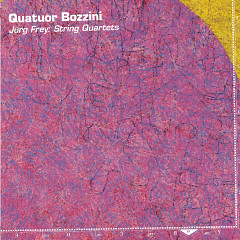
    Jürg Frey: String Quartets dans Trybuna Muzyki Spontanicznej

    «Recenzje», Trybuna Muzyki Spontanicznej, 9 mai 2025
    mardi 13 mai 2025 Presse

    Un compositeur notable de musique contemporaine, un quatuor classique canadien tout aussi notable et cinq compositions datant du siècle dernier, interprétées au début du suivant et aujourd’hui rééditées. Les deux premières durent une douzaine de minutes chacune, les deux suivantes sont des miniatures de quelques dizaines de secondes, tandis que la dernière dure près d’une demi-heure, une épopée de sons qui s’estompent d’une beauté unique.

    La première histoire est une sorte de trépidation douloureuse, une berceuse déchirante et sans joie, sous la forme d’une répétition constante construite par des oppositions, tant sur le plan sonore que dramatique. Le récit ondule, adhérant avec détermination à l’idée de minimalisme et parfois de réductionnisme constitutif. Le silence joue ici un rôle important, qui, de temps à autre, fait entrer clandestinement des bribes de mélodies qui s’estompent. La deuxième piste semble s’inspirer de l’esthétique de la musique ancienne, est plus sombre et est certainement la plus classique de l’ensemble de l’album. La narration apparemment simple subit ici une rupture systématique, mais elle ne perd pas la marque d’une exposition moelleuse. Il fait souvent un pas en avant, puis deux en arrière. Il avale de petites portions de mélodie, les mâche et les remet en place. La fin même semble porter une note d’optimisme mystérieux. Parmi les miniatures annotées, la première cherche un fond, la seconde brille d’un post-baroque strident. Le cinquième morceau occupe la moitié de l’album et en constitue définitivement la qualité. Elle coule du fond de la crypte obscure, s’étirant entre les dents serrées, évoquant une procession des morts. C’est d’une beauté indicible, bien que construit avec des méthodes extrêmement réductrices. Une grande omission qui déplace des montagnes. Une vie qui porte depuis longtemps la marque d’une mort irrémédiable. Elle sent la musique ancienne, la bande-son parfaite d’une mort exceptionnellement lente.

    … d’une beauté indicible…

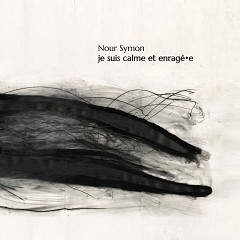
    Je suis calme et enragé·e dans Trybuna Muzyki Spontanicznej

    «Recenzje», Trybuna Muzyki Spontanicznej, 9 mai 2025
    mardi 13 mai 2025 Presse

    Après un album solo et deux quatuors, voici venu le temps d’un grand line-up, ici douze pour être exact, issus de deux formations. Il y a bien sûr aussi un compositeur, inspiré ici par des poèmes très contemporains. Et impossible de ne pas donner les crédits de l’album. Je suis calme et enragé·e est une pièce transdisciplinaire qui commence par ces mots de Roxane Desjardins. Ce projet ambitieux que vulnérable et donnant à entendre six tableaux sonores — partitions musicales visuelles composées par Nour Symon — pour autant de poèmes explorant des positions de détresse et de vertige par rapport à l’Histoire, à l’ampleur de l’humanité, aux désastres écologiques qui se profilent.

    L’œuvre méta-opéra, entièrement monumentale, s’ouvre sur une polyphonie équilibrée mais déjà très expressive, étayée par une narration de cordes en sourdine. L’électronique règne en arrière-plan, créant une tension, posant des questions, inspirant parfois. Ce récit dense et nerveux n’est cependant pas dépourvu d’une note de rêverie mystérieuse. Le deuxième mouvement est d’abord une sorte d’étirement musculaire paresseux — le flux instrumental-vocal semble s’écouler un peu plus haut. Il gagne rapidement en puissance et explose avec la force d’un orchestre de free-jazz. Au premier plan, cependant, se trouve le narrateur, qui distribue les rôles et fait respecter les engagements d’une voix ferme. Le troisième mouvement devient définitivement nerveux: cris, salves instrumentales, rythmes brisés et tordus, hauts d’opéra et bas décadents.

    Le début du quatrième poème est tissé de bagatelles instrumentales. La trompette, la flûte et les cordes ont toutes leur rôle à jouer. Ce n’est qu’à la cinquième minute qu’apparaît une meute de chanteurs malicieux qui commence à faire des ravages considérables. C’est l’équipage ivre d’un navire balayé par les vagues qui commence à faire la fête. Le tout ressemble à une improvisation… libre bien définie. Le point culminant est aussi mélodique et post-baroque que râpeux et strident. La cinquième histoire est tantôt une prière, tantôt une méditation étudiée, elle suinte la mélodie et la crasse. Le narrateur joue volontiers son rôle important, bien que tout le monde ici puisse crier, chanter et sentir l’odeur d’un voyage partagé. L’histoire se construit efficacement et se transforme en un carambolage presque free-jazz. Le début du dernier poème est un bourdon — vocal, à cordes et soutenu par des harmoniques anxieuses. L’histoire se transforme assez rapidement en une polyphonie théâtrale et nerveuse, qui reste refroidie dans la couche instrumentale, bien qu’imprégnée de rythmes mystérieux. La méditation berçante rencontre finalement un chœur de fous furieux, réfugiés d’un opéra en flammes. Ce sommet vocal implique une plus grande activité de la part des instrumentistes. Le final de cette interprétation frénétique est libre, expressif, joué avec un ensemble complet, avec des voix qui, sur la dernière ligne droite, semblent céder le terrain à la sphère instrumentale.

    … entièrement monumentale… récit dense et nerveux…

    Jürg Frey: String Quartets dans nitestylez.de

    «Review», Baze Djunkiii, nitestylez.de, 26 avril 2025
    mardi 29 avril 2025 Presse

    Released via the Quatuor Bozzini run and headed Collection QB label on March 7th, 2k25 is String Quartets, a collaborational release which sees the ensemble take on pieces by Swiss composer Jürg Frey. Originally put out on the circuit via Edition Wandelweiser in 2006 the recent re-issue was driven by the ensembles 25th anniversary the hour long album features a total of four compositions written in the period from 1988 to the year 2000, opening with Streichquartett — an eleven minutes spanning exploration of repetitive yet ever so slightly shifting Minimal Music with all four instruments playing in perfect unison whilst continuously meandering around a seemingly set set of parameters when it comes to pitch and sustain. With (Unbetitelt) VI we’re taken into a stripped down, yet emotionally touching world of Contemporary Classical composition whereas the two micro-pieces in Zwei allerletzte SächelchenMailied and Vorbei weigh in a brief excursion into unscathed rural beauty before the albums main piece Streichquartett 2 rounds things off in a surprisingly Dark Ambient-leaning manner, serving stripped down, yet highly fascinating, hypnotic and time-dissolving micro-movements at the very brink of the audible spectrum which therefore turn out to be quite an essential piece of contemporary Deep Listening Music for all genre aficionados. Go check!

    … an essential piece of contemporary Deep Listening Music for all genre aficionados.
  • 19
  • 20
  • 21
  • 22
  • 23
  • 24
  • 25
  • 26
  • 27