Sauter au contenu principal
actuellecd
  • This website is also available in English.

Blogue

4946 résultats
  • 161
  • 162
  • 163
  • 164
  • 165
  • 166
  • 167
  • 168
  • 169
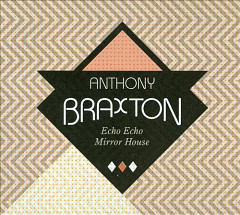
  • Echo Echo Mirror House dans The New York City Jazz Record

    «Review», Ken Waxman, The New York City Jazz Record, 8 janvier 2014
    mercredi 8 janvier 2014 Presse

    Whenever the controversy about what or who is or isn’t jazz is breached there’s likely no more polarizing figure than Anthony Braxton. Braxton has been so prolific in his writing and playing however that ample arguments can be mustered for both points of view. These recent CDs should add more verbiage to the discussion. Although both are well executed and absorbing, Braxton’s protean skills are such that a case can be made either way. […]

    Echo Echo Mirror House on the other hand, recorded live in 2011 at the Festival International de Musique Actuelle de Victoriaville, is played by a septet of Braxton associates, with the composer participating. Perhaps because the hour-plus Composition No 347 allows the players to add snatches of other Braxton pieces plus incorporate still other sounds sourced from iPods, the result is as convincingly jazzy as any advanced improvised music. […]

    Encompassing vivid stylists like Taylor Ho Bynum, Mary Halvorson and Braxton himself, solo interjections are audible during Composition No 347, animating the already powerfully staccato creation. Upping the ante with found sounds emanating from the musicians’ iPods — include piano chamber music and near-operatic vocals — the effect is of several compositions being played simultaneously. So-called classical voicing and orchestration are prominently featured, but so are chugging band pulsations which reflect Basie a lot more than Beethoven. Plus, when it comes to the cornetist’s muted flutter tonguing, the guitarist’s tempo-transcending flanges and crunches and the saxophonist’s stuttering intensity, reference points are without doubt improvisations that derive from jazz — if they’re not jazz itself. Without question, the visceral excitement missing from the more formal Ensemble Montaigne CD is present here. Extravagantly and rousingly performed, by the penultimate sequence, the composition threatens to explode from unrelentless pressure following some frenzied contrabass clarinet lines from Carl Testa and Aaron Siegel’s glockenspiel hammering. Propitiously Braxton, Bynum and Halvorson combine with connective harmonies in the final minutes, effectively ending the piece.

    With Echo Echo Mirror House vibrating with express-train-like tremolo power and Ensemble Montaigne making its points through precise tonal juxtaposition, Braxton’s musical powers are doubly confirmed. As to how you define these pieces that may be something best left to musicologists.

    With Echo Echo Mirror House vibrating with express-train-like tremolo power and Ensemble Montaigne making its points through precise tonal juxtaposition, Braxton’s musical powers are doubly confirmed.

    The Muted Note dans Bad Alchemy

    «Kritik», Rigobert Dittmann, Bad Alchemy, no 80, 6 janvier 2014
    lundi 6 janvier 2014 Presse

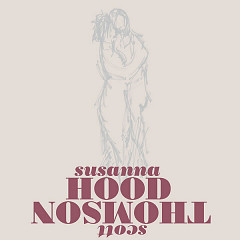
    Wie hier beginnen? Zuerst einfach mal mit dem offensichtlichsten Reiz, der natürlichen Sopranstimme von Susanna Hood. Hood ist in Toronto die gefeierte Leiterin von Hum, einer interdisziplinären Truppe, die Körper und Klänge in Bewegung inszeniert. Als die ‘Irene Aebi’ von The Rent ist mir ihre jazzige, schlanke, gelegentlich mit Scatting und Melismen verzierte Kunstliedsangeskunst durch die Musique de Steve Lacy (Ambiances Magnétiques, 2010) nicht völlig neu. Im helldunklen Verbund mit dem Posaunisten Scott Thomson, ihrem Partner sowohl bei Hum als auch bei The Rent, singt sie hier dessen Vertonungen von Gedichten von P.K. Page (1916-2010). Patricia Kathleen Page, eine der großen poetischen Stimmen Kanadas, die sich Anfang der 1970er auch schon gegen den Klimawandel erhob und nicht zuletzt gegen die Phrase vom Kampf der Kulturen. Gavin Bryars hat zwei ihrer Gedichte vertont (Three Canadian Songs) und 1999 mit ihr selbst ihren ökologisch warnenden Text ‘Unless the Eye Catch Fire…’ aufgeführt. Page stellt dem ‘permanent tourist’, der nur kommt, gierig schaut und wieder geht, ohne Verantwortung zu übernehmen, den Gärtner gegenüber, der sich kümmert. Aber nicht isolationistisch, auch nicht nur zweisam, sondern der Multitude verbunden und der Erde, auch wenn im Garten Rosen neben Stacheldraht wachsen (’The Metal and the Flower’). Hood betont das, wenn sie die schon eingangs gesungenen unsolipsistischen Zeilen As ten, as twenty, now, we break from single thought zuletzt noch einmal a capella anstimmt. Jeder ist eine Vielheit und Teil der Vielheit. Die Posaune folgt der Stimme als Double, als Echo, löst sich aber auch als Alter Ego, ebenso vollmundig, ebenso selbstbeherrscht. Pages weitere Helden sind der innere Ikarus in ‘This Heavy Craft’. Oder auch der Maulwurf: The mole is a specialist and truly / opens his own doors; digs as he needs them / his tubular alleyways; and all his hills / are mountains left behind him (’The Mole). Der Sternenhimmel ist korrekturgelesen und fehlerlos (’Stargazer’), auf der Erde sieht es anders aus. Mit der Option, to go mad… to be huge… the least molecule of an unlimited form… to burn and be burned. It is where you are not / that the fissure occurs / and the light crashes in (’Preparation’).

    The Muted Note dans Vital

    «Review», Dolf Mulder, Vital, no 914, 6 janvier 2014
    lundi 6 janvier 2014 Presse

    A new CD on the small Canadian Etrecords label of Michel F Côté. An album of songs based on the poems by Canadian poet P.K. Page, who died in 2010. Susanna Hood started her career as a dancer, and developed into an improviser both in dance and music. Thomson is a trombonist and composer working mainly in Montréal and Toronto. He studied with Roswell Rudd, Jean Derome, Eddie Prevost, a.o. He leads the quintet The Rent, interpreting works by Steve Lacy. In 2010 they released their debut for Ambiances Magnetiques. Between 2010 and 2012 Thomson composed a suite of 12 songs, inspired on poems by P.K.Page. He composed a version for his quintet The Rent, and one for Hood and himself as a duo of just voice and trombone. Thomson is working on a stage version of the suite for dancers and performers as well, because a lot of the poetry of Page is “danceable” Thomson states in an interview. Back to The Muted Note that contains 11 songs, sung by Hood with a jazzy feel, interrupted with fine solo sections by Thomson resulting in an intimate and charming evocation of Pages’s poetry.

    … resulting in an intimate and charming evocation of Pages’s poetry.

    The Muted Note dans Blow Up

    «Altrisuoni», Stefano Isidoro Bianchi, Blow Up, no 188, 1 janvier 2014
    mercredi 1 janvier 2014 Presse

    Solo voce (Hood) e trombone (Thomson) per mettere in suono le poesie della scrittrice, poetessa e artista visuale inglese ma naturalizzata canadese Patricia Kathleen Page (1916-2010). Vocalizzi arty, virtuosismi, rapidi solo strumentali, interazioni un po’ telefonate. Conoscere la poetessa e l’inglese dovrebbe aiutare, altrimenti è dura.

    Towns and Villages dans Le son du grisli

    «Critique», Luc Bouquet, Le son du grisli, 17 décembre 2013
    mardi 17 décembre 2013 Presse

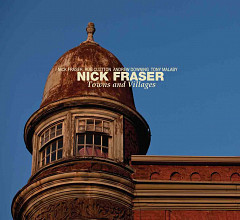
    Le souffle de Tony Malaby ne peut laisser indifférent. Tel un paquebot enroué ou une gralla catalane éraillée, son saxophone refuse d’aller en paix. Malaby malaxe, ressasse, pointe une convulsion, flirte avec le microtonal, tricote quelques pestes soniques, joue droit puis courbe. Bref, aime à chercher ce qui lui résiste encore quitte à oublier l’instant présent. Malaby est un solitaire, il faut faire avec.

    Aux cotés du très fin batteur Nick Fraser et des très complémentaires Andrew Downing (violoncelle) et Rob Clutton (contrebasse), et bien plus que d’ordinaire, il laisse ouverte la parole. Ici, les compositions du batteur imposent simplicité et insistent sur les béances rythmiques. Les espaces ainsi affirmés, chacun va raconter sa petite histoire avec plus ou moins de bonheur. Et dans le cas de Tony Malaby, l’on s’en doute, le lyrisme ne sera pas laissé au fond du filet.

    Le souffle de Tony Malaby ne peut laisser indifférent. Tel un paquebot enroué ou une gralla catalane éraillée, son saxophone refuse d’aller en paix.
  • 161
  • 162
  • 163
  • 164
  • 165
  • 166
  • 167
  • 168
  • 169