actuellecd

Blog

4946 results
  • 813
  • 814
  • 815
  • 816
  • 817
  • 818
  • 819
  • 820
  • 821
  • Face cachée des choses, Diane Labrosse in AllMusic

    “Review”, François Couture, AllMusic, June 1, 1995
    Thursday, June 1, 1995 Press

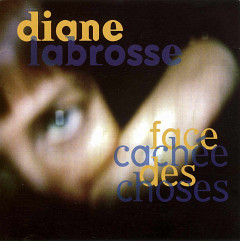
    A keyboardist who turned to the sampler in the early 1990s, Diane Labrosse offered with Face cachée des choses her first solo album. She crafted 13 pieces out of found sounds, mostly domestic or environmental. On a few tracks she added her felt voice or a simple keyboard part. Although this is a sampler album, it has very little to do with the deconstructionist approach of one Bob Ostertag, the roughness of Ikue Mori or even musique concrete. Labrosse’s music remains close to the song format, it feels like instrumental music made with anything but musical instruments. From tenderness (Nénuphar) to downright sillyness (Île de Pâques), Face cachée des choses unfolds like a collection of 13 poems. Each one of them conjures emotions, memories, reactions, but its meaning often lingers out of reach. Later Labrosse will release more substantial and experimental albums, such as the free improvisation trio Île Bizarre and the large-scale project Petit traité de sagesse pratique, but this one feels more intimate and surely is her most accessible CD. Think of it as a guilty pleasure between her work in the avant-rock groups Wondeur Brass and Justine, and her later efforts.

    Think of it as a guilty pleasure…

    Locomotive in e/i magazine

    “Review”, Michael Draine, e/i magazine, April 1, 1995
    Saturday, April 1, 1995 Press

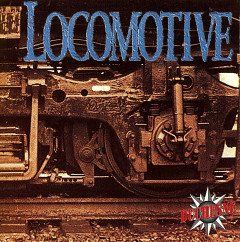
    Guitarist André Duchesne has long been Canada’s premier exponent of rock-based new music, having helmed three line-ups of Conventum (1977-82), two generations of Les 4 Guitaristes de l’Apocalypso Bar, and now the guitar (plus drums) trio, Locomotive. Both second guitarist Claude Fredette and Miriodor drummer Remi Leclerc performed on the second 4 Guitaristes LP Fin de siècle, as well as on Duchesne’s large-ensemble concert work “L’Ou’l”, while guitarist/bassist Francis Grandmot is a new name to me. Continuing the tradition of Les 4 Guitaristes, Locomotive abounds with cascading, interlocking melodies, hot splayed leads and abbreviated, jaunty riffs, firmly anchored by Leclerc’s crisp, oblique backbeat. Never content to repeat himself, Duchesne has spiked the brew with an ingredient some might find indigestible: boxcar blues. Duchesne’s blues blanche vocals vary from the merely eccentric to the outright comic, while the juxtaposition of the clipped guitar riff from Archie Bell and the Drells’ Tighten Up against an over-the-top James Brown impersonation on Sex-Duction is clearly calculated for laughs. Fortunately, Duchesne’s freightyard musings disable only a few cuts, leaving room for plenty of the passionate, seemingly effortless fretwork and kinetic interplay that’s the highlight of his every undertaking.

    L’oreille enflée, Danielle Palardy Roger in Cadence

    “Review”, Cadence, no. 20:8, August 1, 1994
    Monday, August 1, 1994 Press

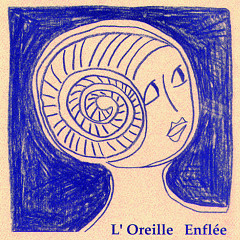
    Crossing the Atlantic, we arrive in French-speaking Canada and the usually interesting Montréal based label Ambiances Magnétiques. Their most recent release (on the subsidiary Archives Magnétiques 04) is L’oreille enflée by Danielle Palardy Roger, Roger is the drummer for the band Justine and here she is joined by fellow members Joane Hétu (rds, vcl) and Diane Labrosse (vcl), as well as other luminaries from the Montréal creative community: Jean Derome (rds, flts), André Duchesne, Marie Ouellette, Mercedes Roy. This appears to be a radio play and it’s performed entirely in French so it’s a little difficult for a monolinguist such as myself to get a key in on the action. But the music is an intricate through-composed tour-de-force relying heavily on Hétu and Derome’s reeds and live and sampled sounds/percussion. A comparison might be marde to some of Henry Cow’s more scored moments but this is music with its own unique character. Very enjoyable, if a bit obscure.

    Very enjoyable…

    L’oreille enflée, Ambiances Magnétiques in Revue & Corrigée

    “Critique”, Pierre Durr, Revue & Corrigée, no. 20, June 1, 1994
    Wednesday, June 1, 1994 Press

    Tiens! Après les musiciens du Drame, de Pied de Poule et de l’Arfi, voici nos amis québécois d’Ambiances Magnétiques qui s’adressent à notre progéniture… Et c’est Danielle Palardy Roger (ci-devant Wonder Brass, Justine…) qui s’y colle… — Papa, c’est quoi ce disque? Autour d’elle, on trouve certains des autres musiciens de la scène de Montréal, André Duchesne, Jean Derome, Joane Hétu et quelques autres, qui allient instruments et voix (chacun interprète, comme dans Pierre et le Loup ou Arthur et les Robots, un des personnages du conte). — Papa, c’est quoi ce disque? Les sons restent très feutrés, les instruments soulignent les narrations des divers personnages, avec juste un brin de dramatisation là où l’histoire le permet. Il ne s’agit pas d’effaroucher nos chères têtes blondes. Mis à contribution également, quelques sons naturels captés par Claude Beaugrand… — Papa, comment on fait les bébés?. Eh bien, vois-tu, c’est un conte un peu curieux, les aventures d’une dame (la narratrice) surnommée L’oreille enflée parce que dans sa jeunesse elle se faisait tirer l’oreille, et des personnages qui l’entourent: le limaçon malade, le professeur Catastrophe (qui vient de la planète des Tendres Géants), le méchant Commodore d’Arès (il veut que tout le monde marche au pas), la sorcière Eole… Un conte qui ne se termine jamais: Tutu la Grenouille s’endort toujours avant la fin et… ronflements.

    … voici nos amis québécois d’Ambiances Magnétiques qui s’adressent à notre progéniture…
  • 813
  • 814
  • 815
  • 816
  • 817
  • 818
  • 819
  • 820
  • 821