actuellecd

Blog

4946 results
  • 106
  • 107
  • 108
  • 109
  • 110
  • 111
  • 112
  • 113
  • 114
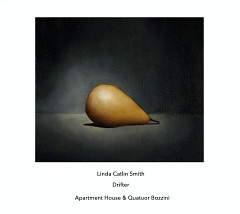
  • Drifter in All About Jazz

    “Review”, John Eyles, All About Jazz, April 22, 2017
    Saturday, April 22, 2017 Press

    Fittingly, the series opens with one of its aces, a double album of Linda Catlin Smith compositions. Where Dirt Road featured the fifteen-part title piece, from 2006, played by Apartment House members Mira Benjamin on violin and Simon Limbrick on percussion, Drifter presents more of an overview of her work, consisting of ten compositions from 1995 through to 2015. Recorded between February and July 2016, mainly at the University of Huddersfield, the pieces are variously played by Bozzini Quartet and members of Apartment House; as is typical of Another Timbre, the recording and sound quality is first-rate throughout, allowing the pieces to be heard to best effect.

    The music here has all of the qualities that Dirt Road led one to expect of a Smith composition — gentleness, subtlety, emotion, attention to detail, a sense of melody, tranquillity — but goes beyond the range of that album. The quartet pieces (exemplified by “ Folkestone ”) certainly display Smith’s talents to excellent effect, but the fewer instruments that are present the better Smith tends to sound, as she seems to savour the sound of each individual instrument. That proposition is tested to the limit on three tracks that feature just one instrument, “ Ricercar ” played by Anton Luksozevieze on cello, “ Galanthus with Benjamin on violin, and “Poire ” with Philip Thomas on piano; all three draw one in and make riveting listening.

    Drifter is impossible to fault; it is impeccable from first note to last.

    Drifter is impossible to fault; it is impeccable from first note to last

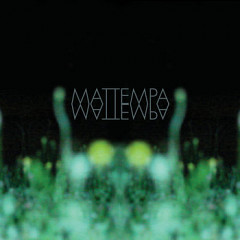
    Mattempa in The Squid’s Ear

    “Mattempa”, The Squid’s Ear, April 12, 2017
    Wednesday, April 12, 2017 Press

    Patterned after Canadian physician and author Jacques Ferron’s book Gaspé Mattempa, where he postulated a character whose creation fantasy stems from a purely acoustic phenomenon. The rustling of the trees on the mountain, takes the form of a mythical creature: satan-mattempa or the squalling of the Madeleine, half voodoo character, half-Nordic, Barron’s cousin Saturday, holed up in the cold mountains of the Gaspésie imaginary. In the book he wrote: “Creature noise, always present and absent at the same time, his singing blurs the horizon, the boundary between land, water and air.”

    Éric Normand works with that material into these 8 musical works, imaginative and complex pieces for improvisation. Though purely acoustic, the works have the feel of bridging worlds into the electroacoustic improv realm, much like the literature they reflect bridges worlds into the mythological. Fascinating.

    Fascinating.

    Dôme in The Wire

    “Review”, Tristan Bath, The Wire, no. 398, April 1, 2017
    Saturday, April 1, 2017 Press

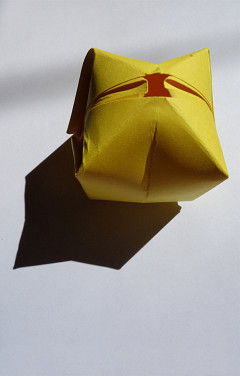
    Dôme documents an installation work by Montréal saxophonist / clarinettist Philippe Lauzier. Composed for a specially made contraption comprising bells, zithers, a Korg and several motors, the music nonetheless feels distinctly organic. Quite how Lauzier plays the music is tough to discern from the recording — the jangling strings and tinkling bells sound like they’re being jabbed at by motorised ghosts in the machine. For long passages all the elements fire at once, although the loveliest moment comes at the end of Far Side, when alarm clocks, bells and strings take it in turns in a motorised conversation. However they were assembled, both 17 minute single takes are surprisingly luminescent and joyful.

    However they were assembled, both 17 minute single takes are surprisingly luminescent and joyful.

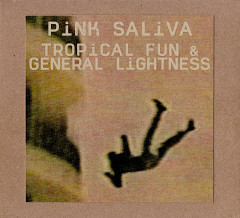
    Tropical Fun & General Lightness in The WholeNote

    “Review”, Ken Waxman, The WholeNote, no. 22:7, April 1, 2017
    Saturday, April 1, 2017 Press

    Don’t be fooled by the tile of this album by Montréal band Pink Saliva (PS). The two-CD set is anything but light and fun. That’s because the 24-tracks consist of moderato-paced oscillating drones, percussion pivots and brass squeals that in a (Morton) Feldman-like fashion unfold slowly while squirming forward. On the other hand, band members Alexandre St-Onge who plays electric bass and electronics; Michel F Côté, whose skill encompasses percussion, steel guitar and all manner of electronics; and Ellwood Epps, who varies his trumpet sound with a series of mutes; are canny enough to limit their compositions to between two and four minutes.

    Overall, the tunes’ appeal is in how precisely like light bulbs in a socket, the musicians’ ideas adhere and subsequently illuminate. For instance a track such as Mario & Salvio is measured out in double bass thumps, making rhythmic sense of brass squeaks and hamster-wheel-like cranks, while (J. von P.) transforms from doom-laden drumming, as it’s opened up with molecule-sized brass bites to reach a theme of satisfying nonchalance. Like its subject matter, Nixon à la television shows that the band can be down and dirty in its exposition but by its conclusion use focused string pulses and relaxed drum pops to direct the narrative to soar sympathetically upwards.
    Tropical Fun & General Lightness easily proves that the trio members are experts in creating the musical equivalent of Instagram photos or pointed tweets. But without appearing to be too old-fashioned, longer tracks with more extensive solos would demonstrate how well PS stacks up against the wok of earlier, innovative improvisers.

    Tropical Fun & General Lightness easily proves that the trio members are experts in creating the musical equivalent of Instagram photos or pointed tweets.

    Trio in The WholeNote

    “Review”, Stuart Broomer, The WholeNote, no. 22:7, April 1, 2017
    Saturday, April 1, 2017 Press
    It’s improvised music in which the three are so in tune that it never seems responsive, resembling instead the inevitability, consistency and variegation of water, stone, earth or air.

    Quartetski in La Scena Musicale

    “Pierre-Yves Martel – Quartetski et le loup (Bartók et Prokofiev dans le collimateur)”, Marc Chénard, La Scena Musicale, April 1, 2017
    Saturday, April 1, 2017 Press

    Depuis son arrivée à Montréal en 2004, Pierre-Yves Martel a fait un son chemin. Armé d’une contrebasse et d’une viole de gambe, ce fils de la capitale nationale s’est pleinement intégré dans notre scène, son succès reposant sur sa polyvalence. D’une part, il s’est donné de la visibilité comme membre permanent de la formation Constantinople des frères Tabassian, groupe tous azimuts à la confluence de la musique persane et celles d’autres traditions. D’autre part, Martel s’est inséré dans le monde des musiques créatives, autant chez nous – par sa présence au sein du collectif Ambiances Magnétiques – que par ses associations avec des partenaires étrangers (v. référence discographique ci-dessous).

    Autre corde à son arc, il dirige une formation au nom singulier, Quartetski, spécialisée en relectures audacieuses d’œuvres de ­compositeurs classiques. Au fil des ans, lui et ses complices se sont attaqués à des musiques de toutes les époques, commençant en 2006 par Prokofiev (le nom du groupe étant donc un clin d’œil à ce compositeur), puis suivis par Éric Satie, Henry Purcell, Tobias Hume, Igor Stravinski et, le dernier en date, Bela Bartók.

    Début avril, il propose de présenter des extraits de Mikrokosmos, grand opus pour piano solo du célèbre Hongrois. Le concert reprendra les 29 miniatures figurant sur le disque le plus récent, retravaillées considérablement par l’ensemble. Mais Martel nous réserve deux surprises pour cette occasion.

    «J’avais eu l’idée du concert pour marquer les dix ans de Quartetski, explique Martel, avant de faire une mise en garde: j’aurais bien pu reprendre mon premier projet, les Visions fugitives de Prokofiev, pour faire la boucle avec le Bartók, mais cela me semblait trop évident. Je me suis fixé sur une autre œuvre du compositeur russe, Pierre et le loup. Cependant, je vais utiliser le texte littéraire plutôt que la partition comme matière à créer une musique originale, démarche inédite pour mon groupe.»

    Réservée pour la seconde partie de la soirée, cette pièce suivra une autre première avant l’entracte, celle-là intitulée Makrokosmos. Toujours selon Martel: «Après avoir repris Le sacre de Stravinski en 2013 à l’occasion du centenaire de sa création, je voulais me tourner vers quelque chose de moins massif, d’où mon choix des miniatures de Bartók. À celles-ci, je vais ajouter cette autre première, une pièce de plus longue durée et assez minimaliste dans ses matériaux, question d’explorer une autre avenue.»

    Pour l’automne, Martel et ses acolytes reviendront à la charge avec leur projet le plus jazzistique: la musique de Duke Ellington, étirée dans tous les sens avec le concours de Martin Tétreault aux tables tournantes et vinyles assortis. On en reparlera sûr et certain.

    Dernière heure: Josh Zubot, résidant désormais à Vancouver, sera remplacé par un autre violoniste, Guido del Fabro.

    Armé d’une contrebasse et d’une viole de gambe, [Pierre-Yves Martel] s’est pleinement intégré dans notre scène, son succès reposant sur sa polyvalence.
  • 106
  • 107
  • 108
  • 109
  • 110
  • 111
  • 112
  • 113
  • 114