actuellecd
  • This website is also available in English.

Blog

4946 results
  • 101
  • 102
  • 103
  • 104
  • 105
  • 106
  • 107
  • 108
  • 109
  • Résistances in La Scena Musicale

    “La ronde des disques Millésime 2017”, Marc Chénard, La Scena Musicale, no. 23:4, December 1, 2017
    Friday, December 1, 2017 Press

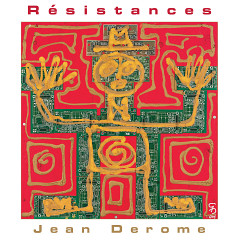
    Récipiendaire d’une bourse de carrière en 2013, Jean Derome a investi son pécule dans une série de projets spéciaux. Le premier, créé en mai 2015, fait l’objet de ce tout nouveau disque lancé le 14 décembre. Pour saisir la pleine portée de cette entreprise, de loin la plus ambitieuse de Derome, une lecture des notes de l’artiste s’impose. En bref, l’œuvre entière repose sur la fréquence de 60 Hz, norme utilisée dans le réseau hydro-électrique nord-américain. En musique, cela se traduit par une note située entre le si bémol et le si naturel, celle-ci servant de tonalité de base. Derome explore donc la microtonalité, ce qui nécessite une certaine adaptation de l’oreille au début. Pour réaliser sa vision, le compositeur a recruté 19 collègues jouant toute une gamme d’instruments, incluant des synthés et tourne-disques. À une seconde près des 60 minutes et divisé en 16 plages, le disque se déploie assez lentement dans la première moitié. Outre un ostinato de basse quasi ellingtonien dans la sixième plage, il y a peu de matière compositionnelle dans cette tranche; il faudra donc attendre la dixième plage et les suivantes pour que l’ensemble ressorte davantage, dans un premier temps par des jeux d’improvisation collective dirigée et, dans un second, par une ligne thématique en fin de parcours. En tant que disque, cette œuvre conceptuelle pèche par des longueurs, mais ceux qui ont pu assister à la captation en concert de cet enregistrement le printemps dernier au Gesù pourront sans doute avoir un autre… buzz.

    … l’ensemble ressort davantage, dans un premier temps par des jeux d’improvisation collective dirigée et, dans un second, par une ligne thématique en fin de parcours.

    Eliot Britton: Metatron in The Squid’s Ear

    “Review”, Marc Medwin, The Squid’s Ear, October 25, 2017
    Wednesday, October 25, 2017 Press

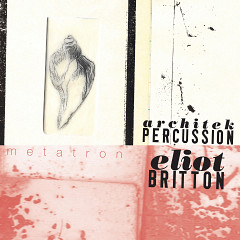
    How deep is the ocean, asks the now-standard tune’s lyrics throughout this half-hour sonic extravaganza. The answer: As deep as the titlewave of sonic signifiers bouncing off the walls of composer Eliot Britton’s diverse, inclusive and warped imagination.

    To suggest that Metatron is plunderphonic at its heart is to suggest that Bach and Webern both employed counterpoint, which is to miss the point almost entirely. Reflecting on the piece as a time warp akin to the end of Stanley Kubrick’s 2001 is also something approaching an injustice. Both are true and false, as music can present the simultaneities toward which speech struggles. Aided by the empathetically excellent work of Architek Percussion, Britton offers a series of quantum leaps through the development of technology, its attendant audio history and many of the signifiers therein as viewed through a 21st century lens.

    The results are miraculous. The deeper you dive, the more you find, and the more you’ve been listening, the greater the rewards. From the radical percussion works of Varese to the bleeps, brips and braps of early 1980s video games, from Whispering Jack Smith to those ambient tintinnabulations of middle 1970s ECM discs, from swinging Ella Fitzgerald to Blue Skies as it might be heard on the Minus label, all is referenced for listener gratification. If it were that simple, the piece might fail; there is a narrative, a beautifully touching and often laugh-out-loud meta-story of how development and recurrence partner on some vast cosmic dancefloor, converging and diverging in spirals of heartfelt reminiscence. If that weren’t enough, the piece begins and ends in C, more or less. How’s that for convention?

    Again, were the recording not absolutely spectacular, those retro-washes of synth magic, the sudden gear-shifts and the constant illusions to old and beloved pop tunes would be lost in the fray. They aren’t, and it is to the credit of all involved that this is one of the most extraordinary, confrontational and often gorgeous trips through timbral history that I’ve encountered.

    The results are miraculous. The deeper you dive, the more you find, and the more you’ve been listening, the greater the rewards.

    Jeux de pistes in The Squid’s Ear

    “Review”, Marc Medwin, The Squid’s Ear, October 4, 2017
    Wednesday, October 4, 2017 Press

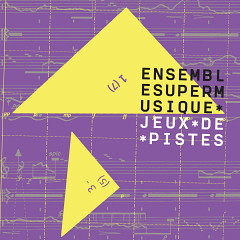
    At this point, there is nothing innovative or even novel about the combination of improvisation and composition save the way the symbiotic relationship is achieved. On this score, Ensemble SuperMusique succeeds on all counts. This disc offers up four of what might be described, loosely and inadequately, as graphic scores, though whatever images are involved are not nearly as graphic in detail as the excellent playing and recording.

    The oldest entry is John Rea’s Tempest, composed in 1969 and here adapted for a much larger temporal canvas than its original two minutes. Sussurations and long-form semidrone encompass voices and instruments of deliciously indeterminate character, leaving aside the point or two at which identification is readily and vividly apparent. Entering and exiting as the proverbial lamb, everything bubbles and seethes with an energetic undercurrent, planes of sound nearly intersecting as unisons ebb and flow into each other, forming complex but clear sonorities that shake hands before exiting.

    The other three scores were composed in the past few years, and easily the most whimsical among them is Malcolm Goldstein. Any fan of Ligeti’s Aventures pieces will absolutely love this realization, such is its cheek and daring. Swoops and glides abound, punctuated by vocal outbursts reminiscent of Phil Minton at his seriocomic best. The occasional unison is fodder both for pause and momentary reflection before the zaniness recurs, turntable often at the ready and a wonderful upward and rapid flick out of focus concluding the proceedings. Danielle Palardy Roger’s TanGRAM is a study in what Jack Kerouac, describing Proust’s Cambre Cathedral, called slow concentric waves. According to shapes based on the ancient Chinese puzzle, we ascend and descend in arcs and lines that creep glacially in and out of cognition as timbres converge and diverge. There are a few similar passages in Tempest, but TanGRAM is pure slow-motion bliss and horror as some percussion rolls a foundation of dread and dynamics slowly increase, eventually leading to fragmentation in the final minutes.

    By way of total contrast, Jean Derome’s L’argent roils, beats and explodes with the unbridled passion only an energetic ensemble of improvisers and composers can bring to the table. Huge fits and starts pervade this sectionalized assault on the senses, and, were it not for a first-rate recording, much of its nuance would be lost in the noise. Fortunately, interstitial and timbral delineation is possible, and a few of the episodes are greeted by the whoops and hollers of a particularly appreciative audience. No sound is left unused, from looped electronics to all combinations of acoustic sonic layering; as with the rest of the discs, the results excite and mesmerize by turn, capturing what was undoubtedly a fiery and introspective performance.

    No sound is left unused, from looped electronics to all combinations of acoustic sonic layering; as with the rest of the discs, the results excite and mesmerize by turn, capturing what was undoubtedly a fiery and introspective performance.
  • 101
  • 102
  • 103
  • 104
  • 105
  • 106
  • 107
  • 108
  • 109