actuellecd

Blog

66 results
  • 2
  • 3
  • 4
  • 5
  • 6
  • 7
  • 8
  • 9
  • 10
  • Joane Hétu in 15 Questions

    “Joane Hétu Shares her Creative Process”, 15 Questions, July 20, 2025
    Friday, July 25, 2025 Press

    Where does the impulse to create something come from for you? What role do often-quoted sources of inspiration like dreams, other forms of art, personal relationships, politics etc play?

    Since I became a musician in my early twenties, it has always been obvious to me: I would play original compositions, either my own or those of the members of the ensemble I was playing with. I never questioned it — it was a given. Was it the era, the early 1980s, that influenced me?

    It’s a bit of everything you mentioned. Sometimes it’s specific commissions based on a theme or concept. Other times, it’s a personal impulse that takes hold.

    I would say that life as a whole inspires me: politics, personal matters, a season (winter), the absurdity of life, love…

    For you to get started, do there need to be concrete ideas — or what some have called a ’visualisation’ of the finished work? What does the balance between planning and chance look like for you?

    I can’t visualize the final work from the outset. I often start with a text or a melody that stays with me.

    Chance is always present — I’m an improviser, and I believe in chance. Little by little, the piece takes shape, through a lot of trial and error… and a lot of joy in composing.

    Is there a preparation phase for your process? Do you require your tools to be laid out in a particular way, for example, do you need to do ’research’ or create ’early versions’?

    Each piece has its own process. No, I don’t need my tools to be arranged in a particular way.

    Above all, I need peace and quiet, concentration, and time. I like to set aside periods of time for composing, in the countryside for example, far from the hustle and bustle of everyday life.

    The creation of a piece continues until its first public performance. Yes, I go through several preliminary versions, and I draw inspiration from the performers’ playing to continue writing.

    Do you have certain rituals to get you into the right mindset for creating? What role do certain foods or stimulants like coffee, lighting, scents, exercise or reading poetry play?

    My lifestyle is an integral part of my life as a composer: a healthy, predominantly vegetarian diet, physical exercise (running, swimming), regular practice of Iyengar yoga, and little alcohol.

    And, as I mentioned, I need peace and quiet.

    For your latest release, what did you start with? If there were conceptual considerations, what were they?

    I initially formed my ensemble based on the availability of the performers. I quickly realized that it would be rare to have them all together at the same time. So I designed pieces for subgroups, in addition to a few large works. That was my first consideration.

    Then I wanted to build a concert around my texts. I started by writing new ones, which I juxtaposed with old texts that had never been presented with music, or that I wanted to revisit with a larger ensemble.

    Many writers have claimed that as soon as they enter into the process, certain aspects of the narrative are out of their hands. Do you like to keep strict control or is there a sense of following things where they lead you?

    I completely agree with this statement. Music escapes me; it dictates what comes next.

    I let it emerge through me — I become a channel, a vehicle for transmission.

    There are many descriptions of the creative state. How would you describe it for you personally? Is there an element of spirituality to what you do?

    Music is spiritual. So yes, there is undeniably a spiritual dimension to my practice.

    Once a piece is finished, how important is it for you to let it lie and evaluate it later on? How much improvement and refinement do you personally allow until you’re satisfied with a piece? What does this process look like in practise?

    I often work with tight deadlines. Once a piece is created, I rarely have the opportunity to play it again. When possible, I rework it — there are always elements to adjust, to enrich.

    I always hope to be able to bring my pieces back to life.

    How do you think the meaning, or effect of an individual piece is enhanced, clarified or possibly contrasted by the EPs, or albums it is part of? Does each piece, for example, need to be consistent with the larger whole?

    Most of my personal albums have a theme that runs through the work. On the other hand, the albums with the Ensemble SuperMusique are independent compositions, each with its own journey, without necessarily forming a whole.

    Even when an album follows a theme, it is possible to extract a piece from it if necessary.

    What’s your take on the role and importance of production, including mixing and mastering for you personally? In terms of what they contribute to a song, what is the balance between the composition and the arrangement (performance)?

    I really enjoy recording and digitally distributing my music, whether in the form of CDs or digital files.

    I always take great care with mixing and mastering.

    Music and the accompanying artwork are often closely related. Can you talk about this a little bit for your current project and the relationship that images and sounds have for you in general?

    The images that accompany my albums often have a subliminal role. I work with a team of graphic designers and let myself be guided by their suggestions.

    The cover of my current album was designed by Gabrielle Godbout, and the overall visual design by Marie-Pierre Morin. It’s a true collaborative effort.

    After finishing a piece or album and releasing something into the world, there can be a sense of emptiness. Can you relate to this — and how do you return to the state of creativity after experiencing it?

    I don’t feel empty after a project, but rather a sense of satisfaction at a job well done.

    I’m always ready to move on to the next one.

    Creativity can reach many different corners of our lives. Do you personally feel as though writing a piece of music is inherently different from something like making a great cup of coffee? What do you express through music that you couldn’t or wouldn’t in more ’mundane’ tasks?

    You can always try to infuse art into everyday life—making a good cup of coffee, cooking a good meal… but music is different: it’s more invasive, more haunting, more demanding… and, as a result, more satisfying.

    My compositions never leave me: they are engraved in me, they are part of my being. I can say that I have a certain culinary talent, but it has nothing to do with the place music occupies in my life.

    I didn’t really “choose” to be an artist — it’s a difficult path, especially at the time, for a 20-year-old woman in the early 1980s. It was over time that this vocation — because that’s what it is — took hold and has never left me. It’s been 45 years now.

    My compositions never leave me: they are engraved in me, they are part of my being.

    Joane Hétu in That Canadian Mag

    “Joane Hétu: Building Territory in Québec’s Experimental Music Scene”, Lawrence Peryer, That Canadian Mag, July 18, 2025
    Friday, July 25, 2025 Press

    How one composer spent four decades forging a distinctly Québécois path through the experimental music landscape

    When Joane Hétu picks up her alto saxophone, she claims territory. At sixty-six, the Montréal composer, vocalist, and saxophonist has spent forty years carving out space for experimental music in Québec, building institutions and communities that define the province’s musique actuelle scene.

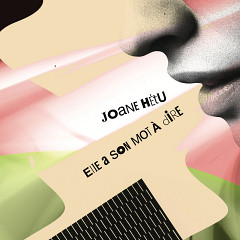
    Her latest recording, Elle a son mot à dire, captures Hétu leading Ensemble SuperMusique through thirteen of her compositions from across two decades. The album opens with “Elle n’a pas de mot” (She has no words) —a brief ambient piece that stacks wordless singing atop a chorus of “whirly tubes,” ribbed hoses spun above players that pirouette through the harmonic series. An apt introduction to an artist who has spent her career finding new ways to give voice to the unspoken.

    Finding Her Voice in the Underground

    Hétu’s path began in the early 1980s with avant-pop groups like Wondeur Brass, Justine, and Les Poules. These bands merged the pluralist ethos of New York’s downtown scene with European progressive sensibilities while maintaining something distinctly Québécois. “I was very young, in my twenties, and this fusion happened quite instinctively, without real premeditation,” she recalls. Through connections to figures like Zeena Parkins, Ikue Mori, and Fred Frith, and the Recommended Records network, these groups found their place in an international experimental music community.

    Even while performing with these bands, Hétu was thinking beyond individual artistic expression. In 1980, she co-founded SuperMusique with Danielle Palardy Roger and Diane Labrosse. Eight years later, they organized a Festival of Innovative Women Musicians, devoted entirely to women’s groups working in avant-garde music—a radical curatorial gesture that signaled Hétu’s growing interest in building infrastructure alongside making music.

    “We were connected to the New York scene,” Hétu explains, “but we wanted to create something here, something that would support the community we were building in Montréal.”

    From Performance to Institution

    The instinct to support that community would shape Hétu’s career as much as her compositions. By 1998, she had taken on co-direction of Ensemble SuperMusique, transforming the organization into one that explicitly welcomes “emerging artists, mid-career artists, and major figures alike.” Where many experimental music scenes fragment along generational lines, Hétu has consistently worked to bridge those gaps.

    “This intergenerational cohabitation is a great richness for us,” she explains. “It opens perspectives, stimulates listening, and provokes essential exchanges.”

    On Elle a son mot à dire, this collaborative philosophy becomes musical practice. In Mot elle a, vocalist Sarah Albu’s written part interweaves with improvised percussion, creating what Hétu calls “flexible, malleable” pieces that depend on interpretation. “For now, I only have one recording, but I hope it will live through other recordings and interpretations,” she says. “This is one of the objectives of open scores: to encourage multiple and living interpretations.”

    The Economics of Experiment

    Running an experimental music organization led Hétu deeper into the infrastructure questions that determine which music gets heard and preserved. As founder and longtime president of DAME Records (Distribution Ambiances Magnétiques Etcetera), she took on the less glamorous work of documenting and distributing Canadian experimental music—a role she maintained for three decades.

    “I’ve always had a passion for sound recording,” she reflects. “From 1985, I got involved in Ambiances Magnétiques, then DAME took over.” The work came with unexpected costs. “After my daughter’s birth in 1990, I was looking for a certain stability, knowing that tours would be more difficult. Naively, I believed that having a record label would offer a form of security. It was quite the opposite. This enterprise cost me a lot in creative time. Looking back, it’s perhaps what I regret most: having carried it for so long, for thirty-three years.”

    Despite the personal sacrifice, DAME has documented a vital chapter in Canadian music history, providing a platform for artists like Jean Derome, Pierre-Yves Martel, Tim Brady, and dozens of others who might otherwise have remained unrecorded. “DAME documents this precious musical heritage and ensures that these musics are represented, supported, available, and that this artistic history is accessible,” Hétu explains.

    Claiming Creative Territory

    The questions of space and belonging that drove Hétu’s institutional work find their most direct artistic expression in her concept of territory. The idea runs through much of her work, most explicitly in her piece La femme territoire ou 21 fragments d’humus. For Hétu, territory encompasses everything from the intimate to the political: “the Earth, my room, Quebec, my soul—a woman who becomes vastitude.”

    “In it, I take a position, as a woman, on my territory—intimate and collective,” she explains. “I doubted while writing it; I had trouble trusting myself. Today, I’m happy with the path traveled and with this work.”

    The territorial thinking extends to her approach to voice and instrumentation. Hétu never formally learned to sing, drawing from influences like Tenko, Phil Minton, Jaap Blonk, and Paul Dutton. “I have a deep love for the voice and its noise-making potential. It’s visceral and fundamental to me,” she says. In her work with La chorale bruitiste JOKER, founded in 2012, she explores what collective vocal improvisation can accomplish using techniques like soundpainting.

    Seasons of Composition

    Hétu’s relationship to place extends to her famous engagement with Québec’s harsh winters. Where others see obstacles to cultural life, she found creative catalysts. Her trilogy Musique d’hiver emerged from the practical reality that “January, February and March are rather quiet in the record industry, which leaves time to compose.” But the relationship between season and creativity runs deeper than scheduling.

    “I love winter, I love the sound, the cocoon effect it produces,” she explains. The final piece in the trilogy, Récits de neige, focused specifically on snow’s geometry: “I hoped to compose 30 short pieces that musicians could amalgamate as they want, like snowflakes, which each have a different geometry.”

    Building for the Future

    Today, as Hétu approaches her fifth decade in music, she remains committed to the experimental principles that have guided her career while grappling with new challenges facing the experimental music community. “I believe the public has the capacity to welcome innovation,” she argues. “But it needs tools, which are becoming scarce: radio broadcasting, interviews, production support, and venues dedicated to new music.”

    Her work with Ensemble SuperMusique continues to demonstrate that experimental music can build lasting institutions and communities. Recent projects include ongoing workshops in graphic scores and conducting gestures, international collaborations, and regular concert series that have sustained the musique actuelle community for decades.

    “I respond to the call, to the impulse of the moment. I am still, fundamentally, the same composer,” Hétu admits. Viewed across four decades, her work reveals a consistent thread: the understanding that experimental music concerns itself with creating the conditions for a community of artists to flourish.

    In an era when funding for experimental music remains precarious and cultural institutions focus on measurable outcomes, Hétu’s approach offers a different model. Her career demonstrates that sometimes the most radical act is creating space for other voices to emerge, building the infrastructure for artistic communities to sustain themselves across generations. After four decades, Joane Hétu still has something to say. She’s still creating spaces for others to find their own voices within the experimental music territory she has helped map. In Québec’s cultural landscape, that may be her most enduring composition.

    She’s still creating spaces for others to find their own voices within the experimental music territory she has helped map. In Québec’s cultural landscape, that may be her most enduring composition.

    Elle a son mot à dire, Joane Hétu in the tonearm

    “Joane Hétu’s Enduring Vision for Québécois Experimental Music”, Lawrence Peryer, the tonearm, July 9, 2025
    Thursday, July 10, 2025 Press

    Joane Hétu has spent more than four decades carving out her territory in Montréal’s experimental music scene. The composer, saxophonist, and vocalist emerged in the early 1980s as a founding member of avant-pop groups like Wondeur Brass, Justine, and Les Poules, where she helped forge a distinctly Québécois interpretation of contemporary music. Her approach merged the pluralist ethos of New York’s downtown scene with European progressive sensibilities, all while maintaining roots in Quebec’s cultural soil.

    Since those formative years, Hétu has become one of Canada’s most important figures in musique actuelle. She co-founded SuperMusique in 1980 and has served as its artistic co-director since 1998, nurturing generations of experimental musicians through her commitment to inter-generational collaboration. Her own compositional work spans everything from intimate vocal pieces to large ensemble works, consistently exploring the space between composition and improvisation. As founder and longtime president of the DAME record label, she has also played a crucial curatorial role in documenting Canadian experimental music for over three decades.

    Her latest release, Elle a son mot à dire, captures Hétu leading Ensemble SuperMusique through thirteen of her pieces—most of them new compositions alongside select revisited works from earlier periods. The album demonstrates her continued resistance to artistic pigeon-holing, moving fluidly between ambient textures, quasi-operatic vocal explorations, and abstract instrumental dialogues. At sixty-six, Hétu remains as committed as ever to challenging listeners while maintaining the deep collaborative relationships that have defined her artistic practice.

    This interview is translated from the original French.

    Lawrence Peryer: In your work with Wondeur Brass, Justine, and Les Poules in the 1980s, you helped create a distinctly Québécois interpretation of experimental music by merging downtown NYC aesthetics with European prog sensibilities. What was that like?

    Joane Hétu: I was very young, in my twenties, and this fusion happened quite instinctively, without real premeditation. We were connected to the New York scene — Zeena Parkins, Ikue Mori, and Fred Frith — and through the Recommended Records network, notably with Chris Cutler. With Danielle Palardy Roger and Diane Labrosse, we founded the SuperMusique organization in 1980. In 1988, we organized a Festival of Innovative Women Musicians, entirely devoted to women’s groups working in avant-garde music.

    Lawrence: What prompted your shift from avant-pop toward deeper exploration of improvisation and composition? And how has the Montréal experimental music scene changed over these four decades?

    Joane: Improvisation imposed itself on my approach in the early 1990s. In 1992, Jean Derome and I founded Nous perçons les oreilles, a group exploring both song and radical improvisation. But I never stopped writing or composing. These practices have always coexisted in my musical universe, in a constant state of interaction.

    In forty years, the new music scene — contemporary, experimental, or whatever term one prefers — has undergone enormous changes. Today, it brings together artists from the ages of twenty to seventy and unfolds in numerous venues, both in Montréal and in the regions. Despite significant challenges, particularly financial ones, I find it in good health. The audience is faithful, and new curious people venture into it regularly.

    Lawrence: Your vocal work employs unconventional techniques alongside traditional instruments. How do you approach the voice as an instrument, and how does this connect to your work with the noise choir Joker?

    Joane: I never learned to sing. My influences include artists such as Tenko, Phil Minton, Jaap Blonk, and Paul Dutton. I learned the saxophone, but I always kept my own way of playing it. I have a deep love for the voice and its noise-making potential. It’s visceral and fundamental to me.

    What pleases me is this cohabitation between writing and improvisation, the freedom offered to interpreters, and their active engagement in creation. This applies to both my solo work and collective projects, such as Joker.

    Lawrence: In pieces like Elle n’est pas un animal and Mot elle a, there’s a fascinating interplay between structure and freedom. How do you balance composition with improvisation?

    Joane: I adore this tension between composition and improvisation. I like to see them coexist, respond to each other. Graphic scores allow precisely this encounter. Elle n’est pas un animal is a good example: the piece rests on a clear concept, a guiding thread, while integrating random elements and suggested materials. It’s improvised but structured. I love it deeply; I was very moved while composing it.

    In Mot elle a, the singer’s part is written, while the percussionist’s part is improvised from instructions. The piece remains flexible, malleable, depending on the interpretation. For now, I only have one recording, but I hope it will live through other recordings and interpretations. This is, moreover, one of the objectives of open scores: to encourage multiple and living interpretations.

    Lawrence: You wear many hats—composer, performer, ensemble leader, label head. And in your work with Ensemble SuperMusique, you’ve consistently brought together musicians across generations. How do you handle these different roles, and what value do you find in these inter-generational situations?

    Joane: I’m a person with multiple functions: artist, cultural worker, manager, choir director (Chorale Joker, founded in 2012), artistic co-director of Ensemble SuperMusique since 1998 with Danielle Palardy Roger. This is, in my view, a characteristic of contemporary music. The composer is often also a performer, improviser, ensemble leader, and manager. I like each of these roles, even if the manager role pleases me a bit less. This balance between functions nourishes me.

    Ensemble SuperMusique’s mission is to welcome emerging artists, mid-career artists, and major figures alike. This intergenerational cohabitation is a great richness for us. It opens perspectives, stimulates listening, and provokes essential exchanges.

    Lawrence: You’ve explored the concept of “territory” extensively, particularly in La femme territoire ou 21 fragments d’humus. Your winter trilogy also seems to have been a significant creative exploration. How do these thematic works function in your compositional practice?

    Joane: La femme territoire ou 21 fragments d’humus is a very important work for me. In it, I take a position, as a woman, on my territory — intimate and collective. I doubted while writing it; I had trouble trusting myself. But today, I’m happy with the path traveled and with this work.

    With my trilogy Musique d’hiver, I covered this season musically. I still love winter, but I no longer feel the need to translate it into music. Neither winter nor any other season, for that matter.

    Lawrence: Elle a son mot à dire draws from compositions spanning over two decades. How do you see your older pieces in relation to your newest work?

    Joane: I don’t yet have a global vision of my work. I respond to the call, to the impulse of the moment. I am still, fundamentally, the same composer. I have just as much affection for my pieces from the 1980s as I do for those from the 2000s. I try to keep them alive in me, to maintain them like one does with old plants.

    Lawrence: Your work with DAME has helped document an important chapter of Canadian experimental music. What motivated you to take on this curatorial role, and how do you reflect on it now?

    Joane: Good question. What pushed me to get into all that? I’ve always had a passion for sound recording. From 1985, I got involved in Ambiances Magnétiques, then DAME took over. After my daughter’s birth in 1990, I was looking for a certain stability, knowing that tours would be more difficult. Naively, I believed that having a record label would offer a form of security. It was quite the opposite. This enterprise cost me a lot in creative time. Looking back, it’s perhaps what I regret most: having carried it for so long, for thirty-three years.

    Lawrence: How do you see the relationship between artistic innovation and audience accessibility in your work?

    Joane: I believe the public has the capacity to welcome innovation. But it needs tools, which are becoming scarce: radio broadcasting, interviews, production support, and venues dedicated to new music. All of this would help contemporary music meet the open ears that exist — I’m certain of it.

    The album demonstrates her continued resistance to artistic pigeon-holing, moving fluidly between ambient textures, quasi-operatic vocal explorations, and abstract instrumental dialogues.

    Jürg Frey: String Quartets in Trybuna Muzyki Spontanicznej

    “Recenzje”, Trybuna Muzyki Spontanicznej, May 9, 2025
    Tuesday, May 13, 2025 Press

    A notable composer of contemporary music, an equally notable classical quartet from Canada and five compositions dating back to the previous century, performed at the beginning of the next and now re-edited. The first two last a dozen minutes each, the next two are miniatures of a few tens of seconds, while the last is almost half an hour long, a uniquely beautiful epic of fading sounds.

    The first story is a kind of painful trepidation, a tearful, joyless lullaby, in the form of constant repetition built up by oppositions, both in terms of sound and drama. The narrative undulates, adhering with full determination to the idea of minimalism and sometimes constitutive reductionism. Silence plays an important role here, which from time to time smuggles in scraps of fading melody. The second track seems to reach for the aesthetics of early music, is more brooding, and is definitely the most classical in the album set. The seemingly straightforward narrative undergoes a systematic breakdown here, but it does not lose the mark of a mellow exposition. It often takes one step forward and then two back. It swallows small portions of melody, chews on them and then puts them back. The very ending seems to carry a note of mysterious optimism. Of the annotated miniatures, the first seeks a bottom, the second shines with a screeching post-baroque. The fifth track occupies half the album and definitively constitutes its quality. It flows from the very bottom of the dark crypt, straining through clenched teeth, reminiscent of a procession of the dead. It is unspeakably beautiful, although built with extremely reductionist methods. A great omission that moves mountains. A life that has long borne the mark of an irretrievable death. It smells of early music, the perfect soundtrack to an exceptionally slow dying.

    … unspeakably beautiful…

    Je suis calme et enragé·e in Trybuna Muzyki Spontanicznej

    “Recenzje”, Trybuna Muzyki Spontanicznej, May 9, 2025
    Tuesday, May 13, 2025 Press

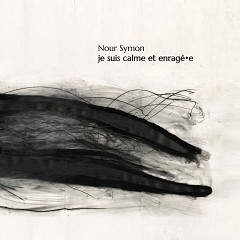
    After a solo album and two quartets, it’s time for a large line-up, here twelve to be exact, pieced together from two formations. There is, of course, also a composer, here inspired by some very contemporary poems. And it is impossible not to give the album credits. Je suis calme et enragé·e (I am calm and angry), is a transdisciplinary piece that begins with these exact words by Roxane Desjardins. This ambitious yet fragile project presents six sound paintings — visual music scores composed by Nour Symon — for six poems exploring positions of distress and malaise in response to History, the scale of humanity and looming environmental disasters.

    The wholly monumental, meta-opera work opens with a balanced but already quite expressive polyphony, underpinned by a low-kneed string narrative. Electronica reigns in the background, building tension, asking questions, occasionally inspiring. The dense, edgy storytelling, however, is not devoid of a note of mysterious reverie. The second movement is initially a kind of lazy muscle-stretching — the instrumental-vocal flow seems to flow a little higher. It quickly gains power and explodes with the force of a free-jazz orchestra. In the foreground, however, is the narrator, who distributes roles and enforces commitments with a firm voice. Things get definitively edgy in the third movement — shouts, instrumental salvos, broken, twisted rhythms, operatic highs and decadent lows.

    The beginning of the fourth poem is woven with instrumental trifles. Trumpet, flute and strings all have their roles here. A pack of churlish vocalists doesn’t appear until the fifth minute and begins to wreak considerable havoc. Here is the drunken crew on the side of a wave-swept ship starting quite a party. The whole thing resembles a well-predefined… free improvisation. The climax is as melodic and post-baroque as it is raspy and shrill. The fifth story is sometimes a prayer, sometimes a studied meditation, it oozes melody and filth. The narrator plays his or her important role willingly, although everyone here can shout, sing and feel the scent of a shared journey. The story effectively builds up and transforms into an almost freejazz pile-up. The beginning of the final poem is droning — vocal, stringed and underpinned by anxious harmonics. The story transforms rather quickly into an edgy, theatrical polyphony, remaining cooled in the instrumental layer, though steeped in mysterious rhythms. The rocking meditation eventually encounters a chorus of angry lunatics, refugees from a burning opera house. This vocal peak implies more activity on the part of the instrumentalists. The finale of this frenzied performance is free, expressive, played with a full ensemble, with voices that seem to cede the field to the instrumental sphere on the final straight.

    … wholly monumental… dense, edgy storytelling…
  • 2
  • 3
  • 4
  • 5
  • 6
  • 7
  • 8
  • 9
  • 10