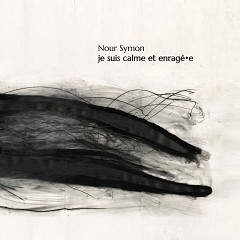
Je suis calme et enragé·e in Trybuna Muzyki Spontanicznej
After a solo album and two quartets, it’s time for a large line-up, here twelve to be exact, pieced together from two formations. There is, of course, also a composer, here inspired by some very contemporary poems. And it is impossible not to give the album credits.
The wholly monumental, meta-opera work opens with a balanced but already quite expressive polyphony, underpinned by a low-kneed string narrative. Electronica reigns in the background, building tension, asking questions, occasionally inspiring. The dense, edgy storytelling, however, is not devoid of a note of mysterious reverie. The second movement is initially a kind of lazy muscle-stretching — the instrumental-vocal flow seems to flow a little higher. It quickly gains power and explodes with the force of a free-jazz orchestra. In the foreground, however, is the narrator, who distributes roles and enforces commitments with a firm voice. Things get definitively edgy in the third movement — shouts, instrumental salvos, broken, twisted rhythms, operatic highs and decadent lows.
The beginning of the fourth poem is woven with instrumental trifles. Trumpet, flute and strings all have their roles here. A pack of churlish vocalists doesn’t appear until the fifth minute and begins to wreak considerable havoc. Here is the drunken crew on the side of a wave-swept ship starting quite a party. The whole thing resembles a well-predefined… free improvisation. The climax is as melodic and post-baroque as it is raspy and shrill. The fifth story is sometimes a prayer, sometimes a studied meditation, it oozes melody and filth. The narrator plays his or her important role willingly, although everyone here can shout, sing and feel the scent of a shared journey. The story effectively builds up and transforms into an almost freejazz pile-up. The beginning of the final poem is droning — vocal, stringed and underpinned by anxious harmonics. The story transforms rather quickly into an edgy, theatrical polyphony, remaining cooled in the instrumental layer, though steeped in mysterious rhythms. The rocking meditation eventually encounters a chorus of angry lunatics, refugees from a burning opera house. This vocal peak implies more activity on the part of the instrumentalists. The finale of this frenzied performance is free, expressive, played with a full ensemble, with voices that seem to cede the field to the instrumental sphere on the final straight.