Sauter au contenu principal
actuellecd

Blogue

4946 résultats
  • 811
  • 812
  • 813
  • 814
  • 815
  • 816
  • 817
  • 818
  • 819
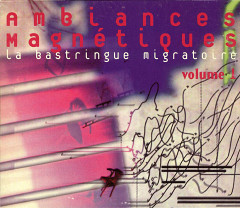
  • volume 1: La bastringue migratoire, Ambiances Magnétiques dans Voir

    «Disques», Nicolas Tittley, Voir, 11 juillet 1996
    jeudi 11 juillet 1996 Presse

    Ceux qui craignent encore de s’aventurer du côté de la musique actuelle n’ont plus d’excuses: avec la compilation La Bastringue migratoire, la bouillonnante étiquette Ambiances Magnétiques s’ouvre au monde. 60 minutes, c’est bien peu pour rendre compte de près d’une décennie de création éclatée, mais La Bastringue offre un survol passionnant. Du déconstructivisme sonore de Michel F Côté et de Diane Labrosse à l’expression jubilatoire du clarinettiste Robert Marcel Lepage, en passant par l’incontournable Trésor de la langue de René Lussier, l’une des œuvres québécoises les plus marquantes des dernières années, on y découvre les multipies facettes de cette musique dite actuelle. Avant tout, on rencontre une panoplie d’artistes animés d’un même désir: celui de créer une musique différente. 4/5

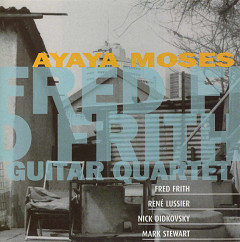
    Ayaya Moses dans AllMusic

    «Review», François Couture, AllMusic, 11 juin 1996
    mardi 11 juin 1996 Presse

    Ayaya Moses is the first CD by the Fred Frith Guitar Quartet. It was recorded in the studios of Radio-Canada in 1996 and captured the quartet at its early stage. The material found here can be split in three categories. First, there are pieces by outsider composers, the Italian Olivia Bignardi and the Québécois Claude Vivier. These contemporary pieces were re-arranged by the quartet and Vivier’s Pulau Dewata works particularly well, developing around a simple melodic structure into a very personal world. The second category is made of contributions from band members. Each guitarist brought one piece. Fred Frith’s Freedom Is Your Friends II is an excerpt from Freedom in Fragments, written for the ROVA Saxophone Quartet, while Nick Didkovsky’s She Closes Her Sister with Heavy Bones is taken from a larger piece for chamber orchestra. They both contrast with Mark Stewart’s textural Trummings. René Lussier’s Ayaya Moses is the strongest piece, written especially for this quartet and making use of all its possibilities. Finally there are a handful of short collective improvisations arranged in suites. More serious and industrious than its follow-up Upbeat, Ayaya Moses showcases four gifted avant-garde guitarists applying their talent to demanding compositions. Recommended.

    Ayaya Moses showcases four gifted avant-garde guitarists applying their talent to demanding compositions. Recommended.

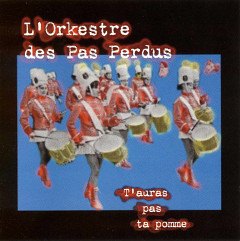
    T’auras pas ta pomme dans Hour

    «Spins», Jim Little, Hour, 1 juin 1996
    samedi 1 juin 1996 Presse

    L’Orkestre des pas perdus is a kind of alternative brass (and reeds) band led by trombonist Claude St-Jean, with Jean Sabourin (sousaphone), Ivanhoe Jolicoeur (trumpet and flugelhorn), Paul Richer (tenor sax), Jean-Denis Levasseur (alto sax and piccolo), and Remi Leclerc (drums). All the tunes are by St-Jean, mixing elements of New Orleans jazz, burlesque, musique actuelle, and humour. An example of the latst shows up on the back cover in the three squares that normally indicate whether the recording, mixing, and mastering were analogue (A) or digital (D). Here the code is OPP. Musical highlights include the truckin’ groove of Déménagement, and the olio furnishings of La salle des pas perdus. 3/5

    T’auras pas ta pomme dans AllMusic

    «Review», François Couture, AllMusic, 3 mai 1996
    vendredi 3 mai 1996 Presse

    L’Orkestre des Pas Perdus’ first CD was released in 1996 on Ambiances Magnétiques, a label devoted to avant-garde music. T’auras pas ta pomme (the phrase itself means very little, it is used as an onomatopoeic expression for a drum roll) presented a very original recipe. Leader Claude St-Jean, a trombone player, has succeeded in creating a new sound somewhere between fanfare marches, jazz-funk and avant-garde stylings. The instrumentation of trumpet, trombone, two saxophones, sousaphone and drums can pack a lot of energy into four-minute tunes. Most pieces follow the fanfare-funk trail and, to some extent, are interchangeable: a groovy beat, a tutti riff, horn cues and solos. The music gets close to Maneige on La marche à Marie B. thanks to a very pied-piperesque piccolo melody. Elements of dissonance and free improvisation are integrated into La salle des pas perdus, but T’auras pas ta pomme is mostly one hot lick after another. The last piece, Acide cirque, takes the band sound’s into circus music. L’Orkestre des Pas Perdus’ follow-up album Maison douce maison will be more accessible and focused than this one.

    Leader Claude St-Jean has succeeded in creating a new sound somewhere between fanfare marches, jazz-funk and avant-garde stylings.

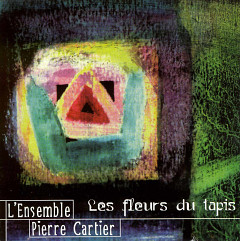
    Les fleurs du tapis dans AllMusic

    «Review», François Couture, AllMusic, 1 mai 1996
    mercredi 1 mai 1996 Presse

    Les Fleurs du Tapis is bassist Pierre Cartier’s first album for Ambiances Magnétiques, his third as a leader. Credited to the Pierre Cartier Ensemble, this is one of the jazziest items in the Montréal label’s catalogue. Cartier’s main influence is Thelonious Monk (with a bit of Mingus too) and it can be felt throughout the album, especially in the harmonies (lots of minor seconds). One must also understand his ensemble has the same line-up as the Monk-tribute trio Evidence (Pierre Tanguay on drums, Jean Derome on saxophone), with the addition of saxophonist Jean-Denis Levasseur. Cartier’s music leaves little place to free improvisation, but it is not rigid: it flows uncertainly, mainly because the bass always seem to be wandering between tonalities (something obvious in Tortue marine), but Tanguay’s drums never move far away from the beat. The traditional free jazz head-solo-head structure appears frequently. The dual voices of the saxophones constitute the main feature here, complementing each other, playing off each other. Cartier’s melodies are inhabited by soulful sensibilities when the mood is soft (the beautiful theme in Thème pour Maurice B.) and by the urgency of free jazz when the pace gets faster. But, not unlike the man himself, his music tends to be self-effacing. It doesn’t impose itself. His project Chansons de Douve is more ambitious and memorable.

  • 811
  • 812
  • 813
  • 814
  • 815
  • 816
  • 817
  • 818
  • 819