Sauter au contenu principal
actuellecd
  • This website is also available in English.

Blogue

4946 résultats
  • 188
  • 189
  • 190
  • 191
  • 192
  • 193
  • 194
  • 195
  • 196
  • Ensemble SuperMusique (ESM) dans Downtown Music Gallery

    «Victo 2012», Bruce Lee Gallanter, Downtown Music Gallery, 30 mai 2012
    mercredi 30 mai 2012 Presse

    Ensemble SuperMusique is/are an Ambiances Magnetiques all-star ensemble with ten members for this set, which featured longtime AM players like Jean Derome, Joan Hetu, Michael Cote, Danielle Roger and Martin Tetreault plus some young musicians like Alexandre St-Onge (el. bass) and Guido De Fabro (violin). The musicians sat in a semi-circle so that they could see each other and the music seemed as if it were directed by certain improv guidelines. The instrumentation included two reeds (Derome & Hetu, also on voice, two percussionists (Roger & Cote), cello, violin, electric keyboards or synth and turntables. Considering that there were ten musicians on stage, the music was often sparse yet focused. Much of the set reminded me of John Zorn’s early game pieces (which are also directed improv without someone directing up front), although the overall vibe was slower and more cautious. Ms. Hetu did some odd vocal sounds which always fit well within the framework on the piece. Since nothing was explained, there were a series of incidents that took place which we had to interpret for ourselves. Each musician took a turn sitting in the middle of the stage and drawing or putting info into a laptop which directed the next part of the piece. I especially like the way each percussionists added something distinctly different to the direction of the set. There was also a fine sax duo with two founding members of the AM label, Joan Hetu and Jean Derome, which was both charming and quirky. I spoke with a few audience members who were confused as to what was going on on-stage so it did take some effort to figure out how things worked. Fractured fairy tales, indeed.

    I especially like the way each percussionists added something distinctly different to the direction of the set.

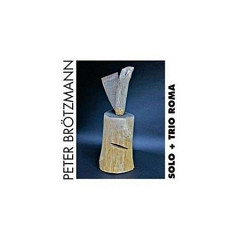
    Solo + Trio Roma dans Downtown Music Gallery

    «Review», Bruce Lee Gallanter, Downtown Music Gallery, 24 mai 2012
    jeudi 24 mai 2012 Presse

    Considering how long German free/jazz sax legend Peter Brötzmann has been playing professionally (more than forty years), Mr. Brötzmann was in amazing form in at least two festivals in 2011, Victo in May (2 concerts) and the Vision Fest in June (3 concerts). I caught all of these sets and was consistently blown away by each one.

    The solo set from the first of this new Victo disc features four pieces with Brötzmann on three different reed instruments (alto, B-flat clarinet & tenor). Solo recordings and performances by Brötz are relatively rare so this disc is a special treat. Like all Victo recordings, the sound here is excellent, clean, clear and powerful. Brötzmann makes each note count, focusing on certain phrases and even laying back for a couple more poignant sections. When Peter switches to clarinet for the second piece, his tone is completely distinctive like a voice that you recognize instantly of an old friend. Again, he often lays back and shows another side — thoughtful and contemplative at first before reaching for the stratosphere with wails, screams, effective bent notes and intense blasts. For the longest piece, Frames of Motion, Brötzmann switches back to his main horn, the tenor sax. This is where he digs in and shows his immense presence. Just plain incredible! Strangely enough he dips into the standard I Surrender Dear amongst his varied, unending explorations. The final piece is relatively short yet enchanting version of Ornette’s classic Lonely Woman. It is a perfect way to bring this superb solo offering to a grand close.

    The trio set was devastatingly great! An explosion of Euro electric free/jazz insanity! Nearly 70 minutes of blisterin’, over-the-top hurricane force volcanic eruption! This is one incredible, super-tight trio playing for all its worth. This was also one of those sets that anyone who was there will never forget. Turn it up and let it wail, wave after wave. Paal Nilsson-Love who remains one of most creative drummers alive was in especially fine form — his playing was riveting and I couldn’t take my eyes off him. Massimo Pupillo from the Italian jazz/punk band ZU is also a force to be reckoned with on electric bass. It sounds as if Peter Brötzmann’s head is about to explode! Jeez, could it get any more intense!?! I don’t think so. This is one of the most throttling sets I’ve heard in a long while so watch out, it is not for the timid. Great googely moogely and holy shit!

    This is one of the most throttling sets I’ve heard in a long while so watch out, it is not for the timid. Great googely moogely and holy shit!

    Érick d’Orion dans La Presse

    «Festival de Victoriaville: ni croissance ni déclin», Alain Brunet, La Presse, 21 mai 2012
    lundi 21 mai 2012 Presse

    […] Érick d’Orion, commissaire aux installations sonores, un concept mis de l’avant au FIMAV depuis trois ans s’est montré fier de leur impact auprès des résidants des Bois-Francs. «Nous avons observé que les gens étaient curieux de ces installations qu’ils fréquentaient par hasard au cours des années précédentes. Ils se les approprient, ce qui augure bien pour les années à venir.»

    … les gens étaient curieux de ces installations…

    Jean René dans Monsieur Délire

    «Journal du FIMAV 2012: Jean René, «Le Blastographe»», François Couture, Monsieur Délire, 19 mai 2012
    samedi 19 mai 2012 Presse

    De la grande musique actuelle québécoise d’hier (des pièces de Lussier, Derome et Guilbeault) et d’aujourd’hui (les compos originales de Jean René). Fantaisie, humour, tendresse, jeu d’ensemble. Un très beau projet qui mérite d’endisquer deux fois plutôt qu’une: un disque de compos originales et un disque de reprises. Qui se propose?

    Un très beau projet qui mérite d’endisquer deux fois plutôt qu’une: un disque de compos originales et un disque de reprises. Qui se propose?

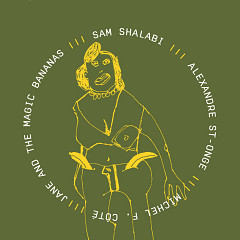
    Jane and The Magic Bananas dans Altremusiche

    «Recensione», Michele Coralli, Altremusiche, 18 mai 2012
    vendredi 18 mai 2012 Presse

    Musica sghemba per un trio dinocolato basso/chitarra/batteria, che per un’abbondante mezz’ora divaga senza possibili direzioni all’interno di un mondo sonoro abbastanza chiuso e claustrofobico. I tre negano dinamiche, fraseggi, strutture e disegni ritmico-melodici. C’è un continuo ripiegarsi su se stessi attorno a pseudo-pattern apparentemente casuali, che prendono il volo come un uccello chiuso in una stanza, le cui traiettorie rimbalzano da un punto all’altro senza conclusione. La chitarra di Sam Shalabi, sorda e monocromatica, è forse la maggior responsabile di questo “impaccio” linguistico. Da parte sua anche il basso di Alexandre St-Onge, cupo e azzerato nella determinazione di altezze facilmente identificabili, dà il suo contributo all’ottusità del panorama. Forse è proprio Michel F Côté a dare profondità di campo attraverso un drumming sempre molto ricercato, a-virtuosistico e per questo decisamente puntuale e azzeccato.

    Jane and the Magic Bananas è una buona metafora sonora della realtà di oggi, chiusa in se stessa da competenze così straordinarie, da risultare inutili. Certamente competenze che non vengono messe in campo, ma nemmeno evocate. Il groviglio di suoni che conduce direttamente a uno sgabuzzino sembra un nuovo messaggio Fluxus, lanciato per dire a chi può entrare in contatto con questa musica che in certi momenti si può abbandonare tutto, per cercare davvero il senso del perché facciamo arte o del perché non possiamo farne a meno.

    Quatuor Bozzini dans Gramophone

    «What’s cooking in The Composer’s Kitchen?», Kate Molleson, Gramophone, 10 mai 2012
    jeudi 10 mai 2012 Presse

    Take the Bozzini Quartet, add six young composers, season with two mentors and stir it all together in Montréal for a tantalising menu of contemporary music-making.

    The premise is simple enough: six young composers spend two weeks in April bouncing ideas off each other, a couple of mentors and a string quartet, first in Montréal, then in Yorkshire. The end goal is a showcase at the Huddersfield Contemporary Music Festival in November. Other groups run other similarly intensive composition workshops, so what makes the Composer’s Kitchen particularly worth writing about?

    Probably it’s the ethos of the thing. Billed as ‘a combination of laboratory, playground and masterclass’, the project is hosted annually by one of Montréal’s more industrious and open-minded new music ensembles, the Bozzini Quartet. They’re clearly skilled adjudicators, too, because the six composers (two Brits, four Canadians) selected from 60-odd applicants turned out to be an unusually down-to-earth, musically diverse and genial bunch.

    A few days into the Montréal week, composer and CK mentor Christopher Fox confided his epiphany to this effect: ‘I used to teach at Darmstadt’s summer school where students would soon enough kill each other if it meant they’d win the final prize,’ he said. ‘Here there’s no hint of competition. Everyone’s piece gets showcased in the final concert, and because they’re all coming from different musical backgrounds they seem happy to pitch in with constructive feedback on each other’s work. Actually, they all seem to genuinely like each other. Bloody brilliant.’ For his part, Fox’s ‘mentoring’ looked a hoot; more reciprocal enthusiasm than teacher-to-student pronouncement.

    Some of the composers turned up with pieces that were nearly finished and mostly needed logistical help tweaking details of notation to make the parts playable. Thierry Tidrow brought a score of dense and convoluted microtones that took the Bozzinis — some of the best sight-readers in the business — dozens of attempts to navigate. They patiently explained the pros and cons of various common symbols, while Fox’s fellow mentor Malcolm Goldstein, veteran improviser of the New York avant-garde, just shook his head. ‘Ultimately the composer’s responsibility is to communicate his intentions with absolute clarity,’ he sighed, and pulled out a pile of Morton Feldman scores to demonstrate.

    Other participants arrived with nothing more than words and the genesis of an idea, and it was these who stirred up the real depths of debate as the week went on. What’s the point of writing down music? Where does a composer’s obligation end? What potential can be drawn from raw open strings and the harmonics of subtle tuning? John Lely produced a single sheet of spare four-part chords, which the group tugged apart for hours. Lovely stuff.

    Composers, mentors and Bozzinis members now have six months to gestate before reuniting for Part II. Huddersfield’s director Graham McKenzie cites the Composer’s Kitchen as a prime example of how the festival should invest in incubating new work. I’m looking forward to the final results in November.

    Take the Bozzini Quartet, add six young composers, season with two mentors and stir it all together in Montréal for a tantalising menu of contemporary music-making.
  • 188
  • 189
  • 190
  • 191
  • 192
  • 193
  • 194
  • 195
  • 196