Sauter au contenu principal
actuellecd
  • This website is also available in English.

Blogue

4946 résultats
  • 180
  • 181
  • 182
  • 183
  • 184
  • 185
  • 186
  • 187
  • 188
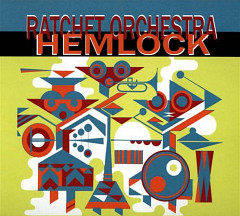
  • Hemlock dans Free Jazz Blog

    «Big(ger) Band Free Jazz: Ratchet Orchestra & Sonic Liberation Front», Paul Acquaro, Free Jazz Blog, 15 novembre 2012
    jeudi 15 novembre 2012 Presse

    I thoroughly enjoy orchestral music, big bands, symphonic adventures and daring arrangements, but I sometimes wonder, how do you pull off balancing writing and arranging with the spontaneity and subtle interactions found in smaller ensembles?

    To present an entirely non-scientific and inconclusive answer, I offer two case studies, the 30 piece Ratchet Orchestra from Montréal and the sprawling Sonic Liberation Front from Philadelphia.

    According to a short bio, Canada’s Ratchet Orchestra leader Nicolas Caloia has for over 20 years, “worked at creating a contemporary music generated by using accurately composed textures to channel collective improvisation.”

    If the guitar break about a quarter of the way into Dusty can be used as illustration, Caloia succeeds astoundingly well. From a prickly drip of melodic snippets to a full on skronk, joined by other woodwind voices, to some classic Fender Rhodes comping, the delicate orchestration that kick off the album (Winnow) give way to a full bodied group improvization. This is followed by the thoroughly composed and orchestrated snippet Yield, which is kind of fun light classical-pastiche. And so on through different approaches and styles, like Wish-Part 1 which is a avant-fusiony gem. While my attention drifted a tad towards the end, the closing Hemlock — part 2 snapped me back to attention.

    There is a great deal of variety on Hemlock. It is thoughtfully constructed and there are moments of inspiration and spontaneity throughout. […]

    So, do I answer my original question? Honestly, I’m not sure. Elements of composition and free playing are approached here in two very different ways, from the quiet sonic constructions of Hemlock to the Afro-Cuban stylistics of Jetway Confidential, all I can definitively say is that there is indeed a lot of room under the free jazz tent and the music is fantastic.

    … all I can definitively say is that there is indeed a lot of room under the free jazz tent and the music is fantastic.

    Hemlock dans Monsieur Délire

    «Journal d’écoute», François Couture, Monsieur Délire, 7 novembre 2012
    mercredi 7 novembre 2012 Presse

    Enfin, le disque du Ratchet Orchestra qui donne la pleine mesure de l’ensemble. Enregistré sur trois jours à l’Hotel2Tango, juste avant la prestation du groupe au FIMAV 2011, Hemlock propose un répertoire solide et maîtrisé. Trente musiciens s’attaquent ainsi aux compositions du contrebassiste et chef Nicolas Caloia. Oui, trente, et un instrumentarium purement big-band — la seule électricité en présence étant celle de deux guitares électriques. Et c’est presque tout le Montréal créatif qui participe: Jean Derome, Lori Freedman, Damien Nisenson, Gordon Allen, Tom Walsh, Joshua Zubot, Guido del Fabbro, Jean René, Sam Shalabi, Guillaume Dostaler, John Heward — et j’en passe plusieurs. Très heureux de voir Caloia et son ensemble avoir enfin droit au disque qu’ils méritent.

    Enfin, le disque du Ratchet Orchestra qui donne la pleine mesure de l’ensemble.

    Hemlock dans Discorder

    «Review», James Olson, Discorder, 1 novembre 2012
    jeudi 1 novembre 2012 Presse

    Ratchet Orchestra’s latest release Hemlock, like its namesake, can be difficult to ingest. This Montréal based collective of over 30 musicians present the listener with a fascinating yet puzzling set of free form orchestra jazz numbers. Recorded by Godspeed You! Black Emperor bassist Thierry Amar and produced by Nicolas Caloia, Ratchet Orchestra blends a variety of incongruent musical elements together with mixed results as a listening experience.

    Winnow eases the listener into the album with its dreamy introduction, punctuated by a pair of masterfully executed saxophone and trombone solos respectively. This slowing burning cut is easily one of the most sonically relaxed of the album. The arrival of a jarring string movement is the track’s only moment of unease. Ratchet Orchestra generally come off stronger on their shorter compositions, particularly on Yield, which bounces along in a stately manner on a rhythm infusing both elements of swing and waltz.

    The longer, more improvisational selections from Hemlock will likely be the sticking point for many listeners in terms of appreciating this album as a complete experience. The loose arrangements on tracks like Dusty and Safety highlight different sections of the orchestra and to showcase the undeniably impressive musical talent at play here. What gets lost in translation is a sense of purpose. At their best, these free form sound experiments can be mystifying in their absurdity. At their worst, these tracks can sound aimless, meandering, and unnecessarily cacophonous.

    Hemlock is an interesting listen to be sure. There’s enough going on to keep one attentive to all the different instruments, moods, and rhythms at play here. Its indulgences do add up after a while, resulting in a somewhat uneven album as a whole. It’s not everyone’s cup of tea, but it can be said that Ratchet Orchestra are definitely stretching and playing with the boundaries and taboos of jazz and orchestrated music.

    … it can be said that Ratchet Orchestra are definitely stretching and playing with the boundaries and taboos of jazz and orchestrated music.

    Jane and The Magic Bananas dans Le son du grisli

    «Improvisations expéditives», Luc Bouquet, Le son du grisli, 1 novembre 2012
    jeudi 1 novembre 2012 Presse

    Précepte cher à Glenn Branca, le petit jeu consistant à passer d’un apparent chaos à une transe évolutive, se retrouve plusieurs fois appliqué ici. Nous dirons donc que la guitare électrique de Sam Shalabi, la guitare basse d’Alexandre St-Onge et la batterie amplifiée de Michel F Côté œuvrent dans l’hypnotique et le dérèglement. Sachant s’échapper de la masse pour mieux faire bloc, nos trois sidérurgistes donnent aux sévices soniques quelques vives médailles: pièces courtes et déplumées, travaillant sur les micro-intervalles, souvent déphasées et grouillantes, elles prennent source dans la dissonance même. En ce sens, habitant un profond aven, impriment la douleur dans la chair d’une musique sauvage à souhait.

    Sachant s’échapper de la masse pour mieux faire bloc, nos trois sidérurgistes donnent aux sévices soniques quelques vives médailles…
  • 180
  • 181
  • 182
  • 183
  • 184
  • 185
  • 186
  • 187
  • 188