Sauter au contenu principal
actuellecd
  • This website is also available in English.

Blogue

4946 résultats
  • 98
  • 99
  • 100
  • 101
  • 102
  • 103
  • 104
  • 105
  • 106
  • Torche! dans Touching Extremes

    «Review», Massimo Ricci, Touching Extremes, 31 janvier 2018
    mercredi 31 janvier 2018 Presse

    Nowadays, our stance against the vestiges of lowercase improvisation is less rigid than before. Especially because many of its practitioners have eventually understood that the theoretical fecundity of that ground has been nullified by a large number of incompetent locusts. As a result, abundant doses of whoosh-clink-and-sputter apathy have conclusively annihilated whatever good intention there was on this side of the speakers.

    Therefore it is nice to collect enlivening signals from a quintet like this, still trying to assign a degree of gravity to the manœuvres occurring in the noisier interstices of (relative) quietness. Two types of clarinet, trumpet, percussion and electric bass would be sufficient to raise serious mayhem; however — although a few rambunctious entities do materialize every once in a while over eight tracks — these musicians mostly spark off a vivacious sub-ebullience whose sympathetic consequences involve more the skull than the ears.

    When there is focus to begin with, no secondary attachments are necessary: the sounds truly speak for themselves. Lonesome asymmetries are enhanced by contrapuntal spurts halfway through neo-serialism and animalist devolution. Gauzy timbres and barely intuitable silhouettes evolve smoothly into frolicsome stridency. The devitalizing lameness of a damp nihility — in earlier times mandatory to get additional coverage by currently vanished specialists — has been replaced by the willingness to affirm that the present day improviser refuses to (let the audience) die (of boredom), and — provided that conditions and partners are right — is also capable of inducing legitimate curiosity in a curmudgeon who was not expecting anything phenomenal.

    A fine acoustic commentary for damaged illusions, a restrained concreteness with sporadic hints to tight-lipped irony. It may take several spins prior to realizing how efficient this music is. Sometimes it is better to furnish those vibrating molecules with a stronger propeller.

    It may take several spins prior to realizing how efficient this music is.

    Torche! dans The WholeNote

    «Review», Stuart Broomer, The WholeNote, no 23:5, 30 janvier 2018
    mardi 30 janvier 2018 Presse

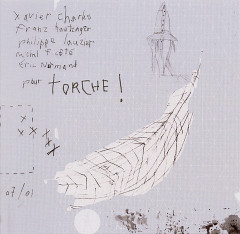
    Bandleader, electric bassist and organizer Éric Normand has become a central figure in Canadian improvised music, working from his unlikely base in Rimouski, Quebec to develop a large ensemble, a local festival and regular programs of international visitors, activities that have led to international touring for his ensemble GGRIL. Torche! comes from a 2016 quintet tour in which Normand was joined by Montréal-based drummer Michel F Côté and bass clarinetist Philippe Lauzier along with two distinguished European visitors, French clarinetist Xavier Charles and German trumpeter Franz Hautzinger.

    On paper that instrumentation might look like a jazz group, even a free jazz group, but the methodology is very different, with close listening the only directive, and the music’s evolution timbral and textural rather than linear. Wind instruments are sometimes played with oscillator-like evenness, even when they’re exploring complex multiphonics; the unfolding layers of sound can suggest an insect-dense forest or the compound sonic ambience of fluorescent lights, varied electronic appliances and of one’s own internal processes.

    Individual instrumental voices disappear into the collective whole, so that one is less aware of personalities, more involved in the movement of sound. The music feels orchestral rather than like a collection of individual voices, collective purpose creating work that is as profoundly selfless as it is involving. It’s a highly evolved art, with the five musicians here shaping eight taut improvisations that are remarkably free of meanderings or those empty moments of merely getting acquainted.

    It’s a highly evolved art…

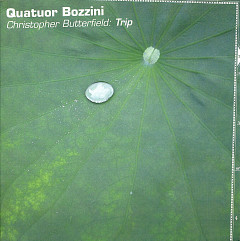
    Christopher Butterfield: Trip dans Percorsi Musicali

    «Review», Daniel Barbiero, Percorsi Musicali, 30 janvier 2018
    mardi 30 janvier 2018 Presse

    Over the course of its three centuries’ long existence, the string quartet has shown itself to be a highly resilient medium well-adaptable to changing developments in music. Traditionally weighted toward the contrapuntal, the string quartet in contemporary hands is equally effective in presenting texturally — or timbrally-oriented work, as shown in fine recent recordings of compositions by Scott Wollschleger, Lewis Nielson and Richard Karpen, among many others. But it also serves as an apt vehicle for composers concerned with questions of alternative architectures and pre-compositional structures. With Trip, their latest recording, Montréal’s Quatuor Bozzini present this latter side of the string quartet and its derivatives at the present moment.

    Founded a few years before the turn of the century by sisters Isabelle and Stéphanie Bozzini, cellist and violinist respectively, the Quatuor Bozzini — originally called the Quatuor Euterpe — began with a focus on the traditional string quartet repertoire. Violinist Clemens Merkel joined the ensemble in 1999 and has been with it ever since; the remaining violin chair has been filled at various times by Geneviève Beaudry, Nadia Francavilla, Erik Carlson, Mira Benjamin, and most recently, Alissa Cheung. Along with changes in personnel, the quartet’s artistic direction shifted to modern and contemporary music.

    Trip is a collection of work for string quartet, sextet, and solo cello and violin by Canadian composer Christopher Butterfield (b. 1952). Butterfield, who is director of the University of Victoria School of Music, comes from a musical family, his brothers Paul and Benjamin both being classical tenors, the former a conductor as well. His own artistic background is eclectic though reflective of the times in which he grew up — when young he was a chorister for the King’s College Choir in the UK, and later was a performance artist and a rock guitarist. He has expressed an interest in treating composition as a kind of “puzzle” whose realized form derives from the operation of rules or analogous pre-compositional structures; several of the pieces on Trip fit that description. Much of his work has been created for chamber ensembles, dance and multimedia environments and, with the late librettist John Bentley Mays, includes Zurich 1916, an opera premised on the chance meeting, in Zurich’s Cabaret Voltaire, of Dadaists Hugo Ball and Emmy Hennings and exiled Russian revolutionary V.N. Lenin.

    One of the works included in Trip, in fact, draws on music taken from Zurich 1916’s chorale. This is Lullaby, a string sextet composed in 1991. Butterfield sets the lullaby — a simple melody gently rocking back and forth — within a frame of drones, glistening harmonics and silences. In the closing section, the piece turns to a repeated and strangely vertiginous ascending motif made all the more affecting by the performers’ restrained urgency. The quartet, supplemented by violist Jennifer Thiessen and the fine Baroque / early music cellist Elinor Frey, bring out an understated but real richness in the piece.

    The quartet fall (2013), written for the Quatuor Bozzini, is a work both aleatory and serial. The pitch material consists of the four-note row AABA which Butterfield then subjected to chromatic rotations and randomly-generated dynamics. For most of its length the piece floats on long tones overlapping into dissonant chords; the emergent minor-second harmonies, made even more astringent by the quartet’s eschewing of vibrato, in places recall John Cage’s 1950 string quartet, which Quatuor Bozzini in fact recently recorded. Another aleatory piece, 1999’s Clinamen for solo violin, is a composition made up of 80 cards, each of which containing a brief phrase, to be played in the performer’s order of preference. As realized here by Merkel, the piece is an essay in unpredictability and immersion in the moment, in that no single event foreshadows anything that follows, and no subsequent event explains any that preceded it. Nor does any need to. Instead, there is a concatenation of short, independent and non-accumulating events separated by silences and differing from each other in pitch, phrasing, mood and tempo.

    The recording’s title track, a quartet composed in 2008 for the ensemble, is an asymmetrical work of three short movements followed by a much longer closing movement. The piece opens with a polyphonic flourish playing out against a background wash of talk radio, followed by a driving, rhythmically dense second movement and a third movement that breaks the individual voices out into arco and pizzicato lines. The final movement is a reflective adagio of long, suspenseful harmonies sporadically scuffed by rough timbres.

    In the closing section, the piece turns to a repeated and strangely vertiginous ascending motif made all the more affecting by the performers’ restrained urgency. The quartet, supplemented by violist Jennifer Thiessen and the fine Baroque / early music cellist Elinor Frey, bring out an understated but real richness in the piece

    Political Ritual dans Stray Landings

    «Review», George McVicar, Stray Landings, 23 janvier 2018
    mardi 23 janvier 2018 Presse

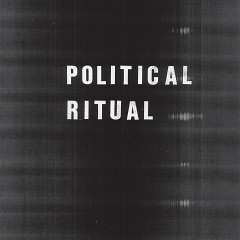
    Maxime Corbeil-Perron and Félix-Antoine Morin have released an intriguing new 12” with Ambiances Magnétiques: Political Ritual. The record presents two 20-minute pieces that work more like ‘sound sculptures’ than songs. They take as their subject the detritus of sound, the unwanted buzzes and resonances of technology. On Political Ritual, these sounds move out of the corners and rubbish bins and into plain sight. You are made to confront sound as it really is: caked in surface noise and sonic debris.

    Political Ritual is a record of two halves. The first, ‘Cérémonie’, judders like a truck over bumpy terrain. There are moments of what sounds like hyper-engineered studio-production trickery. But in fact, many of these are from acoustic sources, like cellos and organs played in unorthodox styles. There is even the introduction of “a wedding harmonium bought from an old man in an Indian village”.

    The unanswered questions left by ‘Cérémonie’ are concluded by the record’s second half:Projection cathodique’. Here, elements of traditional ‘musicality’ creep in, like the bassline that broods over the piece. The ‘politics’ of Political Ritual remain somewhat unclear, but its ambiguity is addictive.

    The ‘politics’ of Political Ritual remain somewhat unclear, but its ambiguity is addictive.

    Political Ritual dans Voir

    «Critique», Réjean Beaucage, Voir, 22 janvier 2018
    lundi 22 janvier 2018 Presse

    Duo formé des électroacousticiens montréalais Félix-Antoine Morin et Maxime Corbeil-Perron, Political Ritual crée des ambiances dont il est peut-être préférable de faire l’expérience en concert, à moins d’avoir des voisins compréhensifs… C’est une musique dense, qui se développe par couches, en construisant des espaces gigantesques, et, comme le disent ses concepteurs: «La seule cause qui importe est celle de mettre le volume à fond». Évidemment, ils ne sont pas les premiers à faire cette recommandation, mais leur musique, toute en textures et large comme un paquebot, bénéficie que l’on porte attention à ce détail. Conçu dans une période «de deuil, d’abus de substances [et] d’inquiétudes géopolitiques», le résultat est assez noir, comme le vinyle qui le supporte.

    C’est une musique dense, qui se développe par couches, en construisant des espaces gigantesques…
  • 98
  • 99
  • 100
  • 101
  • 102
  • 103
  • 104
  • 105
  • 106