actuellecd

Blog

4946 results
  • 200
  • 201
  • 202
  • 203
  • 204
  • 205
  • 206
  • 207
  • 208
  • Filature in Monsieur Délire

    “Listening Diary”, François Couture, Monsieur Délire, November 22, 2011
    Tuesday, November 22, 2011 Press

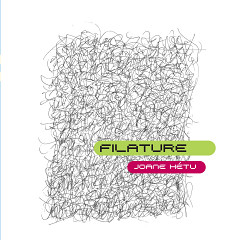
    It took five years for Filature to transit from stage to record. Meanwhile, Joane Hétu’s sound theatre has evolved toward much more stripped-down forms. On the path that has led Hétu from Musique d’hiver to La Femme territoire, Filature represents a turning point, a crossroads where her past, present and future approaches have met. The piece integrates text, dance, and video art (the last two aspects are missing on the CD) — a path on which she would later travel much further — but it is based on the artist’s past life as a weaver. The text tells this experience, an experience that also provides the very structure of the work: Chaîne, a first movement performed only by the men (Fabbro, Derome, Guilbeault, Tanguay, Venba); Trame, a second movement performed by the women (Auclair, Gignac, Hétu, Labrosse, Roger); and Motif, a movement performed by all. The male component is metrical, repetitive, grounded; the female component is aerial, creative, whimsical; the final movement combines it all — and seems to bring together all of Hétu’s background, from Wondeur Brass and Justine to Nous perçons les oreilles, by way of Musique d’hiver. A dense, synthetic work, though still accessible and showing its rock-in-opposition roots.

    A dense, synthetic work, though still accessible and showing its rock-in-opposition roots.

    Lieux imaginés in Le Devoir

    “Critique”, Yves Bernard, Le Devoir, November 18, 2011
    Friday, November 18, 2011 Press

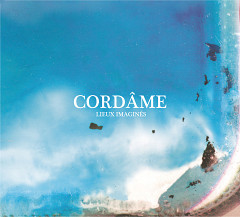
    Après avoir fait paraître deux disques avec des invités, les membres de ce trio à cordes reviennent à l’essence de leurs compositions: une musique livrée avec contrebasse, violon, violoncelle, grande sensibilité et lyrisme, à la croisée du jazz, du classique et des musiques du monde, mais qui n’est ni l’un ni l’autre. Dans plusieurs pièces, le leader Jean-François Mailloux transmet son impression de villes qu’il n’a pas visitées. Vancouver révèle sa douceur avant son intensité. Madrid dévoile le déchirement rythmique au bout des doigts. Madagascar est plus sautillante; Kisarazu, plus orientale; Buenos Aires, passionnée mais adoucie; Santiago, doucement nostalgique; Veracruz, calme et non frénétique; Riga, en respiration lente. Ainsi va la vie imaginée. Preuve que les tableaux sonores n’ont pas besoin d’être des portraits réalistes. Et les rêveries de Cordâme sont très enveloppantes.

    Ainsi va la vie imaginée. Preuve que les tableaux sonores n’ont pas besoin d’être des portraits réalistes. Et les rêveries de Cordâme sont très enveloppantes.

    La Formule Xyz in The Squid’s Ear

    “Heard In”, Wyman Brantley, The Squid’s Ear, November 15, 2011
    Tuesday, November 15, 2011 Press

    Musicians who let drones do most of the talking for them might learn a thing a two from Martel, Tetrault, and Lauzier. Complex drone washes can be beautiful in themselves, to be sure. But developments in the shape of the sound — the “composition,” for lack of a better term — in drone musics can be glacial at best. The listener can ironically feel almost coerced to enter that hypnotic state that best lends itself to enjoying steady drones.

    The pieces on La formule XYZ perhaps highlight a strategic element that may seem missing when you are in the mood for something more engaging: the use of figure/ground contrasts. What do I mean by this? Listen to track one x= (R) z, for example. A sound complex is established at the beginning of the piece and it is held pretty much static throughout, making it function as a drone. At the beginning, this drone is the “figure,” the main voice of the piece. However, as the piece advances, other sound events and sound complexes occur “on top of” this drone. As they happen, they momentarily become figure, and the static elements serve as ground. Later, though, the original drone also returns as figure occasionally, as the other sound events stop or otherwise lose our attention. Through this use of figural interplay, the drones tend to retain their effectiveness and attraction as musical events. Their ability to capture our interest is continually recycled and renewed.

    Mind you, this is noisy stuff. Consider the instrumentation: Pierre-Yves Martel: feedback, static; Martin Tetrault: pick-up, equalizer; Philippe Lauzier: soprano saxophone, bass clarinet, prepared amplifier.

    This should give readers some indication of the sense of the term “drones” used above. The tones and timbres here can be quite saw-toothed. This is post-industrial music, to be sure. Yet, on the harshness continuum, the aesthetic is much closer to your Nakamuras than your Merzbows.

    Aside from this group’s effectiveness as an ensemble, it really should be noted how well they work as an electroacoustic ensemble specifically. Track four (sparing you its Braxtonian title) is a great example. While Lauzier uses a purely acoustic instrument, soprano saxophone, the piece retains the machine-like aesthetic of the more electronically voiced tracks. Part of this is surely due to Lauzier’s playing (and his magnificent amplified bass clarinet on track six is a stand-out aspect of this recording). But it is also testament to the solid studio skills of those involved in making this disk: the balance of the three musicians is perfect throughout. The mix is upfront with minimal processing, providing a level of detail that suits this trio best.

    the balance of the three musicians is perfect throughout

    Jean Derome in Downbeat

    “Review”, John Murph, Downbeat, November 14, 2011
    Monday, November 14, 2011 Press

    At Largo — the festival’s unofficial headquarters in the city’s Saint-Roch downtown district — multi-reedist Jean Derome paid homage to Strayhorn with an energetic performance that alluded to Lovano’s formative years in Cleveland. Derome focused on the alto saxophone but showed equal wherewithal on the baritone saxophone and bass flute. He fronted an extremely agile band — pianist François Bourassa, bassist Normand Guilbeault and drummer Pierre Tanguay — who brought their restive urgency to the forefront. Much of the performance’s delight came from Derome’s devil-may-care flair and finesse with Strayhorn’s material. While the sets didn’t rely upon unnecessary whimsy, the musicians brought inventive vigor to warhorses like Take The ‘A’ Train and Passion Flower. Occasionally, Derome shared the front line with vocalist Karen Young, who evoked Billie Holiday with the improvisational guile of Betty Carter. She meshed and contrasted deftly with Derome’s vinegary timbres on the saxophones and flutes, hitting high points on poignant readings of Strange Feeling, Imagine My Frustrations, Something To Live For and an encore performance of Lush Life. […]

    Like many Québécois jazz musicians, Derome and L’Orchestre d’Hommes are shamefully under-recorded, but such unforgettable performances will have festival attendees returning to Quebec to encounter other rare treasures.

    Like many Québécois jazz musicians, Derome and L’Orchestre d’Hommes are shamefully under-recorded, but such unforgettable performances will have festival attendees returning to Quebec to encounter other rare treasures.

    Birds Abide in Le son du grisli

    “Disques”, Luc Bouquet, Le son du grisli, November 7, 2011
    Monday, November 7, 2011 Press

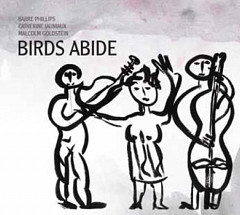
    À Victoriaville, le 22 mai de l’année dernière, Barre Phillips, Catherine Jauniaux et Malcolm Goldstein avaient jugé utile de n’être qu’eux-mêmes et rien qu’eux-mêmes.

    Sur scène, les voici donc investis, sourds aux distractions extérieures et sensibles aux sollicitations de chacun. Oui, unis et liés par cet art du délestement qu’ils n’ont plus à prouver mais à maintenir et à renouveler (ne change rien pour que tout soit différent disait tonton JLG dans ses Histoire (s) du cinéma). Alors, ils partagent, se rebellent, se suivent, s’opposent sans se disperser.

    Les histoires amorcées par Catherine Jauniaux avortent ou sont rendues incompréhensibles par le phrasé fissuré de la chanteuse. Qu’importe: le tableau a déjà changé de teinte. Maintenant, ils tressent et détressent, rompent ou entretiennent l’unisson. Parfois, d’une mélopée incertaine surgissent les traces d’un chant ancestral. Parfois, le violon est maître alors que la contrebasse n’est que d’accompagnement ou de soulagement. Mais toujours d’écoute. Parfois duo, presque toujours trio. En résumé: poignant.
    En résumé: poignant.
  • 200
  • 201
  • 202
  • 203
  • 204
  • 205
  • 206
  • 207
  • 208