actuellecd
  • This website is also available in English.

Blog

4946 results
  • 176
  • 177
  • 178
  • 179
  • 180
  • 181
  • 182
  • 183
  • 184
  • Bruit court-circuit in Downtown Music Gallery

    “Review”, Bruce Lee Gallanter, Downtown Music Gallery, January 25, 2013
    Friday, January 25, 2013 Press

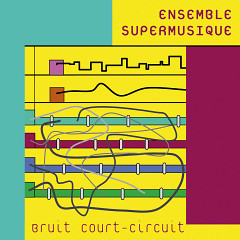
    I’ve caught this ensemble live on several occasions and have always dug them since they have figured out a way to improvise based on certain internal directions. For this disc, five of the nine members have contributed pieces. The opening piece, Tétreault’s Malgre tout Face A, begins with a moderate-paced repeating rock beat with a variety of sounds interspersed. Snippets of spoken word French, turntable samples and strings are woven together. SM has layers of record or radio static (synth?) and strings being selectively manipulated into a mesmerizing swirl of colors. Occasionally a disembodied voice will float through, half sung, half spoken but haunting nonetheless. These pieces don’t sound written although they do sound as if someone is directing since the changes in direction are so tight. What some of this reminds me of is a Zorn game piece from way back when (the eighties) although it is just as focused, it is not as quick cutting. Fascinating either way you look or listen to it.

    Fascinating either way you look or listen to it

    La femme territoire ou 21 fragments d’humus in Downtown Music Gallery

    “Review”, Bruce Lee Gallanter, Downtown Music Gallery, January 25, 2013
    Friday, January 25, 2013 Press

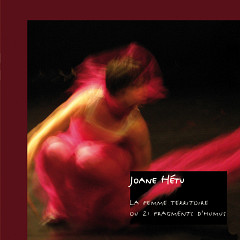
    For the past decade, Ms. Hétu has been involved in a series of thematic works, each one different yet somehow related. The pictures in the 36-page booklet inside the CD show what looks like a serious operatic work involving musicians and dancers. Each of the 21 short pieces on this disc involves a text which is printed in the booklet in French. Most of the texts were written by Ms. Hétu with others taken from Shakespeare, Anton Chekov, Constantin Cavafy and Sophie Calle. Since my French is rudimentary at best, I can’t tell what most of the texts are about. Since Ms. Hétu uses minimal instruments here (melodica, flute, accordion, sax & percussion), most of the sounds come from objects and voices. Still, the overall sound is most impressive, stirring, serious, focused and most often fascinating. There are a few layers of voices used minimally and selectively as well as objects like poured water, toys, dolls, a whistle, bells, a wine glass, assorted unseen percussives and things that we don’t know without bring listed. Even without knowing what the words mean, I was still knocked out by the way this entire disc unfolds and evolves. My feeling is that Ms. Hétu is working towards creating an effective contemporary opera. If she ever gets the funding, she will no doubt be successful at illustrating a wonderful French-language production worthy of serious consideration. Perhaps we will be lucky enough to see and hear it staged at the New York City Opera House. Stranger things have happened.

    … the overall sound is most impressive, stirring, serious, focused and most often fascinating

    Wow! in Downtown Music Gallery

    “Review”, Bruce Lee Gallanter, Downtown Music Gallery, January 25, 2013
    Friday, January 25, 2013 Press

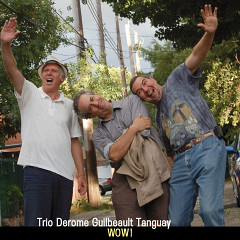
    Trio Derome Guilbeault Tanguay is a longtime working trio featuring Jean Derome on alto & bar sax & flute, Normand Guilbeault on contrabass and Pierre Tanguay on drums. I’ve always had a soft spot for this trio since they do jazz standards, with equal amounts of reverence and humor. For this, their fifth disc on the AM label, they cover songs by Earl Hines, Lennie Tristano & Eric Dolphy as well as a few originals by Mr. Derome. Starting with an Earl Hines song called You Can Depend on Me, which features Mr. Derome on bari sax with a warm, charming tone. This song interpolates into Lennie Tristano’s Wow which works quite well. Tristano tunes are often quirky and challenging and incorporate elements of bebop. The next piece is also a Tristano song called, Dreams. This tune soars and swings like the finest of any bop songs, the trio is in fine form here. Québécois drummer Pierre Tanguay is an under-appreciated master and his playing here and throughout is consistently inspired and uplifting. He takes a couple of solos here which are riveting, extending the melody with his ever-sympathetic drumming. Mr. Derome is featured on flute on his own La Danse de Raphaelle. Derome is also an exceptional flutist and is completely enchanting on this slow-burning gem, his solo one of the best flute solos I’ve heard in recent memory. On Mes Enfants the bari sax and bowed bass shadow each other perfectly, creating lush, enchanting harmonies. The very first jazz album I bought (in 1972) was a 2-LP reissue of Eric Dolphy’s Outward Bound and Out There. It completely blew my mind and it changed my life. The trio cover one of the gems from that album, The Baron and do an amazing job! No easy feat with Derome’s alto swinging hard, it makes me smile just to hear that familiar riff once more. Although Derome penned Palestine, it does sound like a standard. His tone and playing on the bari sax is exemplary, touching and beyond belief. This disc ends with a rather charming version of a silly old standard called, The Best Things in Life are Free, which Mr. Derome sings on. Corny but cute and a nice way to bring this entire affair to a humble close. The cover features a humorous picture of the Trio smiling like naughty children on a sunny day outside. Fun for all parties involved.

    Fun for all parties involved

    Wow! in Voir

    “Critique”, Stanley Péan, Voir, January 10, 2013
    Thursday, January 10, 2013 Press

    Après deux albums et un DVD en concert, l’iconoclaste trio nous revient avec cet opus réunissant trois thèmes originaux du saxophoniste Jean Derome (notamment l’envoûtant Palestine, tellement à propos ces jours-ci), un emprunt au répertoire de Broadway (The Best Things in Life Are Free) relu avec inventivité, mais sans irrévérence, ainsi que des clins d’œil à Lennie Tristano et Éric Dolphy (superbe pièce The Baron, dédiée au mentor du contrebassiste Normand Guilbeault, l’immortel Charles Mingus). Nourri par l’indispensable pulsation rythmique du batteur Pierre Tanguay, l’ensemble déploie sur ces canevas ses audaces, sa bonne humeur et sa créativité habituelles. Petite formation certes, mais grands musiciens. Jubilatoire, vraiment.

    Petite formation certes, mais grands musiciens. Jubilatoire, vraiment.

    Teoria dell’elasticità di Girolamo Papariello in The Squid’s Ear

    “Heard in”, Kurt Gottschalk, The Squid’s Ear, January 10, 2013
    Thursday, January 10, 2013 Press

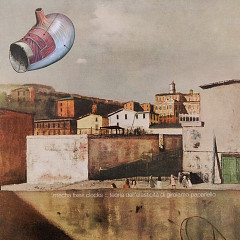
    The intriguingly named Mecha Fixes Clocks is an ongoing project of the Montréal percussionist Michel F Côté. It’s a sort of pseudonym, cleverly sharing initials with the composer, and a bit of an explosion of personality, taking a seemingly very introverted approach to music-making and exploding it onto sometimes as many as a dozen performers. And it is, maybe, a sort of methodology, a working process that has been suggested by the composer as a repair shop with musicians as mechanics working to patch up a century already in disrepair. It’s a big job and, for that matter, a pretty huge clock.

    From the challenging and ever-changing groups Bruire and Klaxon Gueule to his own evocative works (see Flat fourgonnette (Mescal Free Style), his fascinating take on American song), Côté has excelled at soundscape-with-subtext, and the Mecha Fixes Clocks records might be his most strangely expressive yet. Teoria dell’elasticità di Girolamo Papariello, the third Mecha disc, was recorded live in studio in 2010 and then mixed and constructed by Côté. Consistent yet irregular rhythms run through the seven tracks and backing drones that seem electronic but may be provided by the small string section adhere the improvising instruments, which are allowed to play free jazz at times but never to dominate. At other moments, the strings rise into a proper quartet against the softly banging buzzing of an upright bass. Of course any of those could also be the turntables of Martin Tétrault, so deftly set in the mix as to become a virtual trompe l’oreille.

    Côté also has a knack for drawing from different areas of Montréal’s music scene, and this 11-piece assembly of Mecha Fixes Clocks includes Lori Freedman and Philippe Lauzier on bass clarinets, Elwood Epps on trumpet, Josh Zubot and Jean René on strings, Alexandre St-Onge on contrabass and Bernard Falaise on electric guitar. It’s a deep and woody band, never quite fired up, certainly never uptempo, and yet always moving forward, like a clock, perhaps, viewed under a microscope.

    It’s a deep and woody band, never quite fired up, certainly never uptempo, and yet always moving forward, like a clock, perhaps, viewed under a microscope.
    Victoriaville mai 2011 in Voir

    “Disques”, Réjean Beaucage, Voir, January 10, 2013
    Thursday, January 10, 2013 Press

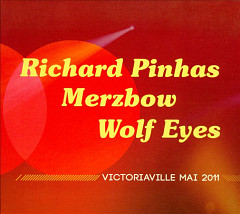
    Ça a été l’un des concerts les plus costauds, sur le plan sonore, auxquels j’ai pu assister au Festival international de musique actuelle de Victoriaville. Le genre qui s’écoute avec des bouchons, quitte à perdre quelques fréquences. La guitare de Richard Pinhas était complètement noyée dans le mix, et même le tonitruant Merzbow semblait disparaître sous la déferlante du trio Wolf Eyes. Hé bien, la magie du disque remet tous ces éléments à leur place; on entend du sax, de la guitare et même de la voix entre les nappes de sons transistorisés qui s’entremêlent avec pas mal plus de subtilité que la tonne de briques reçue en concert. Le développement de cette musique improvisée est nettement plus dynamique ici et ce noise s’écoute fort bien.

    Ça a été l’un des concerts les plus costauds, sur le plan sonore, auxquels j’ai pu assister au Festival international de musique actuelle de Victoriaville.
  • 176
  • 177
  • 178
  • 179
  • 180
  • 181
  • 182
  • 183
  • 184