actuellecd

Blog

4946 results
  • 96
  • 97
  • 98
  • 99
  • 100
  • 101
  • 102
  • 103
  • 104
  • Boule-spiel in The WholeNote

    “Review”, Ken Waxman, The WholeNote, March 1, 2018
    Thursday, March 1, 2018 Press

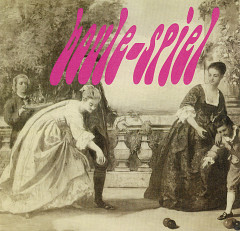
    An enthralling sonic landscape encompassing mercurial harshness, unexpected contours and cultivated accents, Boule Spiel is an affirmation of the textural cooperation among German pianist Magda Mayas and two Québécois musicians, electric bassist Éric Normand of Rimouski, where the session was recorded, and Montréal viola da gamba player Pierre-Yves Martel. Those instruments, along with “feedback, snare drum, objects and speaker” are the only sound-makers listed. But the minimalist tones which blend to create this two-track journey, including keening whistles, string plucks, bell peals, percussive thumps, feedback flutters and oscillated hums, not only make individual attribution unlikely, but at the same time highlight the constant unexpected shifts within the understated unrolling sequences.

    Emphasizing atmosphere over narrative or instrumental virtuosity, the trio’s blended output, especially on the more-than-30-minute introductory Lancer, contains enough processed drones, electric bass stops, keyboard patterning and inner-piano-string plucks to vary the aural scenery enough to create a sense of harmonic and rhythmic progress, but without jarring interludes. By the time the concluding Spiegelbildauflösung or “mirror image resolution” fades away, the three confirm how carefully each can reflect the others’ cerebral improvisations. An enlightened sound journey has been reflected and completed, but the details of what transpired individually are impossible to accurately analyze.

    An enlightened sound journey…

    Les porteuses d’Ô in Musicworks

    “Recording”, Stuart Broomer, Musicworks, March 1, 2018
    Thursday, March 1, 2018 Press

    In its first twenty years under founders Danielle Palardy Roger and Joane Hétu, Montréal’s Ensemble SuperMusique has established itself as Canada’s most broadly exploratory midsize ensemble (here numbering thirteen), investigating and combining contemporary composition, graphic notation, and collective improvisation. Les porteuses d’Ô presents interpretations of three recent graphic scores, each of which has strongly programmatic content and challenges the ensemble in different ways.

    Roger’s En arrivant par le nuage de Oort (2014—15) is a graphic score that resembles conventional notation, creating an ambiguous ground for the members of the ensemble. The work describes a cosmic journey from the Oort Cloud — the ring of comets orbiting the sun at the outer edges of the solar system — to the sun itself. It’s a journey from darkness to absolute light, marked by rising pitch and volume, accelerating events, and an expansion of orchestral colour that grows in intensity throughout its thirteen-minute duration. It’s a singular, initially gradual movement, but the passage through space is marked by sudden flashes of brilliance.

    Hétu’s Préoccupant, c’est préoccupant (2015—17) the CD’s centrepiece, is inspired by “various concerns that can insidiously interfere in our lives.” There are four concerns here, two with multiple forms: falling from high (including effervescence and fainting), states (coup d’états and states of mind), bitter oranges (an inspired list of expired foods, among them putrid steak and rancid nuts: the items are called out throughout the work’s duration), and the “tone of your voice.” The musicians follow a sequence of words, drawings and colours, and the piece teems with high spirits, good humour and explosive invention, highlighted by a duet between Hétu (voice) and Jean Derome (alto saxophone).

    B.C. composer Lisa Cay Miller’s Water Carrier (2017), is inspired by issues of water rights in Canada and uses mixed materials, including graphic scoring (a checkerboard), standard rhythmic notation, and free improvisation. No detailed programmatic concordance to the work is supplied, but it abounds in unusual textures, including a full-ensemble passage in which Ensemble SuperMusique’s horns and rhythm section sound like a traditional jazz big band, while the strings play contrasting parts from the vocabulary of European high modernism. Other unlikely textures include the opening passage in which grinding, discordant, bowed strings give way to episodic, liquid intrusions from Bernard Falaise’s guitar amid consonant pizzicato passages.

    Each of these highly inventive, heterodox works gains immensely from the Ensemble’s precision and improvisatory skills, making the most of these pieces whatever their specific demands.

    Each of these highly inventive, heterodox works gains immensely from the Ensemble’s precision and improvisatory skills, making the most of these pieces whatever their specific demands.

    Polychrome in Bandcamp Daily

    “Best of Bandcamp Contemporary Classical: February 2018”, Peter Margasak, Bandcamp Daily, February 26, 2018
    Monday, February 26, 2018 Press

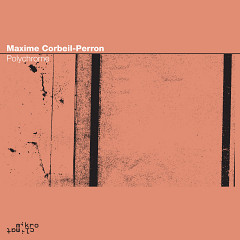
    Montréal composer and sound artist Maxime Corbeil-Perron — who also works extensively with moving images — delivers two instinctive works on this richly nuanced album, one fully composed, the other improvised (but with a rigor that might suggest he’d written everything). Cubic is an acousmatic piece— a purely electronic work that can only be presented through loudspeakers, rather than actively performed — and it draws upon samples from old vinyl records as raw sound objects, although he lassoed surface noise rather than actual music, and while it embraces techno roots, this work eschews any easy stylistic tag. Corbeil-Perron crafts a dynamic series of events and elements — tiny squiggles, quasi-orchestral swells that conjure deep space, and violent sound flashes — to create an almost filmic journey. The seven movements of Polychrome were improvised during a residency at Signal Culture in Oswego, New York, and it’s tough to determine the provenance of the fast-moving vignettes with a more austere design than the opening piece, but they’re no less exciting and physical.

    Corbeil-Perron crafts a dynamic series of events and elements — tiny squiggles, quasi-orchestral swells that conjure deep space, and violent sound flashes — to create an almost filmic journey.

    Multi.Cosmes in Avant Scena

    “Review”, Avant Scena, February 24, 2018
    Saturday, February 24, 2018 Press

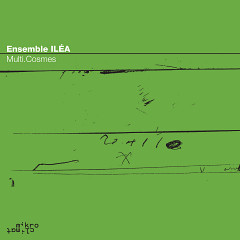
    The compositions by this ensemble are the free improvisations — free structures, wide range of playing expressions, scales, patterns, harmonies and instrumentation decisions, are masterfully used and combined in one place. each musician has original playing style — creative improvising, free and spontaneous solos, sudden stylistic twists and turns, wide range of different expressions and moods — all these elements form the main basic of each musicians improvising. the improvisations of each musician are full of masterful styles combinations, virtuosic solos, emotional and expressive free improvisations, harsh, sharp and specific electronic music sounds and other elements. musicians masterfully combine together their own and unique sound and get all the different melodies together in one place.

    This album music is based on free improvisation. Various acoustic instruments and electronics are gently combined together in one place. The sound of this album is dynamic and variable — free and spontaneous collective improvisations are based on many different music styles and expressions, have rich and bright musical language. The synthesis between acoustic and electronic and electroacoustic instruments form the big contrast between different episodes. Soft, warm and expressive clarinet, saxophones, bass clarinet and flute solos, emotional and passionate strings (viola, double bass), dynamic harp melodies, memorable and energetic percussion sounds — all these elements form the rich, independent and solid basic ogf acoustic instruments. The wide range of different playing techniques are used here — from traditional and very well-known playing techniques to experimental and innovative ways of playing — musicians are able to connect and fuse together all these elements. Different timbres, strange noises, weird sounds and other illustrative and effective elements of the melodic background effect all the melodic pattern. The electronic music section is absolutely different from the acoustics. It’s full of strange, dark, harsh and depressive timbres, original and inventive musical decisions, unknown and extraordinary sounds, abstract and short melodic elements, special effects and various modern and innovative playing techniques. The sound of these two absolutely different types of music is combined in one place in this album. Soft, warm and expressive reeds solos, subtle, passionate and virtuosic flutes, dramatic strings, dynamic and effective double bass, colorful and energetic percussion section is based on free jazz elements and collective improvisations. It’s impossible to predict, what’s gona be next — this music is full of sudden turns and twists, is formed and based on spontaneous solos and innovative musical experiments. Live, energetic, warm and memorable sound of acoustic instruments is combined together with electronics, which also bring to the compositions academic music elements. Electronic and electroacoustic music, academic avant-garde jazz and other various styles of contemporary academical music are heard in these compositions. Ekectronic music episodes are also based on free structure and various electronic music playing techniques — field recordings, tape records, computer and electronic devices sounds, sonic system experiments, sonoristic music and many other playing techniques are combined together with experimental and new ways of playing. This wide range of acoustic and electronics, different playing techniques, manners, sounds and moods, masterful and creative improvising and playing, bright, organic, effective and innovative musical language bring original and interesting sound of this album.

    This wide range of acoustic and electronics, different playing techniques, manners, sounds and moods, masterful and creative improvising and playing, bright, organic, effective and innovative musical language bring original and interesting sound of this album.
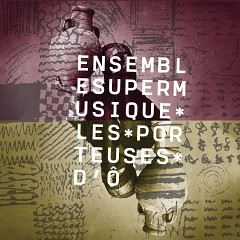
    Les porteuses d’Ô in Le canal auditif

    “Critique”, Philippe Desjardins, Le canal auditif, February 21, 2018
    Wednesday, February 21, 2018 Press

    L’Ensemble SuperMusique est une formation active depuis une vingtaine d’années dans le milieu des musiques actuelle et improvisée. Une des particularités de cette formation est qu’elle est dirigée par les compositeurs/instrumentistes directement, selon les œuvres au programme. Dans ce contexte, leur nouvel album, Les Porteuses d’Ô (2017), ne fait pas vraiment suite à Jeux de Pistes (2016), et propose plutôt trois nouvelles compositions de Danielle Palardy Roger, Joane Hétu et Lisa Cay Miller; dont le thème met en scène des femmes (porteuses d’eau) qui alimentent le courant musical. L’album propose donc trois compositions jouées à partir de partitions graphiques (comparativement à des partitions écrites) qui mélangent savamment l’interprétation et l’improvisation pour créer trois grandes scènes sonores uniques en leur genre.

    En arrivant par le nuage de Oort (Roger, 2014-15), commence sur un crépitement étouffé et quelques coups discrets de cymbales. Les souffles imitent une sorte de fournaise et participe à une trame atmosphérique épaissie par des bruits de combustion. Le passage arythmique mène à un pont plus calme formé de frottements de cordes joués en itérations, comme des moteurs d’embarcations auxquels les cuivres ajoutent des klaxons de différentes grandeurs. La partie rythmique revient à l’avant comme une pluie d’impacts dans la salle des machines, et laisse ensuite l’espace à un dernier passage dissonant, voire strident, qui siffle comme des bouilloires jusqu’à une fin abrupte.

    Le roulement de tambour de Préoccupant, c’est préoccupant (Hétu, 2015-17) ouvre sur un ton circassien, les cordes simulant des acrobaties dans les hautes pendant que les percussions et «canard-qui-fait-squeak» mènent à la partie théâtrale, durant laquelle une voix clame comme prise sur une embarcation au milieu de la mer. La scène évolue davantage avec des segments plus denses et percussifs et une performance vocale dont le niveau de folie fait penser à une aile psychiatrique. Les acrobaties musicales sont surprenantes et leur virtuosité rappelle une forme de «mickey-mousing» avec tous les événements sonores virevoltant dans la pièce.

    Les cordes miment des portes en bois qui grincent sur Water Carrier (Miller, 2017), la guitare et la basse établissent en parallèle une discussion entrecoupée de coups de pic et de pizzicatos. Tout s’arrête pour laisser le segment suivant prendre place, d’une façon un peu décousue d’abord, mais ça se clarifie à partir des interactions entre les instruments. Une autre pause brève mène ensuite à un segment jazz très bien rythmé, approfondi dans les basses avec les cordes et accentué par moment aux cuivres. Le mouvement suivant est bien plus ramolli avec une atmosphère dramatique, presque souffrante et fiévreuse. Le rythme reprend progressivement pour finir sur un dernier segment de musique de chambre.

    Il y a une dimension théâtrale à ce nouvel album qui donne l’impression que les instrumentistes sont des comédiens et qu’une partie de la mise en scène leur appartient. On reconnaît des inspirations provenant de la musique bruitiste et des dessins animés en noir et blanc, deux éléments qui se combinent parfaitement avec l’improvisation. En ce sens, Les Porteuses d’Ô garde les oreilles captivées à travers les trois pièces, renouvelant l’anticipation un son à la fois.

    Les Porteuses d’Ô garde les oreilles captivées à travers les trois pièces, renouvelant l’anticipation un son à la fois.
  • 96
  • 97
  • 98
  • 99
  • 100
  • 101
  • 102
  • 103
  • 104