Sauter au contenu principal
actuellecd

Blogue

66 résultats
  • 3
  • 4
  • 5
  • 6
  • 7
  • 8
  • 9
  • 10
  • 11
  • Je suis calme et enragé·e dans PAN M 360

    «Critique», Frédéric Cardin, PAN M 360, 17 mars 2025
    lundi 24 mars 2025 Presse

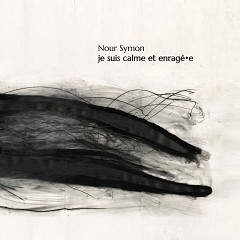
    Je suis calme et enragé•e de l’égypto-québécoise Nour Symon est une plongée dans l’étrangeté. Une étrangeté musicale portée par une partition presque bruitiste, faite de vocalisations infernales et de plages sonores acides, électro et acoustiques, qui soutient la déclamation souvent très intense de textes poétiques expressionnistes signés Roxane Desjardins. Le résultat s’affirme comme une manifestation existentielle de présence au monde, inspirée initialement du Printemps érable de 2012, moment de «genèse du projet», selon Symon. Des échos de Diamanda Galas sont perceptibles dans cette œuvre exigeante et déroutante.

    Nour Symon est assurément une voix musicale parmi les plus audacieuses du Québec contemporain, une de celles qui osent aller le plus loin. Sa langue créative est une décharge sans compromis à l’encontre du pépèrisme ambiant.

    Le genre de musique qui fait malheureusement fuir les médias de masse traditionnels, et qui rend ceux comme PanM 360 si indispensables.

    Nour Symon est assurément une voix musicale parmi les plus audacieuses du Québec contemporain…

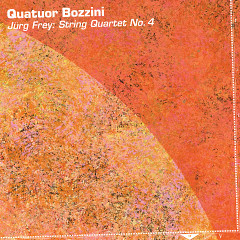
    Jürg Frey: String Quartet No. 4 dans Bandcamp Daily

    «Review», George Grella, Bandcamp Daily, 10 mars 2025
    mardi 11 mars 2025 Presse

    The instruments and sounds that seem at first to not fit into the Wandelweiser world come from strings—a bowed note held continuously until the musician can no longer perform the stroke. Yet Frey has written marvelous string quartet music that contrasts the inherent delicacy of silence with careful, concentrated string playing. The great Bozzini Quartet has recorded all of his string quartet pieces so far, this colorful, fiercely quiet performance being the most recent.

    Frey has written marvelous string quartet music that contrasts the inherent delicacy of silence with careful, concentrated string playing. The great Bozzini Quartet has recorded all of his string quartet pieces so far…

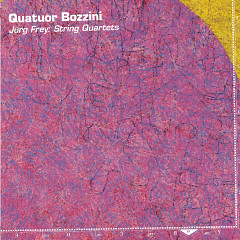
    Jürg Frey: String Quartets dans Sonograma Magazine

    «Crítica», Josep Bosch, Sonograma Magazine, 28 février 2025
    mercredi 5 mars 2025 Presse

    Amb el suport d’Actuellecd, un recurs inestimable en la música nova i d’avantguarda, que treballa, entre d’altres, amb DAME-Music, un segell discogràfic amb seu a Montréal, Canada.

    El disc, que forma part de la Collection QB, recull quatre obres per a quartet de corda de Jurg Frëy.

    El llançament de l’àlbum String Quartets commemora el 25è aniversari del Quatuor Bozzini, de manera que el públic pot conèixer una part essencial de la seva eclèctica discografia. Es tracta de la reedició d’un enregistrament llegendari produït originalment per Editions Wandelweiser el 2006.

    El compositor suís Jurg Frëy és poc conegut al nostre país. La seva música és lenta, reflexiva, amb cops d’arc llargs realitzats amb un so expressiu que dona coherència a tot el cos de la producció musical de Frëy.

    En la peça central, Streichquartett, el quartet fa sonar uns repetitius intervals cromàtics descendents sotmesos a una llarga cadena d’acords lents que generen harmònics; un sol tema, el mig to, que els quatre instruments omplen de sonoritat amb molta lentitud. Són insistents els pizzicatos, intercalats amb notes llargues repetitives.

    El segon quartet està precedit per altres obres més breus. El díptic Zwei allerletze Sächelchen —Mailied i Vorbei— crida l’atenció per la seva delicada brevetat. Són moviments sorprenents perquè cadascun d’ells dura escassament un minut. Dues idees, dos instants.

    El Quatuor Bozzini ofereix una visió moderada del cromatisme suau i insistent, una construcció harmònica innovada per Morton Feldman en els seus darrers anys.

    El Quartet de cordes núm. 2 és més ombrívol i les tècniques interpretatives del Quatuor Bozzini són meticuloses, lúcides i perfeccionistes: cada so és tota una experiència. Són músics amb una gran experiència que transmeten a l’oient una immersió completa en la música de Jurg Frëy.

    El seu rigorós ofici, que cerca la qualitat per damunt de tot, els ha convertit en un dels conjunts de cambra de música d’avantguarda més importants de l’actualitat.

    … les techniques d’interprétation du Quatuor Bozzini sont méticuleuses, lucides et perfectionnistes: chaque pièce est une expérience en soi.

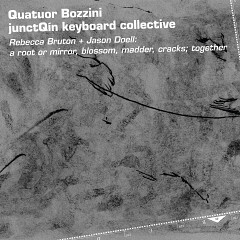
    Rebecca Bruton + Jason Doell: a root or mirror, blossom, madder, cracks; together dans Free Jazz Blog

    «Review», Nick Ostrum, Free Jazz Blog, 13 février 2025
    vendredi 14 février 2025 Presse

    Quatuor Bozzini, a string quartet featuring Alissa Cheung, Clemens Merkel, and siblings Stéphanie and Isabelle Bozzini, have been at the forefront of Canada’s new music scene for over two-and-a-half decades, now. Here, they are joined by the junctQín keyboard collective, a somewhat younger but well established and distinguished piano trio — that’s three pianos — consisting of Stephanie Chua, Joseph Ferretti, and Elaine Lau in a series of realizations of composer Rebecca Buton’s Faerie Ribbon and Jason Deoll’s to carry dust & breaks through the body. These and the album title, a root or mirror, blossom, madder, cracks; together, are evocative, but in their opacity and undefined suggestiveness. And maybe that is a fitting way to lead into the review proper. The music is suggestively enigmatic.

    Burton’s The Fairie Ribbon consists of four parts of glittery, romantic music that borders on the hymnic. At the same time — and maybe linked to that religious idea of calm, sacred space — it evokes an uneven saunter through a forest pathway with strings enveloping birdsongs just well enough to add an impressionistic mystery. As with any proper forest tale, it plays with light and dark, sometimes seeming more foreboding than carefree. (Leo Orenstein comes to mind in this blend of elements.) Long pauses separate the sections within each part, of which there are four. These mark transitions and escalations, but also mimic the detours and distractions of a light hike, where one stops to view a vista here, or a strange, colorful bird in a tree there, or an odd outcropping one may or may not want to risk exploring. After a quick glance, one returns to their thoughts, meandering along with the hiker’s uncertain path. The listener’s mind and attention is set wandering in a similar fashion, until, in the final part, the piece climaxes in a majestic moment of clarity.

    The second half, loosely speaking, of a root or mirror consists of a realization of a composition from Jason Doell. This one is somewhat darker than The Fairie Ribbon and relies on long doubled tones and slow progressions to achieve a sort of grandiosity. Slow melodies waft around a couple central dramatic leitmotifs. The melodies, meticulously excavated from what could otherwise have been a morass of chords, are heavy and plodding, almost menacing in their unison. But the piece shows its real power in the persistence of the drones, the heavy key strikes, the constant loop back to the foundational melody, the anticipation those elements engender. To carry dust is a strong piece, more linear than the itinerant Fairie Ribbon.

    In this release, we see two related but diverging faces of the many-sided dice of contemporary composition, inspired by various strands of the postwar new music, but avoiding the stark minimalist or cacophonist extremes. Composers Burton and Deoll are not alone in this pursuit, of course. However, they pursue it with a rare degree of skill and confidence. As do the Bozzini and junctiQin ensembles.

    The music is suggestively enigmatic.
  • 3
  • 4
  • 5
  • 6
  • 7
  • 8
  • 9
  • 10
  • 11