Sauter au contenu principal
actuellecd

Blogue

88 résultats
  • 1
  • 2
  • 3
  • 4
  • 5
  • 6
  • 7
  • 8
  • 9
  • Plus de Snipettes!! dans The WholeNote

    «Review», Ken Waxman, The WholeNote, 30 mai 2019
    jeudi 6 juin 2019 Presse

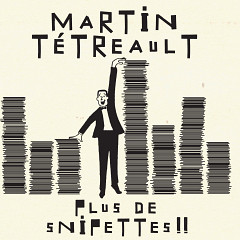
    While electronics are now accepted as instruments, some musicians have accelerated the search for innovative sounds further, creating programs from collages of already existing material. For instance, Martin Tétreault’s Plus de Snipettes!!, is a sprawling 77-minute program in which the Montréaler constructs a wholly original recital from audio cassettes, tape reels, short-wave static, radio soundchecks and excerpts of untouched or cut-up vinyl. With each of the 31 [!] tracks lasting from about seven seconds to around seven minutes, the collages captivate with sheer audacity. Entertaining while sometimes making sardonic comments, this homage and burlesque of recorded sound is satire mixed with love. Not adverse to snipping French or English narrations from educational or instructional discs to foreshadow subsequent noises, Tétreault’s mashups are free of cant. Snippets of a Varèse or Boulez composition are slotted next to a flute improvisation, a snatch of disco sounds or a piano picking out Polly Wolly Doodle. Crunching noises created by train movement can fuse into a drum instruction record and then the flanges of backwards-running tape. At point his manipulations make succinct inferences, as when Dave Holland’s bass solo on Emerald Tears is juxtaposed with the sounds of a man crying. Other times connection leads to spoof, as when a ponderous lecturer’s voice outlining a complex phrase with the word “basis” in it is cut to become “bass” and later “mace” and repeated numerous times, becoming an electronic-dance rhythm in the process. Manipulations in speed and pitch turn juxtaposition of Sidney Bechet’s soprano saxophone and a Dixieland drum solo into frantic microtones. And if that isn’t enough, Tétreault creates abstract sound collages by cutting several LPs into many sections, gluing together the parts and recording the results so that a chorus of Soviet military singers fades into jazz piano chording and unknown speechifying, with the entire exercise surmounted by the crackles from divided and sutured vinyl.

    Entertaining while sometimes making sardonic comments, this homage and burlesque of recorded sound is satire mixed with love…

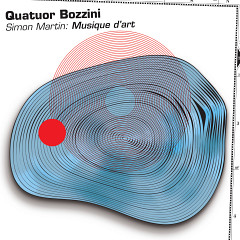
    Simon Martin: Musique d’art dans Mes enceintes font défaut

    «Critique», William Paulhus, Mes enceintes font défaut, 3 juin 2019
    mardi 4 juin 2019 Presse

    Ça y est, le Suoni Per Il Popolo s’entame officiellement demain à Montréal et il s’étendra jusqu’au 23 juin prochain. Afin de réellement débuter notre couverture de ce très éclectique événement, nous croyons qu’une sortie à l’extérieur de notre ligne éditoriale s’impose pour refléter la richesse de la programmation qui nous est offerte. C’est en vous présentant la plus récente parution du Quatuor Bozzini que nous espérons vous donner l’envie d’assister aux premiers jours du festival. La raison derrière cette sélection est bien simple, nous avons adoré l’écoute de leur album Phill Niblock: Baobab paru en début d’année et avons très hâte de les voir à l’œuvre lors de la semaine de lancement du Suoni. Même si ce que nous analyserons dans les prochaines lignes ne correspond pas à ce qui sera reproduit sur scène, nous espérons vous mettre l’eau à la bouche et surtout piquer votre curiosité.

    Avec cette ambitieuse création du compositeur Simon Martin, l’imprévisibilité et la fragilité du son jongleront avec votre perception. Très confrontant par moments, le quatuor est particulièrement fascinant sur Musique d’art pour quintette à cordes: B. Cette fresque auditive de haute voltige nous chavire aux quatre coins de notre corps, jouant avec notre confort, tiraillant nos méninges. La suite nous propose une certaine forme d’accalmie, se voulant toutefois inquiétante et sournoise. Les sonorités virevoltent avec méfiance dans la pièce, s’appropriant instantanément le lieu d’écoute. Nous faisons face à un album absorbant qui nous attrape dans sa toile et nous observe sans empressement. Cette musique vivante est empreinte d’un trait incontestablement dramatique, penchant plutôt vers le cauchemar que le rêve inoffensif. La dernière composition en est le parfait exemple avec ses pulsions rythmiques déroutantes. Musique d’art est une escapade sonore intransigeante, défiant son public à plonger au plus profond de lui-même.

    Si l’écoute de cette pépite vous a aussi chaviré que moi, alors n’hésitez aucunement à répéter l’expérience les 4 et 5 juin prochain dans le cadre du festival. Vous aurez l’opportunité de voir le Quatuor Bozzini collaborer avec la talentueuse Andrea Young lors de la soirée d’ouverture et de les voir présenter la composition Agréable, désagréable, neutre d’André Cormier le lendemain.

    Cette fresque auditive de haute voltige nous chavire aux quatre coins de notre corps, jouant avec notre confort, tiraillant nos méninges. Musique d’art est une escapade sonore intransigeante, défiant son public à plonger au plus profond de lui-même.

    Mistpouffers dans The Wire

    «Review», Emily Pothast, The Wire, no 425, 1 juillet 2019
    mardi 4 juin 2019 Presse
    A dreamscape documentary emerges from this assemblage of human voices, recordings of wildlife and geophysical events, instrumental ornamentation and studio enhancements.

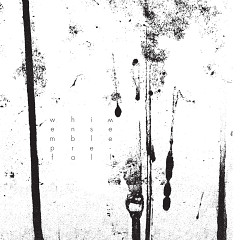
    Pre-Fall dans Vital

    «Review», Dolf Mulder, Vital, no 1185, 27 mai 2019
    mercredi 29 mai 2019 Presse

    Whim Ensemble is Ofer Pelz (prepared piano, percussion) and Preston Beebe (percussion). Both are new to me. Beebe is a composer and percussionist with a strong interest in using technology, live as well in the studio. Preston studied composition, electronic music, and percussion at several institutes. For example from 2014-2015, he studied at Ircam and composed a work for baritone saxophone & electronics, performed in the Centre G. Pompidou in Paris. As a duo, they debuted in 2016 with a release for the Montréal-based Kohlenstoff label. The music keeps the middle between improvised and modern composed music and moves within abstract territories. They have a very varied sound palette to their disposal, using prepared piano and a variety of percussive objects and gadgets. Some of their improvisations are very intense and dramatic, like the opening one Four Zero, that sounded like an abstracted version of a Morricone-theme. In other improvisations, I missed however something. Lovely sounds, but a bit too much sounds only, missing an idea, focus or direction. Just dwelling around. But in contrast, there are also some dazzling perspectives opened up by them. The rich sound spectrum built from scraping and percussive sounds, lead up fascinating timbres and textures full of details.

    … fascinating timbres and textures full of details.

    How Does This Happen? dans Vital

    «Review», Dolf Mulder, Vital, no 1185, 27 mai 2019
    mercredi 29 mai 2019 Presse

    Not The Music is a duo of bassist Eric Norman and bass clarinettist Philippe Lauzier, both Montréal-based musicians. English saxophonist John Butcher joined them for concerts in Ottawa and Montréal. First five improvisations — En conséquence — were recorded live on April 27th 2018 in Ottawa. The second set of five improvisations — par interruption — were recorded live on April 26th in Montréal. Lauzier is a composer, improviser, instrumentalist (clarinet & saxophone) and sound artist. Normand is likewise working on many fronts as a composer, improviser, bassist, instrument designer, composer, songwriter, singer and record and concert producer. Earlier the duo released an album for Tour de Bras. Here in the company of John Butcher, they give way to very concentrated set with a lot happening. All three of them are experienced improvisers, each one with its distinctive style and technique. They interact and communicate with full force and concentration, although sounding sometimes a bit hesitant and modest. Strongly focused they demonstrate a concentrated interaction with sometimes diverging sometimes-converging manœuvres of emotional impact. Often repetition of motives and gestures is an important strategy of building up tension and drama. Excellent work.

    Excellent work.

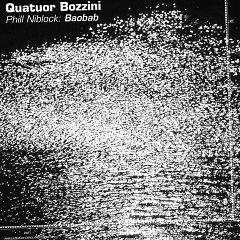
    Phill Niblock: Baobab dans Free Jazz Blog

    «Review», Nick Ostrum, Free Jazz Blog, 15 mai 2019
    mardi 21 mai 2019 Presse

    The Canadian ensemble Quatuor Bozzini are really something special. I only recently came across them on Cassandra Miller’s Just So, which I loved. A quick internet search reveals that they have interpreted everyone from contemporary composers such as Miller and Linda Catlin Smith to John Cage (of course they did) to, now, Phill Niblock. And they do all of this with great aplomb and, even more impressively, refinement.

    Phill NiblockBaobab is no exception, though it is a very different beast than some of their other releases. (For you Niblock fans out there, you likely already know what to expect.) Originally penned for orchestra, the two tracks on this album — Disseminate and Baobab — have been chopped and reconfigured as 20 separate tracks, each consisting of a single instrument, performed by the quartet of Clemens Merkel, Alissa Cheung, Stéphanie Bozzini, and Isabelle Bozzini. The result, per the notes of Emanuelle Majeau-Bettez, is a sort of “hardcore drone” of microtonal layerings, albeit created by a chamber quartet. In that, it reminds me of a less wandering and less entangled take on Zeitkratzer’s Metal Machine Music recording. As seems fitting for such acoustic drone, these tracks are characterized by sonic modulations rather than melodic shifts or unpredictable sounds. In this sense, the music sounds deceptively mechanical, as if it were a series of digital loops. Of course, the acoustic nature of the music belies this. Apart from the brief fade-in and fade-out marking the beginning and end of each piece, these songs have no prescribed course. They simply and glacially fluctuate, as the listener’s ear wanders from tone to tone.

    This is music to listen to closely. This is music to read to, to tune in and out of. This is music to mediate to and contemplate. If full, subtle, and loud new music is your thing (and, yes, this should be played loud), Baobab is well worth the listen. And, if you are not yet sure whether you enjoy this “hardcore drone,” this compounded, aggressive monotony dense with rich timbral subtleties, then this album is an excellent place to start.

    The Canadian ensemble Quatuor Bozzini are really something special. […] And they do all of this with great aplomb and, even more impressively, refinement.
  • 1
  • 2
  • 3
  • 4
  • 5
  • 6
  • 7
  • 8
  • 9