Sauter au contenu principal
actuellecd

Blogue

109 résultats
  • 6
  • 7
  • 8
  • 9
  • 10
  • 11
  • 12
  • 13
  • 14
  • Martin Tétreault dans Exclaim!

    «Review», Richard Moule, Exclaim!, 8 mai 1999
    samedi 8 mai 1999 Presse

    For Montréal improviser Martin Tétreault. a turntable is a machine for literal deconstruction, rich with infinite ionic possibilities as its own source of sound. “For Île bizarre, I don’t use a lot of records.” asserts Tétreault. “Most of the sounds come from the turntahles themselves — the sound of motors, prepared needles, prepared records. It’s more ‘musique d’objet.’ More texture research than, for instance, [1998’s] Dur noyau dur with René Lussier, which was a mix of using records and using the turntable and with Japanese turntablist Otomo Yoshihide, on 21 situation, it’s mostly turntable with a little bit of sampling. Every project has its own direction.”

    He continues: “All the sound are well-kept secrets in the [turntable] because when this object is manufactured, it’s not made for this purpose. You put of using turntable for the secret sounds inside. Cartridges and needles are microphones, so it is possible to catch a lot of sound inside the object itself. And with prepared records I prepare the circular surface – put stickers on it, sound it with some sandpaper — so there are more rhythmic possibilities to make it more noisy, more lyrical. [The turntable] is more of a musical instrument because I develop its language. I can control it. It is not just to listen to a record on it.”

    Tétrtault, who adds springs to his cartridges and balloons to the tone arms will occasionally plug a guitar distortion pedal in the turntable. But no samplers. Instead he concentrates on coaxing sounds from his 20 decks – including old fashioned elementary school Califone record players — and is his collection of 3000 records. And while many of the turntables are heavily customised. Tétreault has taken to improvising in their construction and building them from scratch. His most recent creation is a turntable with two tone arms. He attributes his unorthodox approach to his background in fine arts. In fact, he insists it was purely by accident that he switched to music in 1984.

    “One day I was cutting paper in fine arts class. I was doing very minimalist stuff. One day I decide to cut on something else other than paper. I cut a record (in half). I reversed one side and put side B with side A and put a needle on it and wow, it works. So that you take a record of a sitar and record of big band and take a different side of each and glue it together and create your own orchestra only on one record. Most of the time when I go into my studio to work I think I am doing more fine art than music. For me, it is like working on a canvas.”

    Tout le monde, Monsieur Fauteux, m’entendez-vous? dans La Presse

    «… suite d’une tradition», Alain Brunet, La Presse, 1 mai 1999
    samedi 1 mai 1999 Presse

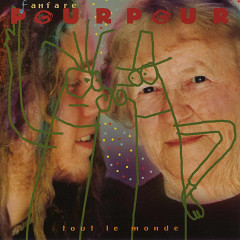
    Une tribu du Plateau Mont-Royal s’était donné rendez-vous au Centre-Sud, coin Ontario et Champlain. Comme si le Quai des brumes s’était transformé en… Lion d’or. Lundi soir, une fanfare y klaxonnait des airs de vieux cirque, on y imaginait des roulottes de saltimbanques sillonnant les chemins de Hongrie en direction de… Saint-Fortunat.

    Là où est née la fanfare Pourpour, qui vient de lancer l’album Tout le monde (étiquette DAME) à sa troisième année d’existence.

    Arrangements un tantinet déglingués, tantôt tziganes, tantôt germaniques (époque république de Weimar), tantôt italiens. Guitares acoustiques, accordéon, violon, cuivres, anches, cris d’allégresse et gracieuses steppettes.

    Pour bien saisir ce qui s’est passé au Lion d’or lundi soir, il faut remonter le temps. Un quart de siècle, en fait. En 1975,l’Enfant fort fut l’une des premières manifestations sonores de cette tribu du Plateau. A l’époque, la fanfare était devenue un véhicule important de la contre-culture. Réappropriation de la rue, ouverture au répertoire populaire mais aussi à l’innovation orchestrale. En Europe, plusieurs fanfares alternatives avaient déjà mis en œuvre différents alliages aiants de modernité et de progressisme. L’Enfant fort avait importé la tendance.

    Fin des années soixante-dix, le Pouet Pouet Band reprit le flambeau, et ce avec beaucoup de vigueur. On se plaisait alors à comparer la facture de cet orchestre ambulant aux musiques de Kurt Weill composées pour Brecht, à celles de Nino Rota imaginées pour Fellini.

    «Du Pouet à aujourd’hui, il y a tout un espace-temps. Et l’on ne voulait surtout pas retourner en arrière. La musique de Pourpour ne se fait pas de la même façon. Dans le plaisir, bien sûr, mais pas de la même façon» amorce Luc Proulx, qui écarte d’emblée toute tentation nostalgique. Il fut membre à part entière du Pouet Pouet Band bien avant d’amorcer une brillante carrière de comédien (Carbone 14, Bouscotte, etc. ), il renoue avec la musique de fanfare pour des motifs essentiellement ludiques.

    «On n’a pas fait ça pour faire renaître une fanfare, mais bien pour faire de la musique. Par un bel été, on s’est dit que ça serait bien de monter une fanfare pour les gens de Saint-Fortunat, dans les Bois-Francs —où j’ai une petite ferme. On a alors joué quatre pièces à l’hôtel de la place, puis on s’est dit que ce serait bien de continuer à répéter. Parce qu’on avait un prétexte pour se faire à souper, boire un verre, parce qu’on avait du plaisir.»

    Au tournant des années quatre-vingt, Bernard Poirier était aussi du Pouet Pouet Band. Dans la fanfare Pourpour, il est devenu le principal compositeur. Luc Proulx dit aussi composer, mais Poirier achève le travail d’arrangements.

    «Pour ce qui est de l’apprentissage du répertoire, ça va de plus en plus vite. Pendant la première année, on était restés pris avec nos quatre premières chansons!», indique Bernard Poirier, suscitant l’hilarité auprès de ses collègues.

    «A l’époque du Pouet, reprend-il, peu de gens savaient lire la musique, ce qui n’est plus le cas, bien que plusieurs membres de Pourpour ne vivent pas exclusivement de la musique.»

    La fanfare Pourpour propose un métissage traversé par les musiques du monde. «Toutes sortes de cultures qu’on a entendues et absorbées, une fête intérieure, des sons à la fois tristes et gais. On s~est aussi permis Russian Dance, une toune de Tom Waits, on a même composé un country», explique Poirier. Présente à cette interview, la chanteuse et accordéoniste Lou Babin a toujours brillé au sein de cette tribu du Plateau. Elle sait, par ailleurs, que l’avant-garde de la culture montréalaise est beaucoup plus fragmentée qu’elle ne l’était il y a 20 ans.

    «Nemo, conte-t-elle, était dans mon ventre à l’époque où je jouais dans le Pouet. Maintenant il est trompettiste de formnation, il joue avec nous dans la fanfare. Je me sens bien par rapport à cette continuité. En arts visuels, en cinéma ou en musique actuelle, on forme encore une communauté active. Une communauté peut-être moins flamboyante, mais toujours présente.

    «Moi, je pense qu’on va jouer encore longtemps. Tant qu’on va avoir du fun à partager, on va jouer. Le nom de Pourpour, on va le faire.»

    Castor et compagnie: Mets ta langue dans Exclaim!

    «Review», Spike Taylor, Exclaim!, 1 mai 1999
    samedi 1 mai 1999 Presse

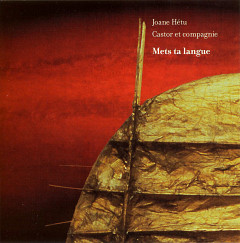
    Joane Hétu is always interesting to check out. and if you don’t know this longtime member of the Ambiances Magnétiques collective, Mets ta langue is her at her most compositionally and sexually promiscuous. With the castors — Jean Derome, Diane Labrosse and Pierre Tanguay — Hétu launches into a warm inviting world of bodies at rest and play, entwined and making beautiful musique. Uncategoriseable, except to say this is some steamy meditation on the meeting of Hétu’s musical mind and her sexual self — check this one out and come in out of the cold to warm hands all over an alto sax and somehow, all over the listener.

    … Hétu launches into a warm inviting world of bodies at rest and play, entwined and making beautiful musique.

    Upbeat dans Downtown Music Gallery

    «Review», BLG, Downtown Music Gallery, 1 mai 1999
    samedi 1 mai 1999 Presse

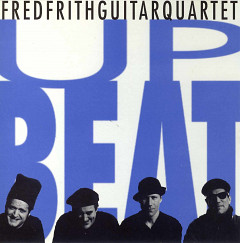
    This is the third release from Fred’s outstanding el. guitar quartet, live from various dates on their previous European tour. This is an all — star unit, each member a leader & guitar great in their own right, each one gets a chance to compose a piece, as well as solo on one piece each. What is interesting is that it is often difficult to tell who is doing what, since each of these players employ so many unorthodox techniques to their guitars — e bows, numerous objects rubbed or struck against the strings, various distortion devices, too many ideas to mention here. Nick Didkovsky (from Dr. Nerve) recently played a marvelous solo set at the Knit, he had just gotten off tour with this quartet and he sounded like he had absorbed many ideas from Fred’s long history of influence and extended guitar weirdness. Listening to four e — bows drone together on Fred’s Antaeus is like a somber cello intro, parts soon expand, chatter jazzy grooves, lines intersect, the ghost of Les Paul appears as the pace quickens although there is no studio trickery here. It was Mark Stewart (of the Bang on a Can All Stars) that inspired that last bit. René Lussier’s Tout de Suite rums the gamut from subtle & quirky to short episodes of controlled chaos, always well balanced, textures slowly shifting thin to thick… Fred Frith will tentatively be organizing a three to five day 50th birthday celebration at the Knit in May or June, doing a retrospective of his entire career in music, here’s hoping that his outstanding Guitar Quartet will be a part of this special Frith festival, as they were the highlight of Victo ’96.

    21 situations dans Downtown Music Gallery

    «Review», Downtown Music Gallery, 1 mai 1999
    samedi 1 mai 1999 Presse

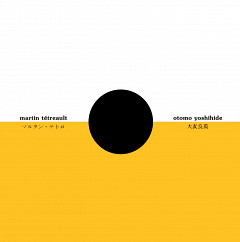
    Both Martin from Montréal & Otomo from Japan are turntable innovators whose unique sounds collide and connect in all sorts of weird but focused ways. Martin often plays & takes apart his turntables, hence the sounds of technology breaking down, often without the use of records. Otomo also plays sampler & cds in addition to turntables usually with records. Each of these 21 pieces are short and seem to deal with a few areas of sound at a time. Still, each piece is fascinating as it explores different terrains one at a time. Obviously both of these wizards have developed their own worlds of sound, sometimes twisted and chaotic, sometimes recognizable sound bytes emerge — is that Eye or David Moss I hear in there? One day when the evil music industry has finally gotten rid of records for good, we will be nostalgic for the sounds of scratchy records, skipping pops & repeats and the warmth that only a good virgin vinyl lp can provide. Those days are not so far off. My young niece of about seven years recently asked her father what a record is/was!?! How sad. An enchanting art form that is slowly disappearing. Available only on cd.

    Upbeat dans Jazzman

    «Critique», Thierry Lepin, Jazzman, 1 mai 1999
    samedi 1 mai 1999 Presse

    Nick Didkovsky, Fred Frith, René Lussier, Mark Stewart, soit le Fred Frith Guitar Quartet. Un des combos les plus réjouissants du moment. La matière de leur nouvel opus est constituée d’extraits de concerts et de prises de studio enregistrées pendant leur tournée européenne de novembre 1997. Déclinaisons imitatives ou dissonances majestueuses, brisures soudaines ou cinglances nonchalantes, l’Upbeat se livre en crépitements intuitifs. Les compositions de chacun sont autant de terres d’espiègleries, portant des missives à quatre voix. Que ce soit pour les tentations bruitistes de Lussier, ou le pamphlet country de Mark Stewart, l’unisson n’a de valeur que s’il est libertin. Initiateur et récolteur, Fred Frith est un druide nécessaire.

    Un des combos les plus réjouissants du moment.
  • 6
  • 7
  • 8
  • 9
  • 10
  • 11
  • 12
  • 13
  • 14