
Castor et compagnie: Mets ta langue
Joane Hétu / Castor et compagnie
… excellent solo and group vocals… — Audion, Royaume-Uni
… Hétu’s earthy vocal acrobatics and the rest of the ensemble’s spirited vocal support gives the album a carnival-like atmosphere. — Exclaim
! , Canada
Depuis six ans Joane Hétu dirige l’ensemble Castor et compagnie qui se consacre exclusivement à la chanson et nous présente un deuxième album intitulé
Chansons cochonnes, chansons d’amour, chansons françaises, chansons intelligentes, chansons touchantes, chansons tumultueuses, chansons vivifiantes, chansons improvisées, chansons
Un tutti de voix qui célèbre l’amour, l’érotisme et la vie.
- Compositeur·trice(s): Joane Hétu, Jean Derome, Diane Labrosse, Pierre Tanguay
- Auteur·trice(s): Joane Hétu
- Interprète(s): Castor et compagnie, Joane Hétu, Jean Derome, Diane Labrosse, Pierre Tanguay
- Image de couverture: Pierre Dumont
- Graphisme: Luc Beauchemin, Jean-François Denis
CD (AM 062, 1998)
- 1Mets ta langue, 2:44
- 2L’eau du puits (1998), 6:20voix, trompette, accordéon, tuba, percussions et instrument électronique
- 3Beauté, 12:21
- 6Le travail des animaux, 2:02
- 7Dans la joie l’amour (1998), 5:54
- 8Un bout de papier, 9:41
- 9Mes odeurs préférées (1998), 6:25
- 10Ben satisfaite, 4:54
- 11Ta manière, 8:17
- Étiquette: Ambiances Magnétiques
- AM 062
- 1998
- UCC 771028106226
- Durée totale: 58:38
- Boîtier Jewel
- 125 mm × 142 mm × 10 mm
- 105 g
Sur le web
Téléchargement (AM 062_NUM, 1998)
- Cet article n’est pas disponible via notre site web. Nous l’avons catalogué à titre informatif seulement.
- Cet article peut être téléchargé et/ou écouté sur le site joanehetu.bandcamp.com.
- 1Mets ta langue, 2:44
- 2L’eau du puits (1998), 6:20voix, trompette, accordéon, tuba, percussions et instrument électronique
- 3Beauté, 12:21
- 6Le travail des animaux, 2:02
- 7Dans la joie l’amour (1998), 5:54
- 8Un bout de papier, 9:41
- 9Mes odeurs préférées (1998), 6:25
- 10Ben satisfaite, 4:54
- 11Ta manière, 8:17
- Étiquette: Ambiances Magnétiques
- AM 062_NUM
- 1998
- UCC 771028106288
- Durée totale: 58:38
Quelques articles recommandés
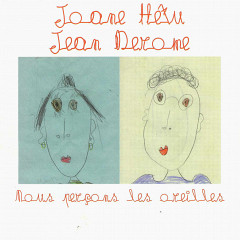

La presse en parle
Review
A quartet making a very avant-garde music. Melodies and abstraction collide to wonderful effect. This is based a lot around the excellent solo and group vocals, incidentally Mets ta langue means “put your tongue”, and some of the song oriented pieces reminded me of the Art Bears, with a similar attention to simplistic/complex detail. I prefer the more obviously structured parts, yet there great instances when the vocals descend into abstract sound alongside the “Manipulation de cassettes”, and free-jazz parts.
Review
Mets ta langue is a perfect bridge between the above records. Derome, Pierre Tanguay and Diane Labrosse offer their flexible vocal and instrumental prowess to Hétu’s deliciously erotic lyrics (which also come with English translations). But there is nothing gratuitous here to these slightly whimsical takes on sex. In fact, if anything there is a rigorous muscularity to this pan-stylistic record. And there are Hétu’s earthy vocal acrobatics and the rest of the ensemble’s spirited vocal support, which gives the album a carnival-like atmosphere.
Review
Joane Hétu is always interesting to check out. and if you don’t know this longtime member of the Ambiances Magnétiques collective, Mets ta langue is her at her most compositionally and sexually promiscuous. With the castors — Jean Derome, Diane Labrosse and Pierre Tanguay — Hétu launches into a warm inviting world of bodies at rest and play, entwined and making beautiful musique. Uncategoriseable, except to say this is some steamy meditation on the meeting of Hétu’s musical mind and her sexual self — check this one out and come in out of the cold to warm hands all over an alto sax and somehow, all over the listener.
Review
Review
Joane Hétu plays alto and sings on Mets ta langue (Ambiances magnétiques 62), an ambitious project combining multiple musical cultures. Her companions include Canadians Jean Derome (reeds, piano, small instruments, voice, and cassette manipulation), Diane Labrosse (sampler, accordion and voice), and Pierre Tanguay (drums and voice). The music has many dynamic highs of freely expressed instrumentation intermixed with vocal parts. The four create full-bodied sound at high volume levels that has punch and drive (Mets ta langue / L’eau du puits / Beauté / Le travail des animaux / Dans la joie l’amour / Un bout de papier / Mes odeurs preférées / Ben satisfaite / Ta maniere. 58:38). Multi-instrumentalist Derome is a powerful force on the recording, being reunited with Tanguay who propels furiously as the driver. Derome, a very talented and original artist, is a forceful blower when ignited, but he also shows a delicate and sensitive side here. The vocal segments, done principally in French with many sexual overtones, take on the fomm of operatic theater, being inserted in chant fomm that mixes smoothly into the oftenboisterous music. It is a pint effort, with everyone involved in the story telling while simultaneously generating the spirited instrumentation. Hétu also uses vocal utterances that blend into Labrosse’s accordion tones in unique fashion. The entire presentation from this talented foursome is a diverse approach to collective creativity of Jazz and theater.
Critique
Ce n’est pas vraiment Sade, mais les textes sont bien osés, délicieusement érotiques et ils auraient bien entendu convenus à Justine. Joane Hétu a préféré se les garder pour elle et son groupe.
Gémissements et râles mais aussi d’autres délires vocaux sont ainsi au rendez-vous d’une musique fortement structurée et puissante, qui mêle l’humour et la tendresse mélodique à des effets bruitistes issus d’une pratique d’improvisation sonore qui caractérise de plus en plus le collectif québécois.
Soundcheck
Like Castor et Compagnie, her debut trom 1995, Joane Hétu’s second solo album, Mets ta langue, presents a variety ot stylistic activity. Once again Derome, Tanguay and Diane Labrosse are on hand to supply solid instrumental and vocal support. And this time Ambiances Magnétiques have included English translations to Hétu’s lyrics, some of which explore earthy eroticism with a pinch ot whimsy
Review
Compared to many other Ambiances Magnétiques releases, there’s a good deal more content on Mets ta langue that could fall under the mainstream definition of “music” — this is an ensemble (which counts Jean Derome, Diane Labrosse and Pierre Tanguay among its other members) that creates songs. It might also surprise listeners that rather than being, let’s say, complex aural meditations on the sonic interactions between certain rare gases that meet every few hundred years during odd phases of planetary orbits, the lyrics (they’re more poems, really, but who’s counting
Muzyka godna polecenia
Joane Hétu is a woman who fulfills herself in various ways
This is her second solo album. As previously, we can hear all musical obsessions of hers thriving on the crossroads between strict composition and free improvisation. Hétu seems to treat her favorite musical styles just like attires and decorates them with her special patches and scraps. And every little thing she is wearing suits her. Joane can persuade us that her setting of the ritual music of Native Canadians, experimental rock, shanties, ballads, sound explorations and non-idiomatic improvisation is intelligent and beautiful. It is worth mentioning that Hétu perceives beauty quite differently than, let us say, Céline Dion. When you are always pleasant and meek you are lying. Beauty has something to do with your life courage and the drive for improving your sensibility and knowledge. Joane also sings of her love experiences, but again uniquely and contrary to our presumptions. No pseudo-inspired let-us-make-love-now easy atmosphere here. No cheap pornography either. Hétu is a mature woman and she opts for the immediate and (some hypocrites would even say–shocking) lyrical description of erotic loving. However, she always manages to control the whole thing within the good taste. Her voice also tells us stories of some moving emotions, friendship, bringing up kids, getting together to overcome everyday problems. No censorship, but no assault either.
This is music for listeners who like to express and receive strong feelings. It is full of fervor. The passion reflects itself in the cover design of wooden sculptures styled after Native American housewares.
Compared to the continually dehumanized and stupid music of recent years, every sound of Joane Hétu seems as a touch of somebody close and beloved. A must at any price.
Traduit du polonais.
Discos
Review
Compact
Joane Hétu et son band continuent là où ils avaient laissé. Une musique polymorphe, anarchique, festive, où tous les styles se mélangent pour former un amalgame toujours organique. On y raconte l’amour, la sensualité, le sexe, parfois crûment, parfois en laissant mijoter un peu… mais avec une originalité et une sincérité dans le propos qui touchent souvent la cible. Par rapport au premier album, on note un net progrès sur le plan musical
Hétu, Derome et ses Zhoms
Sur Mets ta langue, Joane Hétu, accompagnée de son collectif, Castor et Compagnie, impressionne par ses compositions plus personnelles. Loin d’être naïves, les 11 chansons d’amour qu’elle propose dépeignent un univers sensuel et corrosif à la fois, comme toutes les grandes passions.
Jours fastes!
Joane Hétu est saxophoniste. Elle joue de l’alto. Elle chante ses mots. Et elle compose. Elle est également la patronne… C’est mal dit, ça
Bon. Joane Hétu… Jean Derome… Les deux sont donc saxophonistes, auteurs,compositeurs.
Critique
Joane Hétu se montre beaucoup plus pertinente dans les chansons qu’elle élabore pour Castor et Compagnie, quatuor au sein duquel travaillent egalement Derome, la
Une histoire d’amours
Review
In 1995 singer/saxophonist
Blogue
-
mercredi 1 mars 2000 / Presse
… excellent solo and group vocals… Suite
-
samedi 1 mai 1999 / Presse
… Hétu launches into a warm inviting world of bodies at rest and play, entwined and making beautiful musique. Suite
-
samedi 1 mai 1999 / Presse
… Hétu’s earthy vocal acrobatics and the rest of the ensemble’s spirited vocal support gives the album a carnival-like atmosphere. Suite