actuellecd
  • This website is also available in English.

Blog

4946 results
  • 238
  • 239
  • 240
  • 241
  • 242
  • 243
  • 244
  • 245
  • 246
  • Our Balls Are Like Dead Suns in Bad Alchemy

    “Kritik”, Rigobert Dittmann, Bad Alchemy, no. 67, November 1, 2010
    Monday, November 1, 2010 Press

    Titel des Jahres: Our Balls Are Like Dead Suns (&07)! Der Trompeter Philippe Battikha, Mivil Deschênes am Bass und Patrick Dion an den Drums wählten sich in Referenz an Georges Bataille zudem den verschwenderischen Namen La Part Maudite und beides zusammen verpflichtet natürlich zu exzessiver Musik, die durch massive Pedaleffekte auch erzielt wird. Die Trompete nimmt es mit jeder E-Gitarre auf, was Verzerrung und Intensität angeht. Dazu rockt Dion, als ob er es mit dem Potlatch ernst meint. Maison des jeunes wechselt abrupt zwischen zart und brutal und bleibt dann mit heftigen Schlägen bei Letzterem. Boxer Blood puncht sture Viertel, dann Stop und Go und schnelle Wirbel. Als wären Dion und Deschênes bei Jacopo Battaglia und Massimo Pupillo, der furiosen ‘RhythMachine’ von Zu, in die Lehre gegangen. Half-Sucked Egg beginnt mit tubadunklem Gebläse und nur spröd gezupfen Saiten zu leichthändigem Tickling, aber dann nimmt Der Verfemte Teil knirschend und klackend immer mehr Tempo auf und steigert sich in einen Blutrausch, fängt sich, aber leckt sich schon wieder die Lippen nach mehr. Die Trompete steuert von einer Fuzzorgie zur nächsten, nur in den wenigen gedämpften Momenten, dem Auftakt von Panic Park etwa, kommt einem das Wörtchen Jazz in den Sinn. Die Besinnung ist aber immer nur von kurzer Dauer. Schon geht wieder ein Noisegewitter auf die lyrische Trompete nieder. Poesie gibt es nur unter Spannung und Zerreißprobe. Aber sie ist unstillbar, unauslöschlich, Phönix aus der Asche, Pegasus aus dem Blut der azephalischen Medusa, eine Ejakulation von melodischem Überschuss, wenn auch mit bitterem, aschigem Beigeschmack.

    Subsurface in Vital

    “Review”, Frans de Waard, Vital, no. 753, November 1, 2010
    Monday, November 1, 2010 Press

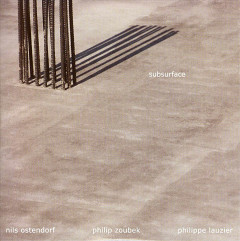
    Germany’s Schraum label has established itself as a small but fine catalogue of improvised music. Somehow they manage to find all those people I never heard of, like on this eleventh release Nils Ostendorf (trumpet), Philippe Lauzier (bass clarinet, saxophones) and Philip Zoubek (prepared piano). All of them were born in 1977 and 1978 and have extensive lists with whom they all played. Last year they recorded this work in Cologne and it was edited down to seven pieces, spanning forty minutes of improvised music. Its not easy to say which sounds is generated by whom here. Which is something I actually thought was great. The sounds bubble up from below, and none of them sound like the sound of the instrument they are holding in their hands. Lots of scraping like sounds, with quite some sustain to them, almost like drone music in Dreaming On A Cargo. But they also work more common ground, with a great sense of interaction, leaving silence when necessary and adding sounds when needed. In Hyperlinking even a small melody pops up in a great Cage like manner. This trio plays some great lush improvised music with beautiful ringing overtones. Excellent.

    Excellent

    Tremblement de fer in Monsieur Délire

    “Listening Diary”, François Couture, Monsieur Délire, October 27, 2010
    Wednesday, October 27, 2010 Press

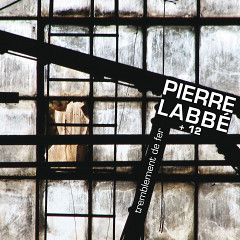
    Premiered to open the 10th Off Montréal Jazz Festival (2009) with 50 musicians, the Tremblement de fer suite has now been committed to rrecord in a studio version rearranged for 12 musicians. Most parts of this suite are a normal extension of the direction traced by Manivelle, Pierre Labbé’s previous record on Ambiances Magnétiques (with his quartet) — Serpents et échelles from that record is even revisited — in big band form. Rather powerful arrangements, occasionally heavy though mostly lively. The music is carried by a carefully assembled ensemble including, among others, Jean Derome, Bernard Falaise, Guillaume Dostaler, and Pierre Tanguay.

    The music is carried by a carefully assembled ensemble
  • 238
  • 239
  • 240
  • 241
  • 242
  • 243
  • 244
  • 245
  • 246