actuellecd
  • This website is also available in English.

Blog

4946 results
  • 160
  • 161
  • 162
  • 163
  • 164
  • 165
  • 166
  • 167
  • 168
  • Canard branchu in Voir

    “Critique”, Réjean Beaucage, Voir, January 21, 2014
    Tuesday, January 21, 2014 Press

    La discographie bien fournie du compositeur Robert M Lepage s’est augmentée de deux disques ces derniers mois et le clarinettiste se fait plaisir sur celui-ci en réunissant un ensemble au sein duquel son instrument déploie un large éventail de couleurs. Il en joue lui-même sur deux pièces, comme Lori Freedman, mais Jean-Sébastien Leblanc, Pierre-Emmanuel Poizat, Guillaume Bourque et André Moisan (ce dernier au cor de basset) sont au cœur de l’ensemble, accompagnés par Pierre Tanguay (batterie) et Fraser Hollins (contrebasse); Nicolas Borycki ajoute une touche électronique légère et très appropriée sur trois titres. Des musiques très imagées, comme les titres qui les coiffent, qui nous emmènent au cirque avec les acrobates ou dans des boisés humides, avec les canards.

    Des musiques très imagées…

    Le caillou in Monsieur Délire

    “Listening Diary”, François Couture, Monsieur Délire, January 20, 2014
    Monday, January 20, 2014 Press

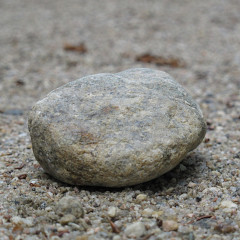
    Le Caillou [The Pebble or The Stone] is an improvisation concept by Danielle Palardy Roger. Here it is in five realizations recorded between 1998 and 2013, plus the other two movements (Le Cristal and Le Camion) of the suite it was first designed for. Personnel varies greatly (I’ll point out a guest appearance by Joëlle Léandre), locations too (live, in studio, in Montréal, in New York), but each take delivers top-notch structured improvising. The development of the improvisation bounces from musician to musician, allowing each one to establish their personality while also blending into the group’s playing. Ambiances Magnétiques fans know all the musicians here and will take pleasure in following them has the pebble changes hands.

    Ambiances Magnétiques fans know all the musicians here and will take pleasure in following them has the pebble changes hands.

    6 improvisations in Monsieur Délire

    “Listening Diary”, François Couture, Monsieur Délire, January 17, 2014
    Friday, January 17, 2014 Press

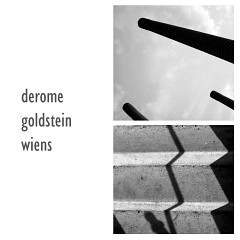
    A session recorded in April 2013 Montréal’s Studio 270. Non idiomatic free improvisation strongly reminiscent of the British school, especially of the Spontaneous Music Ensemble: collectivized individual playing, improvisers listening to each other, room for silence, thoughtful creativity. Derome on alto sax, flute, and objects; Wiens on prepared electric guitar and kalimbas; Goldstein and his ever-so-aerial violin. Demanding music that will surely be off-putting to the non-initiated. A fine trio.

    A fine trio.

    Canard branchu in Monsieur Délire

    “Listening Diary”, François Couture, Monsieur Délire, January 17, 2014
    Friday, January 17, 2014 Press

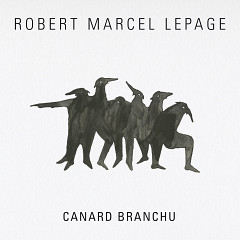
    So, it’s seems real: Robert Marcel Lepage is back. Let’s rejoice! Last fall he released his first CD in eight years: Le lait maternel (a collection of film music scores recorded in the last decade). Then, in December, came Canard branchu, a bona fide group record, his most substantial album since 2003’s La machine à explorer le tempo. Canard branchu consists of 14 lively, animated, bouncy compositions of 2 to 4 minutes, all nicely twisted — just a bit, just enough. A blend of jazz and this musique actuelle Ambiances Magnétiques introduced to the world in the 1980s. No, I’m not being nostalgic; it’s just that this record is a strong comeback, in tune with the Lepage heard on Chants et danses du monde inanimé, Adieu Leonardo!, and Les Clarinettes ont-elles un escalier de secours? Here, he entrusted his music to a group of four clarinet players (among them: Guillaume Bourque and Lori Freedman), whom he joins occasionally, a horn player, and a rhythm section (organ, doublebass, drums). The organist also does some subtle treatment work. The music flows naturally, in turns funny and moving, and listening to this CD is pure unabashed delight.

    The music flows naturally, in turns funny and moving, and listening to this CD is pure unabashed delight.

    {montréal} in Voir

    “Critique”, Réjean Beaucage, Voir, January 15, 2014
    Wednesday, January 15, 2014 Press

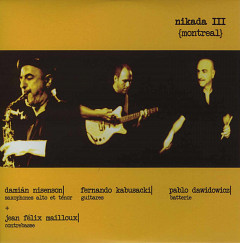
    Il y a 10 ans que le saxophoniste Damián Nisenson est arrivé à Montréal en provenance d’Argentine, où il laissait derrière lui ses comparses du trio Nikada: Fernando Kabusaki (guitare électrique) et Pablo Dawidowicz (batterie). Il les retrouve ici pour jouer ses compositions, qui mêlent jazz actuel, tensions rock et sensibilité folk. Les trois musiciens sont aguerris et inventifs; à noter: le solo de guitare qui déchire sur la piste 9 (les pièces n’ont pas de titre) et, un peu partout, l’efficacité économique du batteur. L’ajout du contrebassiste Jean-Félix Mailloux donne à l’ensemble un groove dont on ne voudrait pas se passer. Nisenson met dans son sax (alto ou ténor) une chaleur sombre qui plane sur l’ensemble avec grâce.

    L’ajout du contrebassiste Jean-Félix Mailloux donne à l’ensemble un groove dont on ne voudrait pas se passer. Nisenson met dans son sax (alto ou ténor) une chaleur sombre qui plane sur l’ensemble avec grâce.

    Echo Echo Mirror House in The Squid’s Ear

    “Heard in”, Kurt Gottschalk, The Squid’s Ear, January 13, 2014
    Monday, January 13, 2014 Press

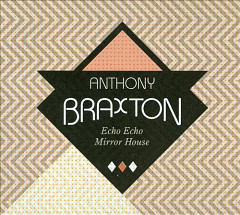
    A concert experience — especially a first one — with Anthony Braxton’s Echo Echo Mirror House can be beyond perplexing. Each of the players onstage has, along with their usual axe, an iPod from which they intermittently play past Braxton recordings. Visually it can seem like a whole lot of sitting around, while auditorially it is more information than can be processed. The resulting dissonance is both harmonic and cognitive while toying with expectations about what musicians are supposed to be doing while on stage. Scratching DJs is one thing, but musicians playing mp3s with no seeming rhyme or reason? It’s a perplexing kettle of fish.

    A recording of an Echo Echo Mirror House performance is, if nothing else, easier to mentally process than the concert experience, primarily by virtue of not having the distraction of looking at musicians without being able to associate their gestures to the sounds being received. Such is the case with the concert captured on Echo Echo Mirror House of a performance at the Festival International de Musique Actuelle de Victoriaville festival in Quebec. The album arguably should be titled “Septet (Victoriaville) 2011” in keeping with Braxton’s usual titling practice, and that epitaph is emblazoned on the back cover — miscommunication or a mistake in cover design may be to blame, but in any event Echo Echo Mirror House has the benefit of a better — or at least more traditional — mix than was in the room that night. On record, the live instruments are a bit louder than the iPod tracks, giving a foreground / background dispersal which makes it easier to focus on individual players, as jazz is supposed to want us to do.

    Whether or not the mix is actually better, of course, is open to argument. The composer Raphael Mostel tells a story of running into John Cage at an early Bang on a Can festival. They encountered some friends outside after the dinner break who urged them to sit in the back, where the sound was better. “Imagine,” Cage is said to have responded, “a sound being better.” And indeed, Echo Echo Mirror House is best received as a Cagean listening experience — not in the overwrought-by-post-Cagean-and-quasi-scholars “listen to the wind, listen to the silence” sense, but to whatever extent we might establish guidelines and precedence for listening. There have been few listening experiences that compare to Echo Echo Mirror House, but one clear forebear is Cage’s HPSCHD, a massive piece of controlled cacophony available on a couple of recordings and on occasion staged live (a recent and remarkable rendition was realized by Issue Project Room at Manhattan’s Eyebeam Art and Technology Center in May). With multiple harpsichords being played live alongside recordings of harpsichords, computer generated sounds and video projections, HPSCHD (which received its premier at the University of Illinois in 1969) is an overwhelmingly immersive experience best received by simple absorption with intellectual questioning undertaken after the fact, if at all.

    What is important about HPSCHD, and about Echo Echo Mirror House (both the project and the CD), is that it is not chaos, and in fact neither Cage nor Braxton often, if ever, descends into chaos. Both pieces work in layered, multi-linear structures, even if the levels of structure don’t always correspond with one another. But what the brain might receive as chaos is just a simple processing problem: there’s too much to take in. Little eddies of logic spin across the soundfield, overlapping and occasionally being overrun by the sound of one of the fine group of musicians [Taylor Ho Bynum (brass), Mary Halvorson (guitar), Jessica Pavone (voice, violin), Jay Rozen (tuba), Aaron Siegel (percussion), Carl Testa (contrabass, bass clarinet) and the leader on alto, soprano and sopranino saxophones], all of whom are allowed solos of sorts.

    There’s some fun to be had in listening for individual voices arising from the Braxtonic bog, and it’s good game for the hardcore to try to pick out which Braxton records are being played underneath. But certainly this isn’t a record for everyone. Hell, it’s hard to say for sure if it’s a record for anyone! But it’s a fascinating, dizzying listen which should be experienced live or on record by anyone interested in 21st Century Gesamtkunstwerk totalism.

    … it’s a fascinating, dizzying listen which should be experienced live or on record by anyone interested in 21st Century Gesamtkunstwerk totalism.
  • 160
  • 161
  • 162
  • 163
  • 164
  • 165
  • 166
  • 167
  • 168