actuellecd
  • This website is also available in English.

Blog

304 results
  • 37
  • 38
  • 39
  • 40
  • 41
  • 42
  • 43
  • 44
  • 45
  • 10 compositions in The Gazette

    “Review”, Irwin Block, The Gazette, March 4, 2004
    Thursday, March 4, 2004 Press

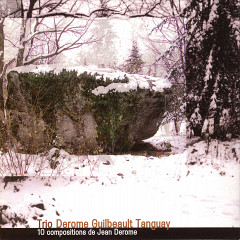
    Showcases the musical achievement of Jean Derome, the Montréal saxophonist and flutist who, in his playing and writing, celebrates the marriage of form and freedom. It features 1O pieces he’s written over 30 years, recorded in a snowy rural Quebec cottage with his long time partners, drummmer Pierre Tanguay and bassist Normand Guilbeault. Playing alto sax, baritone and flute, Derome produces music that’s all about humanity and humility. It evokes the warmth and loftiness of the creative spirit, pure musical values and mastery of the jazz language. And in this intimate setting, you hear how a trio can cook when players know each other this well.

    … pure musical values and mastery of the jazz language.

    Risque et pendule in Splendid E-Zine

    “Review”, Dave Madden, Splendid E-Zine, March 3, 2004
    Wednesday, March 3, 2004 Press

    If you’re anything like me, you immediately fold your arms when you hear the phrase “avant-garde jazz”, daring whoever uttered the words to impress you. Seriously, how can L’Ensemble Pierre Labbé attach such a title to their music, knowing that they are essentially saying, “yes, we are the future”? Oh, I forgot — these folks are members of the Ambiances Magnétiques roster, and everything on this Montréal based label is the future, or at least the present you should be listening to.

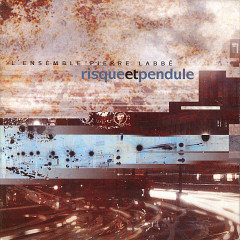
    L’Ensemble Pierre Labbé is a sextet made up of tenor sax/flute, violin, cello, guitar, contrabass and drums. It’s a unique “jazz” ensemble, but that’s not Risque et pendule’s only interesting angle. Most of the tracks follow the traditional formula of “play the A section a few times / everyone takes a solo / come back to A”, but the details in between are sketchy at best. Outrages opens the album in a Bitches Brew-like haze of muted electric guitar, funk-driven drums and sax screeches that reach to heaven. Gradually increasing splats of cello and violin join the ensemble in a boldly syncopated counter rhythm, and just as you were figuring out what “kind” of piece this was, the seams burst. Everyone eases back into a drone and violinist Nathalie Bonin, with her Bartokian bow-bouncing, sul ponticello growls and freeform melodies, topples everything the band has built up to this point. She settles on a high, piercing note as the rest of the group creeps back in and picks up where it left off. L’empêcheur de tourner en rond trips out of the gate with sax stabs, quickly joined by a pointillist chorus from the rest of the band, and settles into a speed-demon piece that saxophonist Pierre Labbé pulls off with the grace of Eric Dolphy or John Coltrane. However, as the track progresses, the rug pulls out, and the instruments drop away one by one, substituting silences for notes as the piece transforms into musical chiaroscuro. Derrière le silence takes delicacy to new heights as the ensemble does its best pianissimo: the flute hovers in the lower register, barely audible; bows barely touch strings until midway through, when pizzicato violin, cello and bass create a rhythmic bed beneath a weaving texture of ebowed guitar and flute. As you can see, not a single track follows the same formula, yet all live in the same world — the same up-is-down world.

    Put a detailed score in front of your average jazz guy and he’ll look at you like “am I supposed to smoke this?” Ask a Classical musician to improvise and he’ll curl up in a ball under his music stand. Ask L’Ensemble Pierre Labbé to do both of these and they’ll present you with Risque et pendule, a disc that stands out on both counts.

    … saxophonist Pierre Labbé pulls off with the grace of Eric Dolphy or John Coltrane.

    Le bal in La Presse

    “Musique pourpour tous!”, Aleksi K Lepage, La Presse, March 2, 2004
    Tuesday, March 2, 2004 Press

    Il était une fois dans les années 70… Au cœur du Plateau Mont-Royal, alors encore grouillant d’authentiques bohèmes, s’attroupaient tous les samedis après-midi quelques musiciens — plus ou moins improvisés — pour aller défiler dans les rues avec trompettes, guitares et tambours, sous les yeux des passants amusés et des autorités suspicieuses.

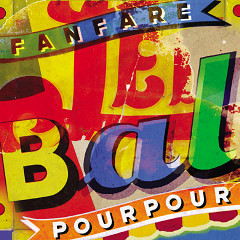
    Pour ces étranges menestrels, il était plus important d’être ensemble et de s’éclater que de savoir vraiment bien jouer. C’était d’ailleurs un jeu; ils jouaient à la musique. C’étaient les belles annees de L’Enfant Fort, rassemblement originel qui va devenir, après 1000 transformations, la Fanfare Pourpour telle qu’on la connaît aujourd’hui.Ils sont 15 «fanfarons» en tout. C’est-à-dire 16, depuis hier, puisque la charmante Mara Tremblay vient d’ajouter son nom à côte de ceux de Lou Babin, Jaco Duguay, Jean Derome, Jonas Slowanski, Luc Proulx, Nemo Venba et les neuf autres qu’on ne peut malheureusement nommer, question d’espace. La plupart sont issus de L’Enfant Fort et d’autres regroupements éclatés comme la Pouet Pouet Band et Montréal Transport Limité. Sont venus les rejoindre plus récemment quelques jeunes musiciens attirés par l’aventure. Pourpour couvre donc trois générations, l’aîne ayant soufflé ses 68 chandelles et le cadet n’ayant vu passer que 23 printemps.

    En guise d’ambassadeurs, Babin, Proulx et Derome ont bien voulu accueillir un journaliste pour promouvoir la parution de leur deuxieme album intitulé Le bal, qui sera lancé dans le monde au Lion d’or jeudi prochain. Deux disques en 30 ans? On ne pourra les accuser de surexposition. «On n’a jamais pensé en termes de réussite; au départ, ce n’était pas notre projet de faire des disques, explique Babin. On faisait de la musique pour les gens, en plein milieu de la rue. Des fois, on bloquait la circulation. On allait jouer comme ca, juste parce qu’il faisait beau. On allait répéter dehors, au grand plaisir des gens. On voulait leur donner le goût de faire de la musique.

    Proulx se rappelle qu’au tout début, rue Duluth, n’importe qui voulait participer à l’expérience, avec n’importe quel instrument jusqu’à des chaudrons, si bien qu’ils ont dû être selectifs: «Il y avait des gens qui voulaient faire de la musique avec nous, mais ça ne marchait pas. C’était cruel parfois, on commençait à nous trouver un peu «sectaires». C’est une question d’affinité.

    Les cancres n’entrent pas dans la Fanfare Pourpour, mais Babin admet que, si elle apprécie le jeu d’un musicien, elle doit d’abord aimer sa personnalité.

    Jean Derome, compositeur multi-instrumentiste accompli et improvisateur très respecté, agit pour ce nouveau disque en tant que grand superviseur. II s’opère selon lui, qu’importe que les musiciens soient professionnels ou amateurs, une sorte de magie au sein de la Fanfare: «On arrive a un jeu d’ensemble qui dépasse la performance, dit-il. Le fait qu’un musicien soit très bon ou un peu moins bon n’a pas d’importance. On a enregistré tout le monde ensemble, on n’a pas mis d’écouteurs, on enregistre comme on pratique. Ça sonne super bien comme ça.»

    Musique du peuple

    Ils n’iront pas nécessairement faire leur numéro sur les planches du Téléthon de la dystrophie musculaire, mais les gens de la Panfare n’en demeurent pas moins doucement engagés, certains enjeux sociaux leur tiennent à cœur: «On joue pour les causes qui nous touchent et qui nous préoccupent, précise Proulx, par exemple la Journée sans auto. C’est vrai que c’est une bonne idée d’enlever ces paquets de voitures de notre centre-ville une fois de temps en temps.» On a pu les voir et les entendre dans les tentes de l’ATSA (Action terroriste sociaiement acceptable) au parc Émilie-Gamelin ou—si vous êtes vraiment mal pris dans la vie—à la Old Mission Brewery. «C’est une façon d’aider un peu, comme on peut, de faire sourire, d’aileger la souffrance», ajoute Babin.

    Leur musique est d’ailleurs proche du peuple, populaire dans le sens premier, dans le sens de noble. Des airs faciles a fredonner, sans artifices, parfois dansants, parfois mélancoliques (souvent les deux en même temps), une musique qui emprunte à certaines traditions européennes et qu’on dirait presque anti-techno, comme une sorte de folklore qui n’a pas tout à fait existé: «C’est la musique du peuple, qui vient du peuple, mais ce n’est pas la musique qu’on vend généralement au peuple», dit Derome, qui déplore ces nouvelles manufactures de vedettes à la Star Académie: «On fonctionne de plus en plus par sondages. Ça donne l’impression aux gens d’avoir vraiment choisi. Vous avez voté pour tel ou tel? Maintenant, achetez son disque, venez voir son show. J’ai l’impression que les gens qui votent à Star Academie pensent avoir enfin de l’influence, plus qu’en politique.»

    Ces boomers atypiques sont-ils nostalgiques? Regrettent-ils les folles annees 70? Pas tout à fait, même si Proulx admet que le Plateau Mont-Royal, où tout a commencé, a beaucoup changé, et pas pour le mieux, lui qui vivait alors dans un logement de 45,50$ — qui doit coûter 4550$ aujourd’hui, en exagérant à peine!

    Pour Derome, le fameux «esprit du Plateau» n’est plus qu’une espèce de piège à touristes, d’autres choses se feront ailleurs d’où il émergera des phénomènes aussi gratuits, jouissifs et spontanés que L’Enfant Fort de 1975. En attendant, l’aventure Pourpour continue, vers Dieu sait quoi. Sans doute la Fanfare va-t-elle gagner, par ce nouveau disque débordant de chaleur et de sincérite, les cœurs d’un jeune public fatigué par la chanson pop usinée.

    … ce nouveau disque débordant de chaleur et de sincérite…

    Carré de sable in Informator “Ars” 2

    “Review”, Henryk Palczewski, Informator “Ars” 2, no. 39, March 1, 2004
    Monday, March 1, 2004 Press

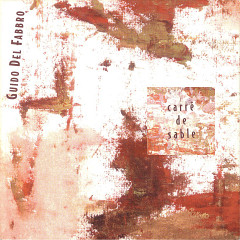
    Solowe wydawnictwo przedstawiciela mlodego pokolenia skupionego wokól Ambiances Magnetiques. Urodzony w 1980 roku muzyk gra na skrzypcach od czwartego roku zycia. My znamy go z udzialu w takich przedsiewzieqciach jak: Fanfare Pourpour, L’hôtel du bout de la terra, Rouge ciel oraz mozemy zobaczyé go na kasecie video “Confidences d’une Fanfare” Richard Lavoie. W latach 2000-2001 wspólpracowal z Gaetan Leboeuf tworzac muzyke do tanca w choreografii Magie Gillis.

    Jego podstawowym instrumentem sa oczywiscie skrzypce ale tym razem daje sie nam poznac jako multiinstrumentalista a takze znalazca nowych dzwiekow tworzonych przez uzywanie przedmiotów. Ten CD wypelnione jest miniaturkami, prawie ze szkicami krókich chwil, mgnien i emocji z nimi zwiazanymi. Dominuje tradycja nowej elektrycznej muzyki kameralnej wzbogacona w awangardowy jezyk wspólczesnej muzyki elektro-akustycznej i preparowanej. Przewazaja pogodne, nieco zamyslone, nostalgiczne opowiadania, chociaz w paru momentach robi sie zlowieszczo, groznie i tajemniczo. Nawet brudne dzwieki preparu nie burza, glównego nastroju muzyki. To abstrakcyjna pozycja ale poprzez zdecydowane opisywanie namietnosci konkretyzuje sie, w nas bardzo jednoznacznie. On sam mówi, ze tworzyl muzyke zachowujac sie jak dziecko w piaskownicy i nie szukal wyrafinowanych struktur. I rzeczywiscie jego muzyka jest prosto bodowana ale przez charyzmat osobowosci twórcy uzyskuje potezna magie, i rytual stajac sie wazna w kazdym momencie, nie traca przy tym wspomnianej pozytywnej prostoty i poruszajac sie w przestrzeni wielu kolorów i odleglosci

    Sang 9 in Signal to Noise

    “Review”, Kurt Gottschalk, Signal to Noise, no. 33, March 1, 2004
    Monday, March 1, 2004 Press

    Why there’s so much great music being made in Canada and ignored south of the border is a mystery. Some of the central figures in Montréal’s Ambiances Magnetiques scene — Jean Derome, Rene Lussier, Martin Tétreault — have built up a bit of a name outside their homeland, but many others are sadly unknown, including the twenty acts collected on Sang 9. The disc-features artists who sent their tapes into the DAME office, giving a survey of another round of remarkable practitioners of musique actuelle. It’s a talented and diverse group of players, and anyone interested in new sounds from the north is likely to find something of interest. Individual opinions will vary, of course, but out of twenty tracks there are only three I would skip on future listens — pretty good odds. More than half employ electronics and studio contruction: Pascal Desjardins and Frederic Leonard’s Lavabo is a glitchy clash of city, country and outer space; Jocelyn Doctor Tellier does a creepy, crawly Saturation du marché; Compromelomanie’s Potpourri Copromelomanie is a strange mash of Looney (out of) Tune; and Arborisationterminale’s Hip Christmas Rock is a dark winter storm. Some of the acoustic-oriented tracks are less forward reaching, but André Marceau, and Tutu combo use voice to interesting effect and L’Hexacorde and Bobok might well pick up the torch for some of Montréal’s jazzier players. DAME and Ambiances Magnetiques have released a number of other compilations, all of which are good introductions to underacknowledged Montréal musicians. Sang 9 shows there’s even more at home like them.

    … giving a survey of another round of remarkable practitioners of musique actuelle. It’s a talented and diverse group of players, and anyone interested in new sounds from the north is likely to find something of interest.

    La boulezaille in Informator “Ars” 2

    “Review”, Henryk Palczewski, Informator “Ars” 2, no. 39, March 1, 2004
    Monday, March 1, 2004 Press

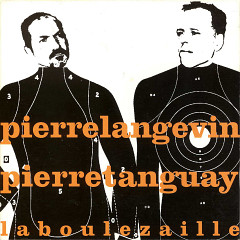
    Wydaje sie ze ie mniej znana, nam postacia jest Pierre Langevin. Ma on za soba gruntowne wyksztalcenie w zakresie klarnetu i kompozycji w Conservatoire de Musique de Québec, granie w Orchestra symphonique du Québec, Ensemble Anonymus a takze artystyczne kierownictwo Ensemble Strada. Jako tancerz i mim wystepowal w Théâtre du Trident. Przez wiele lat wystepowal w Europie.

    Duet LANGEVIN-TANGUAY proponuje nam awangardowa improwizacje na instrumenty i przedmioty mocno umocowana w tradycji nieokreslonej muzyki plemiennej jakiegos plemienia uwiedzionego przez rytm. Mimo to, nie jest to muzyka etniczna lub folkowa. To calkowicie wspólezesna muzyka. Wyrafinowana, dojrzala, zmyslowa, rytualna, zagadkowa, intrygujaca. Hipnotyzne ale z reguly powolne rytmy zakotwiczaja opowiadanie czarujac nas. Tematy i dramaturgia narastaja powoli i mistycznie blakaja sie od ducha Afryki az po niespokojne piesni Celtów. Nic nie jest czyste ale wsystko klarowne. Uporzadkowany chaos jest porzadkowany niezauwazalnie wsród misternych improwizacji. Kazdy dzwiek wydaje sie najistotniejszy i przewodni. Rytual, magia, zaklinanie.

  • 37
  • 38
  • 39
  • 40
  • 41
  • 42
  • 43
  • 44
  • 45