actuellecd

Blog

304 results
  • 35
  • 36
  • 37
  • 38
  • 39
  • 40
  • 41
  • 42
  • 43
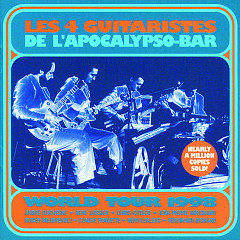
  • World Tour ’98, Chants rupestres, L’oasis, Tout le monde, Au royaume du silencieux, Musique d’hiver, Zucchini, La boulezaille, Chants et danses du monde inanimé, Fanfare Pourpour, Interférence sardines, René Lussier, Pierre Tanguay in actuellecd.com

    “Modern Folklore”, François Couture, actuellecd.com, March 16, 2004
    Tuesday, March 16, 2004 Press

    When I was asked to dive into DAME’s catalog in search of intersecting points or recurring themes that would sketch discovery trails, the trad connection stood out immediately. Not only because of the importance of traditional folk music in the development of avant-garde music in Quebec, but also because the albums belonging to this line usually speak to us in a more immediate way and are easier to grasp.

    It may seem a bit paradoxical, but tradition and innovation often go together hand in hand. When a culture’s avant-garde artists look for ways to overstep the rules of the music industry, they often turn their attention to roots — theirs and others — to find new paths to explore. Traditional folk music often holds at his core treasures of stylistic freedom and improvisation. Furthermore, its festive outlook can make it easier for an audience to accept and appreciate the introduction of new rhythmic, melodic or improvisational parameters. That’s what happened and continues to happen in Quebec. Here’s a listening trail in three parts, three original ways DAME artists approach the tradition: revisited, reinvented, and made-up folk.

    Revisited folk

    Late 1970s: a trad folk revival is sweeping the Province of Quebec, thanks to a new generation of musicians (groups like La Bottine Souriante, Le Rêve du Diable, and L’Engoulevent). Among these groups, many of which recording for the label Tamanoir, is a collective of crazy youngsters, guitarists who deprave reels and folk tunes with their melodic inventions and post-modern poetry. Among Conventum’s regular members are André Duchesne and René Lussier, who will later rank among the founding members of the collective Ambiances Magnétiques (sadly, Conventum’s two albums, À l’Affût d’un complot and Le Bureau central des utopies, are out of print).

    In Ambiances Magnétiques, René Lussier has continued to explore a rereading of Quebec’s music history. His discography is peppered with folk tunes stripped naked and dressed anew. On his three albums with Les Granules (a duo with Jean Derome) he exaggerates the Dionysian character of the music (Le Boudin de Noël — or The Christmas Blood Pudding — on Soyez vigilants, restez vivants and La Chicaneuse on Au Royaume du Silencieux rank among the finest examples). With Le Trésor de la langue, he focused on our historical folklore, turning the words of René Lévesque, the FLQ, and people on the street into a new “Cahier de la bonne chanson” (a music book of old folk tunes that rested on the piano of many Quebec families in pre-television days). His recent collaboration with American guitarist Eugene Chadbourne signals a return to these roots — their CD L’Oasis released on Victo presents many revisited tunes from both sides of the border.

    Reinvented folk

    The folklore of a nation is not limited to a body of songs, it is also a state of mind, a substratum from which many artists in DAME’s catalog dig to reinvent our traditional folk music (and others too). On La Boulezaille, Pierre Tanguay and Pierre Langevin (masters of many European folk music in the group Strada) mix up traditional and modern instruments in search of a new, “actuel” folk freed from the cage in which all kinds of traditionalists would like to preserve it. Groups like Interférence Sardines and La Fanfare Pourpour shape their original pieces in ways that bring to mind the Devil’s fiddler or street fair music (music of the people, the prime definition of “folk” music). Joane Hétu’s Musique d’hiver doesn’t have that festive side to it, but it nevertheless redefines the folklore of our Quebec winters with much more precision and evocative strength then Nelligan’s famous poem.

    Made-up folk

    Traditional folk music refers to an instinctive form of music-making, music created outside the institutions and their codes, everyday music. And what if one wants to step out of the everyday? There is always the possibility to create folk out of nothing, to make folk-fiction. René Lussier and Robert Marcel Lepage establish their “musique actuelle” — a blend of free improvisation and reminiscences of trad — as the folk music of the future, the last enigma of a dehumanized world. The same goes for André Duchesne’s Les 4 Guitaristes de l’Apocalypso-Bar, the band being presented as trad rockers from the future (a post-apocalyptic future, mind you). And with Bruire’s Chants rupestres, Michel F Côté and his friends attempt to recreate through free improvisation the folk music of prehistoric men. We may have ventured far from the falsely naive tunes of Conventum, but this music still stems from a desire to go back to the roots of music expression. And in the end, there are many ways to call a square dance.

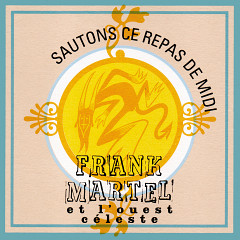
    Sautons ce repas de midi in Radio-Canada: Indicatif présent

    “Critique”, Alain Brunet, Radio-Canada: Indicatif présent, March 12, 2004
    Friday, March 12, 2004 Press

    … donc bon pourquoi pas en parler parce que y a peut-être quelques centaines de personnes, de fans de Frank Martel, ben il faudrait peut-être qu’y en ait quelques milliers parce que ce personnage, car il en est un, est vraiment doué.

    … Finalement qui se révèlent comme de très jolis portraits, enfin, d’un imaginaire absolument déluré et quand même l’expression d’un être intelligent et doué. Donc j’aime bien, moi, Frank Martel.

    … un imaginaire absolument déluré et quand même l’expression d’un être intelligent et doué.

    Luminance in The Toronto Star

    “Review”, Geoff Chapman, The Toronto Star, March 11, 2004
    Thursday, March 11, 2004 Press

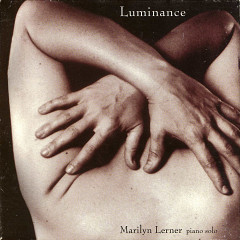
    This Toronto-based pianist is comfortable in jazz, new music, Klezmer and Latin and lately has tried collaborations with poets, computers and video artists. Here are 16 improvised solos that experiment with sound, various microphones set up in different configurations that help create vivid musical images and highlight sonic options. She draws from jazz and classical styles, explores inside tbe piano, strokes strings wearing latex gloves, works pedals furiously and uses the instrument as a drum. Two relatively long pieces, Wolfen and Rife, let her expand ideas, Glovys is rock-ish and all of it is fascinating. One snippet witb the nifty title “Codec Moment” involves using tbe tiny mike of a Palm Pilot.

    10 compositions in Ici Montréal

    “Critique”, BB, Ici Montréal, March 11, 2004
    Thursday, March 11, 2004 Press

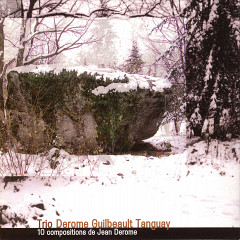
    Nonobstant la maison de disques, plus volontiers associée à la musique actuelle, c’est bel et bien d’un album de jazz (du free au third stream en passant par le post-bop, parfois pastoral, parfois presque sournois) qu’il est question ici. Les 10 compositions de Jean Derome se signalent par des thèmes très forts, vraiment accrocheurs (je vois très bien le No Name Jazz Sextet reprendre Pangolins, par exemple), et l’interaction entre Derome, le contrebassiste Nornand Guilbeault et le percussionniste Pierre Tanguay est tout à fait télépathique. Meilleur flash: Tanguay utilisant les bûches du poêle à bois sur L’Africaine. Ça chauffe!

    Les 10 compositions de Jean Derome se signalent par des thèmes très forts, vraiment accrocheurs…

    Zucchini in L’Ovabese

    “Tra passato e futuro”, Giovanni Pietro Scazzola, L’Ovabese, no. 7:10, March 11, 2004
    Thursday, March 11, 2004 Press

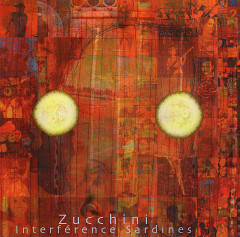
    Tuno proiettato e disteso sul futuro il curioso disco intitolato Zucchini di Interférence sardines.

    Dal Canada (per l’etichetta ambiances magnétiques: www.ambiancesmagnetiques.com) una formazione d’avanguardia di corde, ance e percussioni, fa sperimentazione anche con voci e tasti, facendo del rumore suono, trasformando le ispirazioni e la creatività in un’esperienza unica d’ascolto.

    Un caldo colore impressionante che ci accoglie glà dalla copertina e ci accompagna in un viaggio di splendide sonorità interiori.

    Un caldo colore impressionante che ci accoglie glà dalla copertina e ci accompagna in un viaggio di splendide sonorità interiori.

    Diversion in JazzoSphère

    “Critique”, Éric Normand, JazzoSphère, March 11, 2004
    Thursday, March 11, 2004 Press

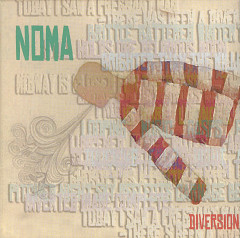
    Tom Walsh est un tromboniste très actif et très respecté au Canada. Il joue dans une foule de formations (tous styles confondus) en plus de faire de la musique pour la danse. Il s’agit ici d’un deuxième album pour la formation Noma — le premier remontant à 1996. Groupe double, à l’exemple d’Ornette Coleman, mais un propos tout autre; côté cour funky: guitare électrique à effets (Guy Kaye), basse électrique (Alan Basculis) et «funk drum» (François Chauvette); côté jardin jazz: guitare préparée bruitiste de Rainer Wiens, la contrebasse de Normand Guilbeault et le «jazz drumset» de Thom Gossage. Au centre, Tom Walsh au trombone, mais aussi à l’échantillonneur et aux commandes de ce groupe à deux faces. Le résultat est fascinant. On trouve en Walsh un soliste sobre et surtout un arrangeur très fin. Empruntant à la fois à toutes les tendances «funky» de la musique américaine (trip hop, funk, fusion), au jazz et aux univers plus abstraits, Walsh montre une connaissance des musiques de son temps et une sérieuse aptitude à les mélanger. Ouvertures grattouillantes et fondus enchaînés viennent bouleverser une musique sophistiquée remplie de réminiscences (dont In Walked Bud), d’arrêts et de reprises. La plupart des pièces sont d’ailleurs divisées en plusieurs plages (à la manière de la musique classique?) qui continuent, sans coupures évidentes, le développement d’un thème.

    Du plus racoleur au plus difficile, Walsh se permet tout, simplement parce qu’il sait rendre fertiles les rencontres inusitées. Loin des parodies de genres, Walsh mélange les styles sans les diluer. En prime, la prise de son live est plus que convaincante. Épatant.

    Épatant.
  • 35
  • 36
  • 37
  • 38
  • 39
  • 40
  • 41
  • 42
  • 43