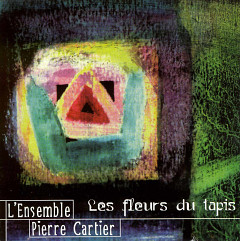
Les fleurs du tapis, Pierre Cartier in Revue & Corrigée
On retrouve toujours un peu les mêmes interprètes d’un enregistrement à l’autre, issu du collectif montréalais. Mais ici, on se situe moins dans l’optique des musiques
S’il y a, certes, un son, ou du moins, une approche musicale
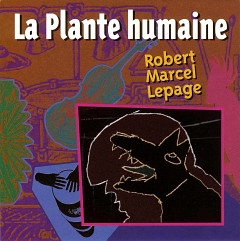
Musique de film d’un genre un peu particulier (la musique, mais, à vrai dire, le film semble l’être aussi
industrieile… et on pourrait citer d’autres genre musicaux. Mais La Plante humaine n’est pas un simple patchwork le tout s’inscrit dans une trame sonore et mélodique qui rejaillit de temps en temps, un peu comme les nombreuses images surgissant dans la mémoire du personnage du film,
Pinning down the music ot Jean Derome is a Study in futility. This Monlréal native is as likely to be composing music for dance or film as he is to be darting through rock-tinged improvisations with his group Dangereux Zhoms, or tearing into the changes of a Monk tune. What all of his music has in common is a keen sense of humor, an insaliable sense of inquisitiveness, and an impeccable ear for arrangements and group interaction. Derome is helped immeasurably by his association with a large pool of like-minded Montréal musicians who form the artists’ collective recording on the Ambiances Magnetiques label.
Assembled in the studio over the period of a year, La Bête — The Beast within is music commissioned for a dance performance. This is music based on exotic color and gesture, building layers up from minute details. As usual, Derome draws from popular music, brass bands, and exotic instrumentation. There is a strong tie to theater and cabaret throughout, though he always avoids the predictable or trite. On one piece, military percussion tattoos lay a foundation for pumping brass cadences while accordion and keyboards seesaw drunken rhythms as flute dive-bomb the ensemble. The next darts into free collective flurries as free gasped vocals spray nonsense scat while duck calls, percussion, and tightly voiced trumpet and trombone pace and circle. Yet even in the freest moments, Derome never completely abandons melodic flow and pulse. Tanguay’s percussion creates a propulsive undertow that freely draws the music along, often augmented by additional percussion grooves. The brass trio, and particularly the tuba, provide warm dark shadings while wheezing accordion, guitar, or piano provide delicate, open harmonies. Whispered and warbled vocals buzz and flitter around the cinematic arc of the music, which has dramatic and spatial richness. Instruments come in and out like characters wrapped in the mystery of an abstract theater piece, moving from dark, brooding sections to wry levity in a matter of moments. The interplay is tight throughout, and while much of the music is carefully arranged, there is considerable room for the nine players to collectively stretch. There is no question that the choreography will add much to the music, but this recording ably stands on its own.
Déjà l’intitulé est clair. Et que rajouter aux indications du livret/dépliant
Jean Derome, dont nous connaissions déjà les qualités d’arrangeur pour une grande formation (Confiture de Gagaku Victo 05) fait montre ici de toute sa finesse et de son propre sens de l’humour, par ailleurs des plus communicatifs.
De facture plus actuelle, les “17 jeux varies pour 12 improvisateurs” (les six Québécois de l’Ensemble Flammeches, et les six Belges de l’EnsemWe White Wine Dark Grapes) de Tur’luttes faits de collages, bruitages, et rappelant quelque peu certains procedés utilisés par John Zom, participent cependant du même esprit, non sans une référence (volontaire
Au final, un certain esprit français, des Québécois, des Belges… Jean Derome a bien mérité de la francophonie
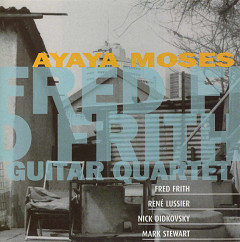
Composed of René Lussier, Nick Didkovsky, Maik Stewart and Fred Frith, this is one fearsome guitar foursome. Recorded in Montréal in July and November of last year, the material here is mostly original, such as the title track, which ranges from bone-crushing industrial power chords to microtonal minimalism. There are also two tunes by Italan composer Olivia Bignardi and a dynamic arrangemerk of Pulau Dewata by the late Québécois composer Claude Vivier. 3/5
Yeah, I know it’s not exactly new, but this disc of previously unissued material by the underappreciated electric bassist Pierre Cartier (Les Dangeureux Zhoms, Évidence, René Lussier) is a little gem. Recorded back in 1989 at l’Église Purification-de-la-Bienheureuse-Vierge-Marie in Repentigny, Cartier leads a band made up of Jean Derome on alto saxophone, Pierre Tanguay on drums and Jean-Denis Levasseur on soprano saxophone. The church acoustics give this coffee shop bop a large, airy sound. And some of it really smokes, like the swinging Tautologie and the funky Signaux de fumée. 4/5 ★★★★