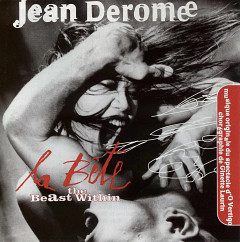
La Bête / The Beast Within in Cadence
Pinning down the music ot Jean Derome is a Study in futility. This Monlréal native is as likely to be composing music for dance or film as he is to be darting through rock-tinged improvisations with his group Dangereux Zhoms, or tearing into the changes of a Monk tune. What all of his music has in common is a keen sense of humor, an insaliable sense of inquisitiveness, and an impeccable ear for arrangements and group interaction. Derome is helped immeasurably by his association with a large pool of like-minded Montréal musicians who form the artists’ collective recording on the Ambiances Magnetiques label.
Assembled in the studio over the period of a year, La Bête — The Beast within is music commissioned for a dance performance. This is music based on exotic color and gesture, building layers up from minute details. As usual, Derome draws from popular music, brass bands, and exotic instrumentation. There is a strong tie to theater and cabaret throughout, though he always avoids the predictable or trite. On one piece, military percussion tattoos lay a foundation for pumping brass cadences while accordion and keyboards seesaw drunken rhythms as flute dive-bomb the ensemble. The next darts into free collective flurries as free gasped vocals spray nonsense scat while duck calls, percussion, and tightly voiced trumpet and trombone pace and circle. Yet even in the freest moments, Derome never completely abandons melodic flow and pulse. Tanguay’s percussion creates a propulsive undertow that freely draws the music along, often augmented by additional percussion grooves. The brass trio, and particularly the tuba, provide warm dark shadings while wheezing accordion, guitar, or piano provide delicate, open harmonies. Whispered and warbled vocals buzz and flitter around the cinematic arc of the music, which has dramatic and spatial richness. Instruments come in and out like characters wrapped in the mystery of an abstract theater piece, moving from dark, brooding sections to wry levity in a matter of moments. The interplay is tight throughout, and while much of the music is carefully arranged, there is considerable room for the nine players to collectively stretch. There is no question that the choreography will add much to the music, but this recording ably stands on its own.