Sauter au contenu principal
actuellecd

Blogue

304 résultats
  • 43
  • 44
  • 45
  • 46
  • 47
  • 48
  • 49
  • 50
  • 51
  • Studio — Analogique — Numérique dans Coda Magazine

    «Martin Tétreault, platiniste extrême», Philippe Robert, Coda Magazine, no 52, 1 janvier 2004
    jeudi 1 janvier 2004 Presse

    Si les disques traditionnels ont déserté la platine du Québécois, c’est au profit d’une exploration sans frontière de la lutherie phonographique. Un coffret en duo avec Otomo Yoshihide fait le point sur ces avancées du turntablism.

    Dans le champ des musiques expérimentales sévissent également des DJ qu’on appelle platinistes, probablement pour différencier leur pratique, qui sur le modèle des pistes suscitées par John Cage, est plus étendue. Ainsi en est-il de la démarche de Martin Tétreault qui a commencé, comme beaucoup de ses confrères, par s’intéresser à la citation et à l’idée de piratage, avant d’œuvrer dans un secteur plus bruitiste. S’il a d’abord joué des disques, de leur contenu comme de leurs craquements, variant leur vitesse de lecture et sautant de l’un à l’autre pour générer, à l’instar d’un Christian Marclay, des apparitions lexicales plus ou moins saugrenues, c’est désormais pour les moyens de reproduction en eux-mêmes qu’il se passionne. «Un jour, j’ai pris un disque, l’ai coupé en son milieu, en ai fixé les deux moitiés ensemble, mais inversées, et l’ai mis sur un pick-up pour l’écouter. Tout est parti de là», comme le raconte ce plasticien de formation. «La platine, qui me fascinait depuis l’enfance, était devenu un objet actif». Cependant, plus qu’en lecteur sophistiqué comme il l’a utilisé en duo avec le guitariste René Lussier par exemple, c’est maintenant en tant que véritable générateur de sons que Tétreault a transformé la platine, abandonnant tout ce qui avait trait au détournement pour ne plus se consacrer qu’à elle. En la modifiant et l’explorant ainsi que ses à-côtés. «La platine en elle-même peut produire du son car son aiguille et la cellule peuvent agir comme un microphone. L’aiguille posée directement sur le plateau crée des vibrations dont on peut amplifier le volume». Singulier, son art est centré sur la musique des objets: deux à quatre platines dont il joue, chacune équipée de plusieurs bras, avec des aiguilles préparées reliées à des ressorts ou des ballons, l’ensemble passant au travers d’un mélangeur. «Avec les deux bras» confie-t-il râvi, «je peux obtenir des effets de delay». Effectivement, le résultat sonore est saisissant, comme en témoigne un coffret qui vient de sortir, réalisé en compagnie du Japonais Otomo Yoshihide.

    Comme lui, ce dernier, influencé par Sachiko M, a délaissé le zapping (il a longuement théorisé le virus sampling) et tout ce qui est de l’ordre des réminiscences pour ne plus se consacrer qu’au son, notamment au sein d’l.S.O. et de Filament. «À un moment donné» confie-t-il, «j’en ai eu assez de travailler sur le processus d’échantillonnage. J’ai alors trouvé plus intéressant d’expérimenter sans disque, de produire du feedback, des bruits parasites et de les monter ensemble. D’essayer de nouvelles techniques». En trois cd, ces deux musiciens inventent une symphonie de scratches corrosifs (le premier est un véritable duo dans les conditions du live, le second, un remix analogique signé Tétreault, et le troisième, un remix numérique de Yoshihide) dont l’architecture fascine. Une architecture peut-être d’ailleurs indirectement et en partie influencée par la techno qu’il dit apprécier pour certaines de ses qualités: «J’aime son évolution verticale: un élément apparaît, un autre disparait, dans un flux continu propice à la trance». Ce duo, on l’aimera aussi jusqu’au vertige.

    Martin Tétreault / Otomo YoshihideS/t LP (Ambiances Magnétiques/Orkhêstra) Martin Tétreault sera en tournée en France avec MXTC au cours du printemps 2004.

    En trois cd, ces deux musiciens inventent une symphonie de scratches corrosifs… dont l’architecture fascine.

    Sang 9 dans Exclaim!

    «Reviews — Improv & Avant-Garde», Eric Hill, Exclaim!, 1 janvier 2004
    jeudi 1 janvier 2004 Presse

    Québec has been a haven for modern music in many forms for some time, but not with such diversity and visibility as in the last few years. Labels like Constellation, Alien8, Intr_version, Substractif, No Type, Victo and festivals like FIMAV and Mutek have fostered growth in rock, electronics and jazz. DAME has been a home for labels interested in improv, new composition and electroacoustics for ages, and now they are casting an eye on the future artists in these genres with Sang9, or “New Blood” as the word play translates. Over the 20 tracks we are treated to power lounge, breathless world/jazz (Melanie Auclair), car-crash rock (Face Dans l’dash) and a cappella phonetics (Kareya). Beyond the music itself, what is striking about the collection is how well it all fits together. Tastes aside, there isn’t a track presented that doesn’t provide some surprise and promise.

    … there isn’t a track presented that doesn’t provide some surprise and promise.

    Luminance dans Exclaim!

    «Piano’s Inner Life», Nilan Perera, Exclaim!, 1 janvier 2004
    jeudi 1 janvier 2004 Presse

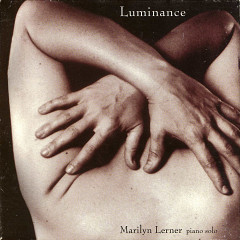
    Back in the ’60s and into the ’70s, there was a style of painting that came into popularity called hyperrealism. True to its name, it portrayed fairly mundane objects (cars, storefronts) in ferocious detail, paying obsessive attention to reflective surfaces and colour. The results were perspectives that the human eye could not reproduce if it looked at the same object, due to the physical limitations of the eye itself. Marilyn Lerner has presented an album of solo piano music that uses various recording techniques to give us audio snapshots of music that you could not hear in real life unless you managed to get inside the piano itself. In this way she has taken an interesting approach that gets into the realm of electroacoustics and remixers. The music itself is a fascinating mix of tuned percussion, electronic glitch, orgies of overtones and blazing technique. The debts to Messiaen, Cage and Debussy have been paid off with interest and Lerner manages to avoid the trap of having the piano preparations and extended recording techniques sound like gimmicks. It’s a real treat to hear piano music as it’s heard by the musician, in all its detail and at the same time realise that she is responding so closely to subtleties that a live listener could only guess at. A remarkable piano album in which the piano itself becomes a truly significant other.

    What inspired you to record an album this way? Lerner: Well, first of all, recording piano has always been a pain in the ass. I had been interested in audio for a while and what different mics can do, so l wanted to work with the shadings and colours of sound and work through some of that stuff. We also worked with compression in the mastering stage to bring out some of the harmonics in particular pieces, but it’s mainly about improvising. It’s all improvised. The mastering and recording were kind of like developing photographs, where you bring out certain things in that process, but it was the musical integrity of each piece that I was going for. In that way it’s a very personal snapshot of where I am right now when it comes to the piano and improvising, but it’s also a chance to get a listener’s ears right inside the piano.

    Do vou plan on taking a similar approach to live playing? Yeah, if I could find someone who was hip to do it with, but it’s also tricky because it’s such a specific situation. You can’t just go into a club and make it work. You need a good PA and mics and a technician who’s also a musician, a good piano and a good room. I mean if I could find all that in one place, I’d love to do it.

    A remarkable piano album in which the piano itself becomes a truly significant other.

    Un moment de bonheur dans Coda Magazine

    «Review», Mike Chamberlain, Coda Magazine, 1 janvier 2004
    jeudi 1 janvier 2004 Presse

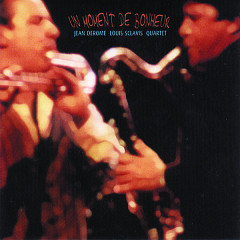
    This concert at the 2001 Victoriaville festival brought together two of Quebec’s finest, Jean Derome (reeds) and Pierre Tanguay (drums), with two of France’s, Louis Sclavis (reeds) and Brano Chevillon (bass). This “summit” meeting came with high expectations; the ensuing performance lived up to them. The energy in the room was right, and afterward, Sclavis and Derome were asked if they would release a recording of the concert. Sclavis answered laconically that it depended what the tape actually sounded like.

    What the tape sounds like is four very fine musicians in synch with one another. Derome and Sclavis can be harsh and propulsive, or lyrical, or edgy, as the situations demands (five of the six compositions are by Derome, the other by Sclavis). Tanguay can lock into a groove or provide skittenng bursts of color, and Chevillon is a monster bassist who coaxes all manner of sound out of his instrument. Chevillon’s work on Le baiser and Sclavis’s Suite pour un bal is otherworldly. His distorted, bowed line on the latter adds a sense of impending doom that takes the music to a whole other dimension.

    I’ll go so far as to say that the performance was better than I had remembered.

    This “summit” meeting came with high expectations; the ensuing performance lived up to them.
  • 43
  • 44
  • 45
  • 46
  • 47
  • 48
  • 49
  • 50
  • 51