Sauter au contenu principal
actuellecd

Blogue

73 résultats
  • 5
  • 6
  • 7
  • 8
  • 9
  • 10
  • 11
  • 12
  • 13
  • Feu aimant dans SilenceAndSound

    «Critique», Roland Torres, SilenceAndSound, 2 avril 2020
    vendredi 3 avril 2020 Presse

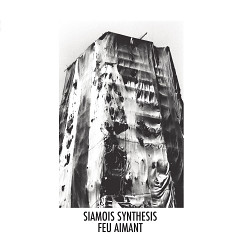
    C’est de Montréal que nous arrive Siamois Synthesis, le super-groupe formé par Maxime Corbeil-Perron (électronique), Maya Kuroki (chant), Sylvain Gagné (basse) et Simon Trottier, auteur d’un premier album, Feu Aimant, qui conjugue habilement diverses tendances, entre post-rock et ambient, experimental folk et psychédélisme drone.

    La grande force de Siamois Synthesis consiste dans sa capacité à créer des ambiances changeantes tout en suivant une identité sonore qui lui est propre, déclinant les montées énergiques sans franchir les limites menant à l’explosion.

    Feu Aimant aime naviguer sur des territoires mouvants, lâchant les chevaux tout en les tenant de la bride, instituant des zones de confort aux frontières ténues flirtant avec les abysses. Le tout est une combinaison d’équilibre et d’abstraction, d’écoute intérieure et de chemins de traverse, de familiarité émotionnelle et de distanciation cérébrale.

    Siamois Synthesis distille ses ingrédients avec modération, alternant titres instrumentaux et chantés, avec des parties de voix parfois disséminées dans la densité des compositions, faisant vaciller les instruments sur des surfaces à la froideur martiale digne des années 80, à l’image du somptueux Urizen. Un album riche et dense qui délivre au fil des écoutes son âme mystérieuse. Très fortement recommandé.

    Un album riche et dense qui délivre au fil des écoutes son âme mystérieuse. Très fortement recommandé.
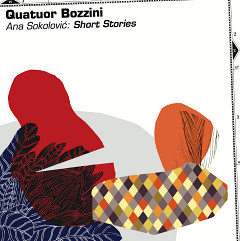
    Ana Sokolović: Short Stories dans Vital

    «Review», Dolf Mulder, Vital, no 1227, 30 mars 2020
    jeudi 2 avril 2020 Presse

    Quatuor Bozzini is a very enterprising and focused quartet operating since 1999. Members are: Clemens Merkel (violin), Alissa Cheung (violin), Stéphanie Bozzini (viola) and Isabelle Bozzini (cello). Most of their challenging projects concern modern experimental composers as you may know from earlier reviews. This time they concentrate on some compositions by Ana Sokolović. She is a composer from Belgrade, Serbia. She studied at the University of Novi Sad, Belgrade and Montréal where she is settled since two decades. She has composed for orchestra, solo piano, chamber music ensemble and theatre. The quartet choose following compositions to perform: Ghost 1 (2015), Commedia dell ‘arte I-II-III (2010-2013), Ghost 2 (2015), Blanc dominant (1988) and Troisième page après le soleil (2013). Commedia dell’ arte is the central work, on this release, a composition in 10 parts, inspired on this old Italian theatre tradition. Each one with its own characteristics. But all are very lively and dramatic with dominant elements that are playful and accessible. The composition is preceded and followed by two other ultra short compositions: Ghost I and Ghost II, the first one being very up tempo, while the second one in contrast is a very meditative and reflective piece. Blanc Dominant is inspired on another art form, contemplating the abstract paintings of Guido Molinari. Sokolović proves to be a composer of very intense and dynamic music with influences of (Balkan) folk music and theatre. In the hands of Quatuor Bozzini her compositions come in a very inspired and concentrated performance.

    Sokolović proves to be a composer of very intense and dynamic music with influences of (Balkan) folk music and theatre. In the hands of Quatuor Bozzini her compositions come in a very inspired and concentrated performance.

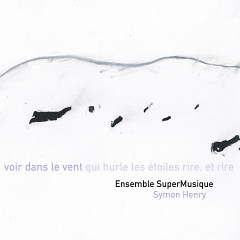
    Voir dans le vent… dans Vital

    «Review», Dolf Mulder, Vital, no 1227, 30 mars 2020
    jeudi 2 avril 2020 Presse

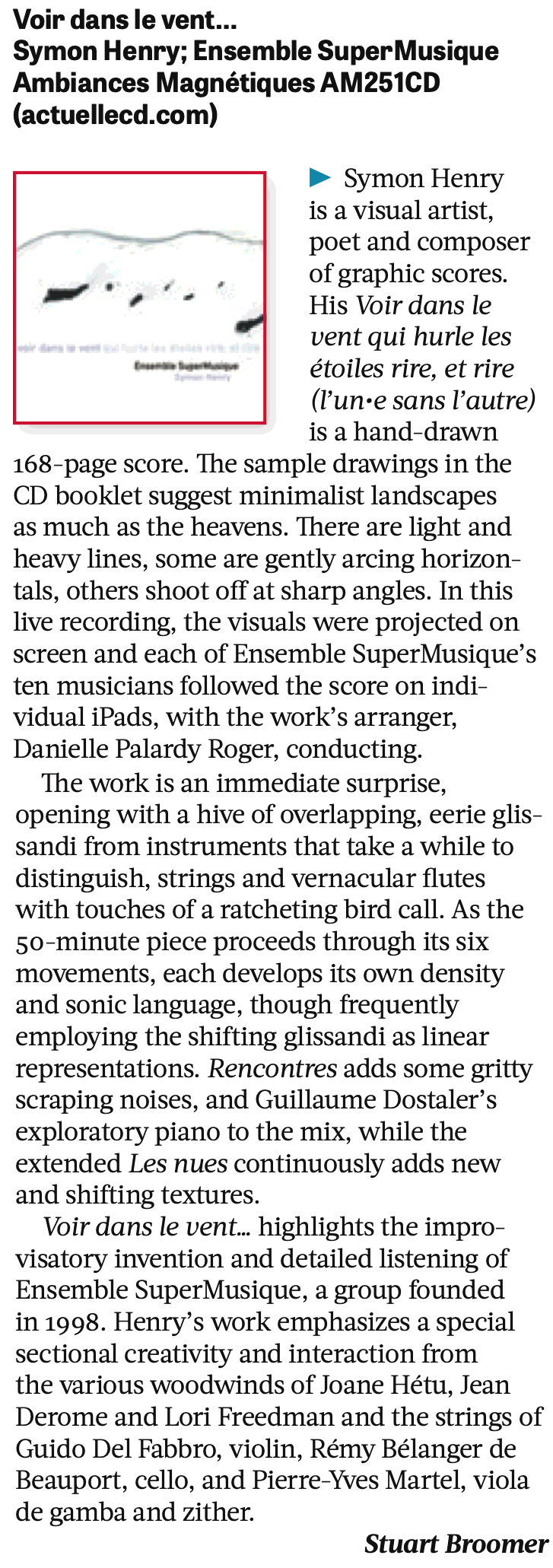
    The first generation of musicians from the Ambinaces Magnétiques from Montréal are still very productive. This counts for example for Ensemble SuperMusique, founded in 1999 and directed nowadays by Joane Hétu and Danielle Palardy Roger. Their projects always are about crossing borders between improvisation and composition, using electronic as well as acoustic instrumentations. This time the ensemble is compiled of: Isaiah Ceccarelli (percussion), Guido Del Fabbro (violin), Jean Derome, Lori Freedman (clarinets), Joane Hétu (alto sax, objects), Pierre-Yves Martel (violin de gamba, cither), Danielle Palardy Roger (direction), Alexandre St-Onge (electric bass), Scott Thomson (trombone), Guillaume Dostaler (piano), Rémy Bélanger de Beauport (violoncello), Guido del Fabbro (violin) and Jean Derome (alto sax, flutes, objects). No electronics this time on this live recording that was “part of the exhibition of composer Symon Henry’s graphic score Voir dans le vent qui hurle les étoiles rire, et rire”. Symon Henry is a young multi-disciplinary artist and researcher, interested in combining concert music, visual arts and poetry. For this new work he wrote a 168-page hand-drawn graphic score. It is a work in six parts taking almost 52 minutes, played in one continuous flow. The graphic scores a series of very abstract and minimalistic drawings. So I guess each performance is totally different. As interpreting graphic scores leave plenty of room for the musicians, who make their own individual choices in interpreting the graphic score. For so far this can be called a setting of improvised music to some extent, it is not one whereby the performers directly respond to another. But surely they also made their choices considering the dynamic, etc of the total sound and flow of the music. The work continues more or les as a continuous stream, built up from often long extended movements and gestures by the performers. The music unfolds gently and cautious, leading up to delicate and fragile constructions, united by the direction of Danielle Palardy Roger.

    The music unfolds gently and cautious, leading up to delicate and fragile constructions…

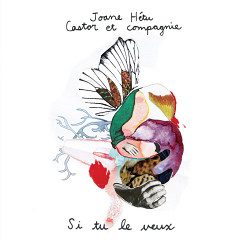
    Castor et compagnie: Si tu le veux dans Vital

    «Review», Dolf Mulder, Vital, no 1227, 30 mars 2020
    jeudi 2 avril 2020 Presse

    Another long-standing collaboration is Castor et compagnie, started by Hétu in 1992. With this project she tries to shed new light on the ‘love song’, exploring new relations between text and vocals on the one hand and music on the other. After a long silence she presents now her third album of this project with music and texts by her hand. Performed by a quintet of veteran musicians: Joane Hétu (vocals, alto sax, objects), Jean Derome (sax, flute, keyboard, objects, voice), Diane Labrosse (sampler, voice), Pierre-Yves Martel (electric bass, synthesizer) and Pierre Tanguay (drums). Vocals (and texts) play a prominent role, and are essential for understanding what is happening here. Alas my knowledge of the French language is far too limited. Concentrating on the music then, we hear experimental song formats, of a style and quality we are used too from Hétu and her companions. They may be not very surprising, but again they are full of funny twists and arrangements with sensitive and expressive vocals and playing. It’s intimate atmosphere and drama is not to be missed.

    … full of funny twists and arrangements with sensitive and expressive vocals and playing. It’s intimate atmosphere and drama is not to be missed.
  • 5
  • 6
  • 7
  • 8
  • 9
  • 10
  • 11
  • 12
  • 13