Sauter au contenu principal
actuellecd

Blogue

108 résultats
  • 3
  • 4
  • 5
  • 6
  • 7
  • 8
  • 9
  • 10
  • 11
  • The Squiggle Game dans Musicworks

    «Review», Jonathan Bunce, Musicworks, no 125, 21 juin 2015
    dimanche 21 juin 2015 Presse

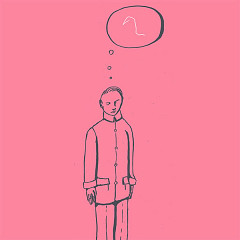
    The Squiggle Game is that rarest of beasts, the free-improv disc you can air-drum along to. Its absorbing rhythmic heft, especially on tracks like the lead-off That Gum You Like, is unsurprising when you realize that it’s the brainchild of a drummer. Alexander MacSween has been a part of the Montreal music underground since the late 1970s, working on every shade of the spectrum between rock and jazz: with punk and indie icons such as The Nils, Pest 5000, and Bionic; numerous improvised music collaborations, such as Detention, his ongoing duo with guitarist Sam Shalabi, founded in 1998; as well as music for dance, theatre, film, and multimedia pieces. The Squiggle Game is an anti-concept album, in which MacSween aimed to overcome a writers’ block consisting of a surplus (rather than deficit) of ideas. He asked &records co-owner Fabrizio Gilardino to design an album cover in advance, including titles, durations, and even guest musicians. The plan initially worked well to help the artist overcome his block, but soon he felt creatively constrained by the parameters and began colouring outside the lines, so to speak. He’d just read English psychoanalyst Donald Winnicott’s description of “the squiggle game,” created for his child patients, in which he would doodle on a piece of paper and get the children to continue the drawing. MacSween’s pieces indeed have a childlike sense of playfulness, squiggling across the border between composition and improvisation. MacSween, who commands the drum set, marimba, keyboards, and rhythm programming, is joined by frequent collaborator Shalabi on electric and nylon-string guitar, as well as Ratchet Orchestra bassist Nicolas Caloia (who also adds some Korg synth action), and the revelatory playing of percussionist Corinne René, who fills in much of the tonal space between the other players, turning aural doodles into sonic paintings.

    The Squiggle Game is that rarest of beasts, the free-improv disc you can air-drum along to.

    Rubedo’ ro dans The Squid’s Ear

    «Heard In», Paul Serralheiro, The Squid’s Ear, 19 juin 2015
    vendredi 19 juin 2015 Presse

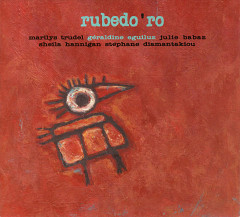
    A more magical cauldron of composition and improvisation could hardly be concocted than this creative collection of pieces for voice and string quartet. I had the opportunity of attending the premier performance of this project in Montreal before it got “waxed,” and the recording is every bit as magical as the live rendition of the pieces.

    Composer and singer Equiluz has imagined a finely inflected set of nine movements. Not always articulating an explicit text, the voice is used as a fifth instrument in a kind of multilingual scat style. The strong geo-historical connotations of the string quartet (i.e. Europe’s noble courts c. 1700s and on) are here subverted in idiomatic writing combining indigenous sounds of the Americas along with free improvisation and tightly rendered ensemble writing that evokes many local colors, from the lush valleys of Mexico, to the Brazilian Rainforest, to the shouting of the Thunder Beings on the North American plains, and more.

    Born in Mexico, the cosmopolitan Equiluz has lived in Columbia, Paris and Lisbon, before coming to Montreal by way of Quebec City. She has performed internationally and is a frequent collaborator with musicians in the thriving Musique Actuelle scene in the province of Quebec. In this ambitious project, a polyglot sensibility comes through loud and clear in the multi-stylistic qualities of the compositions, with titles in a number of languages, like the opener “Aluxes” which announces the music to come via allusions to a playful Maya spirit being, and other titles, like “Tiempo Herido,” that reflect a more mournful mood, or the rhythmically possessed piece called “Tonnere.”

    In Rubedo’ro, Equiluz is joined by four Montreal string players: violinist Marilys Trudel, viola player Julie Babaz, cellist Sheila Hannigan and bassist Stéphane Diamantakiou. The ensemble is honed to render in very precise playing the music Equiluz has penned, but as mentioned before, there is also plenty of improvisation, and individual expression worked in, which makes this release so interesting: it sings with a clear authorial voice, but is emboldened by the multiplicity of personalities, making this a very living, vibrant set of music. The stylistic twists and turns make for an exotic ride along the fine edge that composed material meets improvisation can provide, but the writing here is also a solid and taut high wire along which dance the many colors of Equiluz’s richly textured, warm and expressive voice.

    A more magical cauldron of composition and improvisation could hardly be concocted than this creative collection of pieces for voice and string quartet.

    Reflective Drime dans The Squid’s Ear

    «Heard In», John Eyles, The Squid’s Ear, 15 juin 2015
    lundi 15 juin 2015 Presse

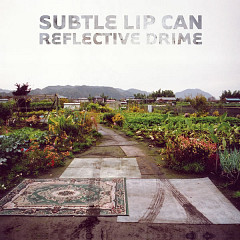
    Subtle Lip Can is the trio of Joshua Zubot on mandolin and violin, Bernard Falaise on guitar, and Isiah Ceccarelli on percussion. All members of Montreal’s active improvised music scene, they came together as a trio in 2007, at the city’s regular improv showcase, Mardi Spaghetti. Reflective Drime is their second release, the follow-up to their fine 2010 eponymous debut, also on Drip Audio. As on that album, the music here totally belies any expectations which the instrumental line-up may create. In fact, it is occasionally difficult to attribute particular sounds to one of the credited instruments. In particular, the music often has a deep bottom end that is consistent with a bassist being present, although none is credited; it may be a treated guitar, although no treatments are mentioned.

    Oddly, the Drip Audio website cites three eclectic comparisons for Subtle Lip Can’s music, saying, “The trio brews up a plethora of sonic phenomena that echoes Morton Feldman’s Triadic Memories, Art Pepper’s Wintermoon (more in the rhythmic sense), and melted melodic moments of Stravinsky’s Rite of Spring.” If you are familiar with those pieces of music, try imagining that combination — the chances are that what you imagine will have few similarities to the actual music here; if you do not know the pieces, nothing here will help you. Instead, across ten tracks, totalling fifty-one minutes, we are treated to the trio’s own idiosyncratic improvisations which seem to draw upon a range of influences way beyond those listed above. In particular, there are occasional forays into the territory of heavy rock or industrial noise (“Shuffle Stomp”) which belie the first word of the group’s name.

    Although their music is clearly improvised, Subtle Lip Can seem to delight in kicking against the conventional norms of “improv”. So, no track here exceeds eight minutes and the majority are nearer four. The tracks do not go in for extended explorations of an idea or theme, usually sticking with the initial soundscape with subtle (yes!) variations. Sometimes that seems a pity — for instance, the music on the longest track, “Rommer Chanks”, is rich and complex, meaning the longer it continues the better it sounds; so It could comfortably have been extended to three times its eight-minute duration. By comparison, some of the shorter tracks feel brief and undeveloped, really going nowhere much before they end. Such quibbles aside, Subtle Lip Can have developed nicely in the years since their debut and are moving in the right direction.

    Musiques de chambres dans Downtown Music Gallery

    «Review», Bruce Lee Gallanter, Downtown Music Gallery, 12 juin 2015
    vendredi 12 juin 2015 Presse

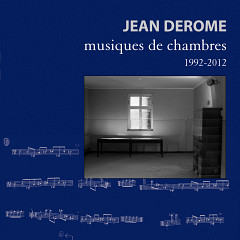
    For myself and a number of other attendees at the 2015 FIMAV Fest in Quebec last month, the best set was Jean Derome’s (20 piece) Resistances Orchestra. Reeds wiz and composer, Jean Derome, has long been a major part of the Quebecois creative music scene. This fine disc was actually released last year (2014) but we just got a promo copy in recently so it is time to give it the credit due. After more than twenty discs as a leader, this is Mr. Derome’s first release of his chamber music, covering two decades of writing (1992-2012). Each of the six pieces feature a different ensemble, solo or duo. Les Dangereux Zhoms here are a six piece unit that Mr. Derome has worked with on a half dozen previous releases. They perform “5 Etudes Pour Figures” for this disc, with Derome on soprano sax, Ellwood Epps on trumpet and Guillaume Dostaler on piano. The music is rich and well constructed, the use of the marimba & horns reminds me of “Uncle Meat” (the Mothers, circa 1968) but without any slapstick but equally complex layers of lines. “Les Cheminees” is for a flute octet that accompanied a video. Again, Mr. Derome does a fine job of arranging various flutes (piccolo, regular & bass flutes), sometimes stark and yet consistently focused and fascinating. Ontario-based clarinetist, Lori Freedman, has been a integral member of the Ambiances Magnetiques collective for more than a decade and has been featured on a number of Derome, Joan Hetu and Ensemble SuperMusique sessions. “Les Jumeaux” is performed by the duo of Ms. Freedman on clarinets and Mr. Derome on alto sax & bass flute. This duo sound especially great together playing Derome’s quirky, playful and festive music. Ms. Freedman plays solo bass clarinet on “Oiseau-Lyre”, an intense and most expressive tour-de-force. “Rouge” is performed by the Quasar Sax Quartet. Mr. Derome is an extraordinary saxist and obviously knows how to write for a sax quartet, exploring a variety of textures, harmonies and extended sounds. This disc shows that Mr. Derome continues to evolve as a composer, his compositions covering a variety of approaches and influences. Highly recommended.

    Highly recommended.

    Quatuor Bozzini dans Bachtrack

    «Contemplations on listening: Alvin Lucier and the Bozzini Quartet in Montréal», Christina Volpini, Bachtrack, 10 juin 2015
    mercredi 10 juin 2015 Presse

    As many composers continue on a mad dash to ensnare audiences in a spiral of novel sounds, fantastic visuals and complexity, it is rare to find a composer who is interested solely in investigating the phenomena of sound itself. Musical trends have come and gone over the course of the 20th century, and yet composer Alvin Lucier has continued to produce works focused on a single idea related to sound production and the act of listening. This past Sunday, Montréal hosted Lucier as he, the Bozzini Quartet and other musicians performed his works of the past two decades.

    At the age of 84, Lucier is a pioneer in the field of experimental music in post-war America. He often makes use of the properties of sound, room acoustics and the experience of hearing in his compositions. Of particular interest in this concert was the phenomenon of “sound wave interference”. This occurs when two sound waves which are very close in frequency approach the ear. The two slightly out-of-sync waves interfere with each other, and we hear this as a sort of ‘beating’ – imagine two instruments playing slightly out of tune. Though undesirable in other forms of classical music, Lucier draws our attention to this and other naturally-occurring acoustic phenomena, often with the use of technology.

    Performing pieces of this nature requires painstaking concentration and hard work on the part of the player; pitches must be executed with absolute precision in order to create the desired effects. The first three pieces on the program presented sound wave interference through the context of a soloist in interaction with electronics. The first piece, Wind Shadows, featured trombonist Felix Del Tredici’s careful microtonal playing. Different rates of beating were created as he played long tones in unison with two pure sine oscillators. This was followed by Violynn, in which the Bozzini Quartet’s Clemens Merkel created a similar effect, this time against a series of six sine waves. Cellist Isabelle Bozzini then performed Charles Curtis, carefully executing double stops against long sine waves to form interference. The performers each paid close attention to detail, displaying fine control of their instrument through careful microtonal inflection.

    Lucier himself performed the piece Bird and Person Dyning, in which an electric bird call interacted with feedback between speakers and a binaural microphone. ‘Dyning’ refers to heterodyning, a term from early radio transmission in which the addition and subtraction of two tones creates two new tones. With the performer required to wear the binaural microphone, the frequency of the feedback was dependent on Lucier’s position in the room. The composer moved in the space slowly and deliberately, able to create uncanny effects through even slight changes in the position of his body. At times, this included the strange experience of difference tones that seemed to form and vibrate right within the ear. The effects of space and resonance were also dealt with in the charming piece Nothing is real, in which pianist Daniel Áñez first recorded fragments of the Beatles song Strawberry Fields Forever with a wash of damper pedal, then replayed the fragments on a speaker housed inside a teapot. By raising and lowering both the lid and the teapot itself, Áñez was able to isolate particular partials within the wash of recorded piano.

    The final piece of the evening, Small Waves, brought all of the members of the Bozzini Quartet to the stage as well as Del Tredici and Áñez. In this piece, the performers played long, sustained clusters tuned closely to pitches of the feedback between speakers and six microphones. These microphones were inserted in glass vessels partially filled with water and placed around the space. On occasion, stage hands would pour water between vessels, thereby changing the pitch of the feedback. At 50 minutes in length, this piece was a display of endurance. The Bozzini Quartet’s care and precision was essential to the execution of the piece; the subtleties of the work were perceptible due to their exact microtonal tuning and synchronous ensemble playing. The quartet confronted the challenges of this music with confidence, their dedication to the work evident in their effort to bring these acoustic phenomena to fruition.

    In many ways, Lucier’s music can be just as challenging for the listener as it is for the performers. Little of Western art music as single-minded and static, particularly when compared with the emotional journeys in the tradition of Beethoven, Wagner or Mahler. What Lucier’s music lacks in turbulence and cinematic grandeur it gains in quiet contemplation; rather than an elaborate structure built from many parts, this music is a monolith chiselled from a single block of marble. Lucier’s music forces us to slow down, reminding us of the quiet wonder found within the everyday act of listening.

    The Bozzini Quartet’s care and precision was essential to the execution of the piece; the subtleties of the work were perceptible due to their exact microtonal tuning and synchronous ensemble playing. The quartet confronted the challenges of this music with confidence, their dedication to the work evident in their effort to bring these acoustic phenomena to fruition.
  • 3
  • 4
  • 5
  • 6
  • 7
  • 8
  • 9
  • 10
  • 11