Sauter au contenu principal
actuellecd
  • This website is also available in English.

Blogue

323 résultats
  • 1
  • 2
  • 3
  • 4
  • 5
  • 6
  • 7
  • 8
  • 9
  • Subsurface dans Bad Alchemy

    «Kritik», Rigobert Dittmann, Bad Alchemy, no 68, 1 décembre 2010
    mercredi 1 décembre 2010 Presse

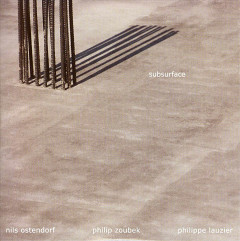
    Berlin — Köln — Montréal, Trompete — präpariertes Klavier — Bassklarinette & Altosax. Eine dröhnminimalistische Internationale, wobei die Drones ganz diskret und völlig unplugged generiert werden. Durchwegs mit extended techniques. Mit den gedämpften Mikro-/Haltetönen kontrastieren bei ‚Hyperlink‘ dann Stenographien, hingeworfene Klangkürzel, Wischer, Kratzer, (Über) Blas- und Kullerlaute, Spotz- und Klimperei. Aber schon ‚Calm City‘ breitet wieder diskret den Mantel über sich. Weich geformte Dehnungen, gedämpfte Klaviersounds, samtig-sonore, luftige Laute der Bläser, lang gezogen, wie gehaucht oder als Rauchringe geblasen. Bei ‚Slow Collapse‘ plinkt Philip Zoubek an den Klaviersaiten, die Bläser zischeln oder ziehen zuckerbraune Töne wie Karamell. ‚Spectral Radiance‘ strahlt aus den Bassregistern des Klaviers, dazu lässt die rechte Hand dicke Klick- und Klacktropfen regnen. Nils Ostendorfs Trompete schnarrt und schmaucht, bis sie ins Freie stößt, Philippe Lauzier mundmalt etwas Dunkles, während der ‚Regen‘ arpeggierend sich verdichtet und wieder ausdünnt. Das Titelstück kurvt zuletzt schmurgelnd und mit feinen Dröhnwellen dahin, dem Vertikalen ganz abhold. Niemand könnte diese Musik oberflächlich nennen.

    À l’inattendu les dieux livrent passage dans Revue & Corrigée

    «Chronique», Pierre Durr, Revue & Corrigée, 1 décembre 2010
    mercredi 1 décembre 2010 Presse

    Michel F Côté remet le couvert avec son MECHA FIXES CLOCKS, deux ans après “Orbiting with screwdrivers”. Dans le mesure où le propos sonore est assez proche de son prédécesseur, l’auditeur peut supposer que “À l’inattendu les dieux livrent passage” a été réalisé avec la même mise en œuvre: se servir de divers enregistrements proposés par les musiciens de la scène montréalaise des musiques actuelles, mais pas nécessairement les mêmes (ici Jean Derome, Martin Tétreault, Bernard Falaise, Freedman, Diane Labrosse, Isaiah Ceccarelli et d’autres) à la trompette, guitare, harpe, clarinette, viole de gambe, flûtes… et même au couteau (!), etc., en les intégrant (un peu à la manière de John Wall par exemple) dans une construction sonore pour laquelle lui-même use de claviers, d’électroniques, de percussions, de microphones. Pour en varier l’approche, il s’associe toutefois, selon les pièces pour leur réalisation finale, à certains de ses partenaires. La trame prend la forme d’une musique improvisée ambiante, parfois presque proche d’une curieuse mais complexe (dans le détail des sonorités) musique d’entertainment aérienne et méditative.

    … musique improvisée ambiante, parfois presque proche d’une curieuse mais complexe […] musique d’entertainment aérienne et méditative.

    Le viandier de Taillevent dans Monsieur Délire

    «Journal d’écoute», François Couture, Monsieur Délire, 30 novembre 2010
    mardi 30 novembre 2010 Presse

    Le retour du groupe bruitiste montréalo-québécois! Antérieur à la formation de morceaux_de_machines, Napalm Jazz réunissait A_dontigny, Érick d’Orion et Philémon. Paru sur vinyle (oui, c’est une thématique aujourd’hui), Le viandier de Taillevent propose deux pièces en studio du trio, ainsi que trois pièces en concert où Philémon et d’Orion échangent avec un invité (le platiniste expérimental eRikm sur Faus Cuernon). Ce disque présente une palette sonore assez large et empruntant au bruitisme pur et dur, au collage sonore et à l’improvisation électroacoustique. Surveillez l’apparition surprise de David Bowie dans Pourcel Farci! Par contre, j’ai été surpris par le niveau sonore du mastering, plutôt bas, avec un manque de «oomph» dans les graves, me semble-t-il…

    Ce disque présente une palette sonore assez large et empruntant au bruitisme pur et dur, au collage sonore et à l’improvisation électroacoustique.

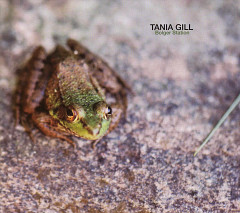
    Bolger Station dans The Globe and Mail

    «Tania Gill’s enticing path through unfamiliar woods», Robert Everett-Green, The Globe and Mail, 26 novembre 2010
    vendredi 26 novembre 2010 Presse

    Disc of the week — According to VIA Rail, its Bolger Station in Quebec is a request-only stop in the woods, with no access by car. But maybe you can get there by listening to this CD.

    Toronto pianist Tania Gill’s first solo disc begins in a quiet, ambient space that feels wide-open and watchful, flecked with single notes from Clinton Ryder’s bass and Jean Martin’s percussion. Then a major triad forms under Gill’s hands, and rolls into a simple strophic tune that feels old and new at once. It’s the title track, and the overture for a whimsical album-length tour of one woman’s forest trek through jazz, pop and other kinds of melodic music.

    Melodic is the key word. The piano is great for presenting a compact view of music’s vertical dimension — its chordal structures and harmonic shifts — but Gill’s mind also runs strongly along the horizontal. Her solo playing can sound like instrumentalized voices, each line having its own co-dependent life, as in Bach or Hindemith. In a tune like Peter Johnston’s On My Sleeve, the harmony forms a vapour trail from melodic notes left to hang in the air behind the moving parts. The tonal centre feels elusive, till the sly affirmation of the final moments. On this album, the path that takes you home through unfamiliar woods is always the most fun.

    In other numbers, it’s the rhythm that makes itself unfamiliar. Magpie begins with an appealingly angular, bebopish tune, as laconic as anything by Thelonious Monk, then lopes into a free-wheeling movement that’s full of energy but slips the beat around like the pea in a shell-game. Paso springs from a jumpy, regular bass-line into a gliding fairground waltz that comes and goes like a memory of familiar places, returning most strongly whenever the music’s centifugal force threatens to burst the thing into aphorisms.

    Waltz-time returns in Bicycle, again acting almost as the ground for a palimpsest that at times obscures it entirely. The lilting tune of Wilf Carter’s Maple Leaf Waltz emerges rather abruptly from a spatter of obscurely connected single notes that persists beyond Gill’s vocal performance. “The music may stop for a while,” she sings, and pauses, as the instrumental chatter continues; and then she jumps back into the verse, like someone who has fallen out of a dance whose steps require a rummaging of personal history to remember.

    The fracturing of an existing melody is only the most obvious way in which this disc reminds us that you don’t need many notes to be melodic. How many? Maybe not more than one, if you play it in the right place, with the right tone and feeling. Fortunately for Gill, her colleagues are also masters of that kind of melody. Trumpeter Lina Allemano is especially good at the melodification of thought and sound. Her finely textured improvisations are always intent but casual, as if she were merely picking out notes and phrases that have always been there, waiting to be made audible. Her complexities feel natural and almost self-evident.

    That’s true of the record as a whole. In the end, Bolger Station makes itself a destination for many travellers, journeying alone or in groups, who may at different moments find it a very familiar place, or the portal to a wilderness where no cars go.

    In the end, Bolger Station makes itself a destination for many travellers, journeying alone or in groups, who may at different moments find it a very familiar place, or the portal to a wilderness where no cars go.

    Subsurface dans Aemag

    «Kritik», Thorsten Soltau, Aemag, no 19, 24 novembre 2010
    mercredi 24 novembre 2010 Presse

    Präpariertes Klavier ist in der Musiklandschaft ein ebenso abgehangenes Unterfangen wie Feedbackmixer und in-sich-selbstverkabelte Instrumente. Allerdings blitzt bisweilen die eine oder andere Perle auf, die sich an der von John Cage vorreiterhaft gespielten Debutidee weidet und sich nicht geniert, das Klavier als unchromatischen Klanggeber zu begreifen. Dieser Diskurs ist nachzuvollziehen auf Subsurface, der aktuellen Schraum-Veröffentlichung, die entgegen der Gewohnheit leise Töne zeichnet, die sich auf unheilschwangere Weise quer durch die Stereosumme fressen. Die verwendeten Instrumente zeichnen ein lebendiges, fast schon artifizielles Bild auf, gänzlich ohne digitalen Überzug oder manipulierte Lasur, lediglich die Instrumente schnattern und knarzen auf unvorhergesehene Weise. Die dabei entstehenden Lautbildungen, erinnernd an den ersten Proberaum von Nurse With Wound, sind so mannigfaltig, dass man unweigerlich erstaunt ist über die Mundgeräusche, amplifizierten Klaviersaiten und feedbackartigen Saxsolos, dass es einen schwindelt. Der Geräuschparcours, unzingelt und umgeben von dräuenden Tonschleifen und simultan ausgeführten Instrumentalausbrüchen weidet sich bisweilen an der eigenen Ernsthaftigkeit, ohne dabei in die Beliebigkeit zu kippen. Subsurface ist ein Konglomerat feinster Skizzen und ausformulierten Ideen, blitzend und gleißend wie ein Metallpartikel auf unbehandelten Stahl, den man über Nacht hat rosten lassen- hier sind Schönheit und Biestigkeit in bester Nachbarschaft zueinander, ebenso wie der helle Fleck auf dem ansonsten verwitterten Stahl. 5/5

    5/5

    Pinta, Niña & Maria dans Monsieur Délire

    «Journal d’écoute», François Couture, Monsieur Délire, 24 novembre 2010
    mercredi 24 novembre 2010 Presse

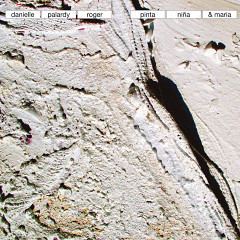
    Un triptyque signé Danielle Palardy Roger, trois compositions pour ensemble d’improvisateurs mêlant musique ancienne et contemporaine, écriture et improvisation, direction et liberté, acoustique et électronique. Chaque suite fait une quinzaine de musiques. Les interprètes: le GGRIL de Rimouski, l’Ensemble SuperMusique, et l’ECM+. Une musique bien sentie, mais dont les codes ne se révèleront pas à la première écoute. Mais Roger manie très bien l’œuvre à grand déploiement (voir Bruiducœur), et celle-ci s’annonce forte.

    Roger manie très bien l’œuvre à grand déploiement
  • 1
  • 2
  • 3
  • 4
  • 5
  • 6
  • 7
  • 8
  • 9