Sauter au contenu principal
actuellecd
  • This website is also available in English.

Blogue

258 résultats
  • 30
  • 31
  • 32
  • 33
  • 34
  • 35
  • 36
  • 37
  • 38
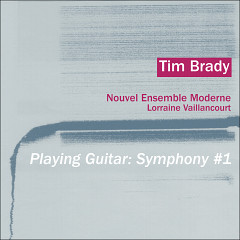
  • Playing Guitar: Symphony #1 dans Exclaim!

    «Review», David Dacks, Exclaim!, 1 mars 2005
    mardi 1 mars 2005 Presse

    Tim Brady has been following his own path of frenetic post-Frippertronic technique of rapid fire guitar complemented by electronic processing for decades. This is his first symphony, realised by an ensemble of 15 members — and it’s great fun. There are a number of different ways to analyse this disc: judging it on its compositional merit as a symphony, or deconstructing the relentless shifts in tempo and instrumentation. Instead, let’s dumb it down a lot and call it music for a 21st Century car chase. Digital delays augment hocketing instruments produce 16th notes galore that race across the stereo field. This is an expertly realised recording— Steve Reich could only dream of these kinds of possibilities for mixing engineers when he first recorded his intricate percussion pieces. Movements One and Four are the most Shaft-like pieces, albeit with funk replaced by non-stop tension — Brady’s not exactly a swinging player or composer, which is part of his charm. These are wisely balanced by sparer passages as in movement Two , which features some beautifully slow melodic developments. The action is never too far behind, as the sampler solo in movement Three produces a brutish blizzard of guitar snapshots all up and down the keyboard. The whole adventure seems short, even at 46 minutes. Unfortunately, the CD is appended by a more intimate composition for guitar and piano called Frame 1 — Resonance that is a too-minimal, too-long coda in relation to what came before.

    The whole adventure seems short, even at 46 minutes.

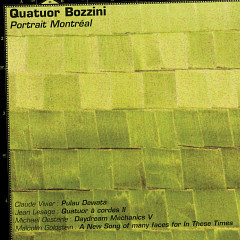
    Portrait Montréal dans The WholeNote

    «Review», David Olds, The WholeNote, no 10:6, 1 mars 2005
    mardi 1 mars 2005 Presse

    While the Leroux disc is presented as a portrait of a composer, in the string quartet discs mentioned above we are given portraits of places. The Quatuor Bozzini disc Portrait Montréal (CQB 0401 www.actuellecd.com) says as much in the title. We are presented with works by four very different composers which not only showcase the diversity of the Montréal new music scene, but also the wide area of interest and expertise of the Bozzini Quartet. Beginning with Michael Oesterle’s arrangement of the late Claude Vivier’s (see Pamela Margles’ review of Chants in the Modern and Contemporary section) classic Pulau Dewata, a Balinese-inspired work originally scored for any combination of instruments, the disc moves through Jean Lesage’s post-modernist pastiche (in the best sense of the word) Quatuor à cordes II and Oesterle’s own haunting Daydream Mechanics V, to the structured improvisation of Malcolm Goldstein’s A New Song of many faces for In These Times. Picked as the Prix Opus 2001 “Discovery of the Year”, this is indeed an ensemble to watch. My only regret with this disc is that in spite of program notes for the individual pieces there is no information whatsoever provided about the composers.

    Picked as the Prix Opus 2001 “Discovery of the Year,” this is indeed an ensemble to watch.

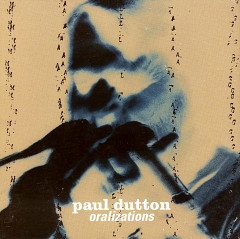
    Oralizations dans The WholeNote

    «Review», Tom Sekowski, The WholeNote, no 10:6, 1 mars 2005
    mardi 1 mars 2005 Presse

    Like a train traveling up a steep hill, [literally speaking] Paul Dutton starts off his latest solo exploration Oralizations with a bang. “Wassum?” “Mat’s um?” and “Mmmm?” these are just some of the questions he poses in the opening piece Mercure. Paul reaches into the depth of the universe to articulate his language and wrap it into as many imaginable colours as possible. A piece such as Else expresses the desire for new words. [Then again, it could be just a need for better words.]

    Over the length of an hour, he stretches his vocal chords and comes up with some of the most bizarre, the silliest [imagine werewolf and donkey imitations in the span of one track], the most painful and extreme sounds you’d probably heard in your life. Some of his sounds are somewhat reminiscent of Tuvan throat singing [it’s almost as if his stomach was talking to us]. Certainly, this can never bc taken as background music. Paul’s music begs for and demands your complete attention. There are too many minute nuances that are sure to pass you by if you had used it simply to multi-task.

    I don’t know how Paul does what he does with his throat, and l’Il probably never learn the secrets of his trade, but here and now, Oralizations feels like Christmas morning, as I’m unwrapping my first present that I found under the tree.

    … he stretches his vocal chords and comes up with some of the most bizarre, the silliest, the most painful and extreme sounds you’d probably heard in your life.

    Atlas Epileptic dans The WholeNote

    «Review», Alison Melville, The WholeNote, no 10:6, 1 mars 2005
    mardi 1 mars 2005 Presse

    Another in the excellent series of recordings by Ambiances Magnétiques, this recording “offers several faces of Arcand: sonosaurus, singer, performer, DJ, visual poet and installer.” The package contains both audio and video CDs. Arcand is a multi-media mage whose sound-world is a colourful and often mesmerizing one, and the nine tracks on the audio CD are a testimony to his ever-curious, constantly adventurous approach to music creation. Using a visual and sonic evolution generator (Macchina Ricordi) to manipulate the sounds of his voice and “found/invented” instruments, Arcand weaves a remarkable and ever-changing web of sound.

    As for the video component of this project, its a frequently hypnotic addition to the mix. Its segments are entertainingly clever, each radically different from the last, provocative examples of how extraordinary human creativity can be. While on one hand this project is time-consuming to absorb, and likely not for all tastes, it’s challenging and always compelling.

    One small complaint: I wish that more information about this “sonosaurus” and his work had been included with the actual package, rather than on the record label’s website. I already spend enough time at a computer screen, and not everyone has one at their immediate disposal.

    … a testimony to his ever-curious, constantly adventurous approach to music creation.

    Sur une balançoire dans La Scena Musicale

    «Critique», Marc Chénard, La Scena Musicale, no 10:6, 1 mars 2005
    mardi 1 mars 2005 Presse

    Peu d’artistes peuvent se dire aussi prolifiques au chapitre des enregistrements que Madame Contrebasse en personne, Joëlle Léandre. Si bien qu’elle nous offre à peu près une nouvelle galette par mois. Bien qu’ayant fait ses premières armes dans le milieu de la musique contemporaine, c’est dans le milieu du jazz (ou du post free-jazz pourrait-on dire) qu’elle fait le gros de son boulot. Musicienne de rencontres par excellence, elle se retrouve aux côtés d’un pianiste sicilien, Gianni Lenoci. En quelque 46 minutes, les deux badinent allégrement, sans jamais trop bavarder (puisqu’il y a 14 plages). Compte tenu de sa propre formation musicale, la bassiste se sert davantage de son archet que du pizzicato, évitant ainsi le rôle traditionnel que son instrument tient en jazz. Ce faisant, les deux partenaires dialoguent en égaux plutôt que d’avoir le piano comme meneur et la contrebasse derrière lui. En cours de route, les dialogues peuvent être désinvoltes, parfois acharnés, mais sans temps morts. Évidemment, ceux et celles qui cherchent des assises plus sûres n’y verront peut-être que du feu, mais ce qui compte ici c’est le tout et comment on trouve son plaisir à écouter les détails, ces petits moments qui titillent l’oreille. Difficile alors d’identifier des faits saillants dans tel ou tel morceau; ce qui importe, c’est l’ensemble de l’enregistrement qui, notons-le, se termine dans la bonne humeur avec un rire complice des deux musiciens.

    … désinvoltes, parfois acharnés, mais sans temps morts.
  • 30
  • 31
  • 32
  • 33
  • 34
  • 35
  • 36
  • 37
  • 38