Sauter au contenu principal
actuellecd

Blogue

304 résultats
  • 43
  • 44
  • 45
  • 46
  • 47
  • 48
  • 49
  • 50
  • 51
  • Grain dans Zookeeper Online

    «Album review»
    mercredi 21 janvier 2004 Presse

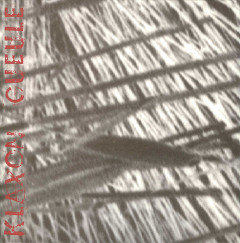
    From Montréal, Klaxon Gueule are a trio that have roots in free jazz avantgarde and here play improvised ambient noise through sampling unorthodox uses of live instruments and processing those sounds electronically. Textures are minimal but still very interesting, often of the ambient random percussive sound variety. Mood-wise, most tracks are creepy as hell and scare the shit out of me, like I’ve entered an endless field of mutilated dead babies with nothing on the horizon except a sky washed in charcoal. Very fucking cool and very well executed, with no trouble maintaining my attention. Great!!!

    … very well executed, with no trouble maintaining my attention. Great!!!

    Diversion dans AllMusic

    «Review», François Couture, AllMusic, 15 janvier 2004
    jeudi 15 janvier 2004 Presse

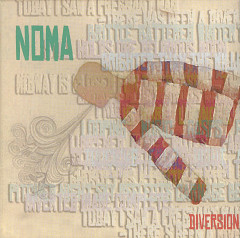
    NOMA’s first album, self-released, failed to draw much attention, but this second opus released on the prestigious Montréal label Ambiances Magnétiques gives Tom Walsh’s project a much better chance to make an impact — that and the fact that the group’s material is pure dynamite. The leader and trombonist stands in the middle of the stage; to his left is an electric funk trio (Guy Kaye, Alan Baculis, and François Chauvette) and to his right a jazz trio (Rainer Wiens, Normand Guilbeault, and Thom GossagePierre Tanguay subs for the latter in two pieces). This geographical disposition is directly reflected in the music, a blend of groovy licks, post-bop phrasing, plus healthy doses of free improvisation and humor (the addictive duo Ambiances Magnétiques has been returning to more and more in 2003). The album presents nine compositions by Walsh and two group improvisations, but it counts 32 tracks. Most pieces have multiple indexes reflecting each and every twist of the music. This could be credited to a hyperactive sense of organization, but this reviewer has a different idea: considering that most pieces are segued, that the album flows effortlessly like a genuine funk set (Fela Kuti comes to mind), and that it has been assembled from two different concert recordings (a fantastic editing job), this overindexing is probably meant to help the listener lose himself in the moment instead of keeping track of where one piece ends and the other begins. The level of playing is captivating: Kaye’s mean wah-wah and Wiens’ prepared electric guitar form the odd couple of the group, displaying lick after lick of infectious invention. Of course, Walsh’s trombone playing shines, but his composer side takes precedence. Pieces like Inversion: Diversion and Capacity reveal a dangerous bandleader, the kind that can entertain and at the same time push the music further than you’d expect.

    … a dangerous bandleader, the kind that can entertain and at the same time push the music further than you’d expect.

    Carré de sable dans AllMusic

    «Review», François Couture, AllMusic, 15 janvier 2004
    jeudi 15 janvier 2004 Presse

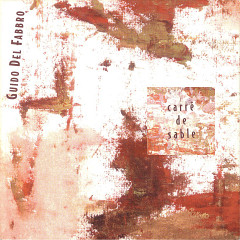
    Known for his participation to the Fanfare Pourpour (an avant-garde street fanfare) and Rouge Ciel (a hyper-complex avant-prog group), violinist Guido Del Fabbro reveals his inner sound world with Carré de Sable (or Sandbox). Truly a one-man band, he is credited for playing 29 different instruments ranging from his trusty violin to banjo, recorder, turntable, outdated keyboard, various hand-held percussion instruments, voice, even water. Each one of the 19 tracks features a different instrumentation and the music itself shifts from one style to another, eluding classification. There are elements of Quebec and Irish folk (Del Fabbro’s other projects are all influenced by folk music to some degree), bedroom electronica, the naive junk/toy ensembles of Frank Pahl or Pascal Comelade, and home-brewed sound experiments reminiscent of the Jewelled Antler Collective. The whole thing is a bit dizzying at first and can be seen as a case of hit and miss. The track list occasionally jumps out of hand: for instance, the beautiful pastoral overture La Bergerie I is followed by Jaka, a rather miserable attempt at lo-fi techno (even if it is meant as an ironic take on the genre, and it may very well be). Other sections on the other hand are obviously the result of careful attention to editing. Adventurous listeners will find gems buried in this pile of fragile melodies and strange textures, and they will differ for each person. But the best moments arise when Del Fabbro throws everything into the pot, like when an elegant duet between violin and bass clarinet (Pierre-Emmanuel Poizat, a rare guest) is backed by gritty guitar drones in Gaviscon. These short pieces recorded while on the road give the impression of a little meddler (to pursue the childhood metaphor developed by Del Fabbro in the booklet). The album has the pros and cons of a scrapbook: variety, lots of imagination, but a lack of organization and cohesion.

    … variety, lots of imagination…

    Art sonore à lire, à écouter

    vendredi 9 janvier 2004 Général

    À Montréal le 20 janvier 2004, Éditions Artextes a lancé S:on, Le son dans l’art contemporain canadien, une anthologie de Nicole Gingras. Parmi les artistes représentés sur cette parution on retrouve Pierre-André Arcand, Georges Azzaria, Steve Heimbecker, Hugh Le Caine, Christof Migone, Hélène Prévost, Jocelyn Robert, R Murray Schafer, Michael Snow, Alexandre St-Onge, Martin Tétreault et Hildegard Westerkamp.

    Diversion dans Downtown Music Gallery

    «Review», Downtown Music Gallery, 8 janvier 2004
    jeudi 8 janvier 2004 Presse

    Featuring the great Montréal-based trombonist Tom Walsh with two different quartets at two live sets in Montréal and Toronto from 2002. The Cote Cour quartet features Guy Kaye on electric guitar, Alan Baculis on el. bass and Francois Chauvette on drums, while the Cote Jardin unit features Rainer Wiens on el. guitar, Norman Guilbeault on contrabass and Pierre Tanguay on drums, with Walsh on trombone and sampler. While I am unfamiliar with all members of the first quartet, the Jardin unit includes both Norman and Pierre, whom I’ve caught up at the Victo fest on more than one occasion. The Cour Qt. features some fine intricate and haunting playing with Guy’s ghost-like spidery guitar, the rhythm moving together in waves, ebbing to and fro. There are some eerie samples floating through the mix and at times it difficult to tell who is doing what since it could me some modified guitar or trombone. This is a well balanced blend of progressive and jazz/rock tendencies, hard to predict which direction will surface next. Each player is utilized to their fullest as many of these pieces shift between a variety of complex schemes. It will probably take a while to enjoy all of this, since there is so many unexpected twists and turns. Most impressive.

    … well balanced blend of progressive and jazz/rock tendencies, hard to predict which direction will surface next. Each player is utilized to their fullest as many of these pieces shift between a variety of complex schemes.
  • 43
  • 44
  • 45
  • 46
  • 47
  • 48
  • 49
  • 50
  • 51