Sauter au contenu principal
actuellecd

Blogue

255 résultats
  • 15
  • 16
  • 17
  • 18
  • 19
  • 20
  • 21
  • 22
  • 23
  • Chant des adieux, chant de la solitude dans ImproJazz

    «… autour des 10 ans du distributeur québécois DAME…», Luc Bouquet, ImproJazz, no 88, 1 août 2002
    jeudi 1 août 2002 Presse

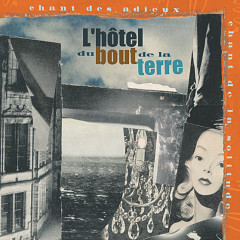
    Je suis comme (presque) tout le monde. Quand on me parle de chanson québécoise, je sors ma kalachnikov à la seule évocation des Céline Dion, Isabelle Boulay, Lara Fabian (elle est belge me signale ma petite nièce), Garou et autres écœurantes comédies musicales. Triple beurk donc! Et c’est là où le (presque) tout le monde prend son importance (vous suivez?); chroniqueur de disques dans quelques revues résistantes, il m’arrive de tomber sur quelque galette questionneuse. La compilation Chante (Ambiances Magnétiques 085) m’avait mis la puce à l’oreille (écoutez le magnifique Constellations de Diane Labrosse), L’hôtel du bout de la terre le confirme; la chanson québécoise (Nathalie Derome, Joane Hétu, Jorane, Geneviève Letarte) mérite une écoute attentive. Sensible, nostalgique est la chaude ritournelle de L’hôtel du bout de la terre. Histoire de marins qui se perdent, ode à la pluie et aux bannis, cabaret intimiste, salsa triste, écorchures de l’âme, la musique de L’hôtel du bout de la terre est faite d’écumes et d’épaves, d’âmes sauvages. Quatre instrumentaux mettant en valeur les violons invités de Kristin Molnar [Christine Molnar] et Guido Del Fabbro viennent plus encore embellir cette musique du repos offert. A suivre donc.

    Zucchini dans ImproJazz

    «… autour des 10 ans du distributeur québécois DAME…», Luc Bouquet, ImproJazz, no 88, 1 août 2002
    jeudi 1 août 2002 Presse

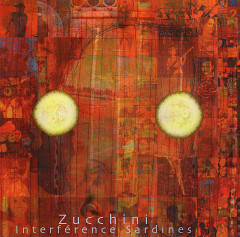
    Tout aussi aboutie est la musique d’lnterférences Sardines, troupe de sales gosses nourris au biberon transgressif. Poésie absurde, free loufoque, ska nonchalant, reggae lunaire, twist bancal, tango suave, nos amis de la sardine joyeuse n’ont pas leur pareil pour mélanger sérieux et gaudriole. Tout comme Rouge Ciel, ils savent éviter la vaine technicité au profit d’une musique-sitcom familière (dominance des cordes, mélodies joyeusement répétitives), sagement barge (plage fantôme, indexage plaisantin, paroles post-dada) et totalement réjouissante. Bref ça fuse et tangue. Personne ne s’en plaindra.

    liberum arbitrium, morceaux_de_machines dans AllMusic

    «Review», François Couture, AllMusic, 25 juillet 2002
    jeudi 25 juillet 2002 Presse

    This noise duet is definitely of the maximalist persuasion. Aimé Dontigny and Érick d’Orion sculpt samples, digital noise, and miscellaneous sounds into thrilling oversaturated pieces. There is almost always a lot going on, yet the pair eschews harsh noise for its own sake. The eight improvisations on morceaux_de_machines’s debut CD liberum arbitrium have that sense of form and purpose one finds only in the works of the best noisicians. One could even say they approach the style from an academic electroacoustic point of view. No matter how noisy, dense, or harsh things get, they don’t reach the level where it would be cluttered and always seem to follow a greater plan. cut-up opens the disc with a brutal sound collage. multivisión espacial contains the harsher moments, Merzbow-esque, while rothko tends to be more pensive and restrained. digisex concludes with an orgiastic maelström, the perfect way to end.

    This music is not for the faint at heart, but fans of intelligent noise — the kind that doesn’t take the listener for a brick wall you can throw anything at — will recognize in this album the spark of genius that occasionally sets an artist aside. And the final good news: liberum arbitrium is a class-A production (recorded while the group had a residency at Avatar in Quebec City) and is beautifully packaged with drawings by cartoonist Guy Boutin. A serious contender for best noise album in 2002, highly recommended.

    liberum arbitrium is a class-A production… A serious contender for best noise album in 2002, highly recommended.

    liberum arbitrium, morceaux_de_machines dans Splendid E-Zine

    «Review», George Zahora, Splendid E-Zine, 25 juillet 2002
    jeudi 25 juillet 2002 Presse

    This is one of the most disorienting and abrasive CDs I’ve ever heard.

    That’s not an award I hand out lightly. I’ve heard more than my share of noiseartsoundsculpture stuff in the last few years, and while many memories of those listening sessions have been reduced to panic-stricken hindbrain rantings (“Ears Hurt. Brain Hurt. What Noise? Why Loud? Why Hurt? Must Run Away!,” etc.), I’d like to believe that I’m as capable of finding beauty in eardrum-bursting cacophony as anyone can reasonably be expected to be. But I don’t recall having heard any other “improvised computer music” that’s as disjointed, disassociate and relentlessly disquieting as the work of Érick d’Orion and Aimé Dontigny.

    Imagine listening to three different CDs on three different portable CD players at the same time. Now imagine doing it while falling down an endless flight of stairs, the tracks cutting in and out, overlapping and merging as you tumble arse-over-tip. That’s cut-up, liberum arbitrium’s opener, and one of the disc’s most benevolent moments.

    Looking for something a little more invigorating? Try multivisión espacial, a thirteen-minute epic that sounds like nothing so much as a welding torch fight in a jack-in-the-box factory. Or if you’d like something a little more immediate, try the jolting sonic jabs, needle-sharp noise bursts, overmodulated white noise and excessive reverb of spencer; listen carefully, and you’ll discover a catchy little rock rhythm in the depths of the mix… unless you have an aneurysm first.

    If prime shake is a gentle lullaby sung by a solid steel whale to its aluminum and polycarbon children, métal scrap might be an auditory close-up of the sound your car’s engine makes when you don’t change the oil for 30,000 miles. But if you really want to up the ante, skip straight to the closer, digisex. What does it sound like? Imagine a backhoe pushing a combination kitchen garbage disposal/56K modem into a giant glass cistern full of razor blades and styrofoam packing peanuts — oh, and you’re watching and listening to it over a 28K video stream. Makes you want to run right out and buy the disc, doesn’t it?

    The mad thing is, it actually might. If you’ve ever taken a whack at creating improvised processed-noise pieces on your home computer, you know that making them interesting — even making them painful for an extended period of time — takes some serious thought and real creativity. It’s one thing to turn the distortion and the reverb all the way up and leave the room for half an hour; it’s another matter entirely to sit there, in the eye of the storm, fine-tuning the wind and the rain and the lightning. Once you’ve made it through liberum arbitrium a few times, assuming you accomplish such a feat, you’ll develop a legitimate appreciation for d’Orion and Dontigny’s work; they rip sounds apart at an almost genetic level, scrunching them and tearing them and twisting them and hacking at them and carving them into little potato-peeler-curlicues with the ravenous relish of sonic serial killers.

    Realistically, though, there aren’t many people who’ll buy a disc like this, and even fewer who’ll listen to it on a regular basis. This is one of those albums that defines one of the polar “ends” of your record collection. It can’t be listened to casually; simply withstanding it eats up far more mental CPU cycles than the average active listening experience. You can’t ignore it, and you certainly can’t tune it out.

    I figure there are three types of people who’ll buy it:

    1. Academic, wire-rimmed-spectacle-wearing intellectual types who grew up on death metal and have spent their later years seeking out increasingly extreme thrills, attempting to trump other members of their social circle in the difficult listening stakes;
    2. People seeking sonic armament. For instance, I’d love to play digisex at 5:00 a.m., at very high volume, for the cocksucker with the weapons-grade subwoofer who drives past my house with his car stereo blaring at 3:00 a.m., or for the workmen at the town home development down the street who fire up their earth-moving equipment at 6:30 to get a head start on the day;
    3. Random buyers attracted by the cover art and Latin title.

    Regardless of which category suits you, rest assured that you’ve never heard computers make noises like these before (no, not even when you tried to play the OS X install CD). There’s something so resolutely non-musical about liberum arbitrium — despite the brief, unrecognizable song snippets (i.e. the one at the beginning of digisex) that bleed through its pink-noise shell — that its most intractable moments will be like siren songs to those musical explorers who are driven to the polar extremes of sound. You can’t sing along to it, you sure as hell can’t dance to it — hell, you can barely think to it — but you need to hear an album like liberum arbitrium at least once in your life, if only to define your boundaries.

    … they rip sounds apart at an almost genetic level, scrunching them and tearing them and twisting them and hacking at them with the ravenous relish of sonic serial killers.

    Who’s Playing, Joane Hétu, Lee Pui Ming dans Splendid E-Zine

    «Review», Jennifer Kelly, Splendid E-Zine, 15 juillet 2002
    lundi 15 juillet 2002 Presse

    Listening to this record of free improvisational piano is a little like watching a group of bored children on a swing set. They’ll spend a few minutes actually swinging, then the ringleader ventures to hang by his knees from the top. A few minutes later, they’re walking a hazardous tightrope across the top of the swing set, then building a fort underneath. If you leave them alone for the time it takes to drink a single cup of coffee, you will return to find them gathering firewood in preparation for burning the whole thing down.

    Like these kids, Lee Pui Ming applies her restless intelligence to devising ways of playing that the piano wasn’t designed for and probably wouldn’t survive on an extended basis. She plays, she bangs on the lid, she lifts the cover and runs her car keys (or something) along the exposed strings, she keeps the pedal down for most of a 10-minute track… and that’s just the piano parts. Lee and her partner Joane Hétu also use their bodies as instruments, breathing, speaking, moaning, slapping and thumping. In the process, they extract an extraordinary array of sounds from themselves and their instruments, and create a landscape of furious, questing, contentious beauty.

    Who’s Playing starts with Greetings, a half-minute interlude of slaps and moans and sing-song spoken word. Then we move to the demented, freeze-frame cakewalk of Steps, a prickly jazz improvisation that sounds more like music you’ve heard before than anything else on the album. Silica, the third track, finds us opening up the piano cover and discovering a slithery, metallic menu of sounds inside. Bones returns to the piano as it’s usually played, with a tentatively played conversation between high notes and low, but then Lee leaves the keys behind and drums insistently on the cover for Sinews. The thwacks and thumps continue in the dance rehearsal rhythms of Torso, and, in hearing it, I first began to think it would be more fun to watch Lee play than to listen to her. Belly of the Beast, the album’s best track, layers piano sounds by holding the pedal down. You hear a swirling cigarette smoke miasma — not just the note that’s being played, but the ones before it and the ones that weren’t played but have somehow been picked out of the ether. What follows, Uvula, is certainly the album’s oddest cut — a rhythmic blend of slaps and deep, fractured breathing, moans and tonally diverse nonsense syllables. I’m tempted to be flip and say that it sounds like two asthmatics having sex, but there is such a variety and multilayered texture of sounds that I can’t dismiss it so readily.

    The title of Who’s Playing comes from a short, unattributed poem in the liner notes, which asks “When one is completely present in the moment — / Playing, or listening / — Who, then, / in that moment, / is playing / and who / is listening?” I can’t recommend playing like Lee does — it sounds like it might be painful — but if you like to push the boundaries of what music is, then you should definitely try listening.

    … they extract an extraordinary array of sounds from themselves and their instruments, and create a landscape of furious, questing, contentious beauty.

    «Dis, Blaise…» chanson du Transsibérien dans Ici Montréal

    «Compact!», Catherine Perrey, Ici Montréal, 11 juillet 2002
    jeudi 11 juillet 2002 Presse

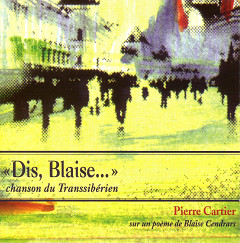
    En 1913, Blaise Cendrars a croché La Prose du Transsibérien et de la petite Jehanne de France, un bijou-poème de longue haleine. Presque 90 ans plus tard, Pierre Cartier a lilttéralement entendu des voix en découvront ce texte dans une anthologie de poésle française. Magnifique travail s’étalont sur deux CD, comme un voyage en train dans le chaos annonçant la Première Guerre mondiale. Bien que le texte eût commandé une lecture plus musclée, voire nerveuse, Pierre Cartier nous propose ici une interprétation beaucoup plus souple, ultra-mélodique. Spécialiste du chant grégorien et, entre autres, adepte de musique actuelle, version douce,Pierre Cartier livre un étrange combat entre musique des siècles passés et musique moderne. Parfois un peu longuette, cette lecture musicale très personnelle de l’œuvre de Cendrars séduit et agace tout en même temps, malgré le travail admirable pour ciseler mélodies et ambiances.

    Magnifique travail s’étalont sur deux CD, comme un voyage en train dans le chaos annonçant la Première Guerre mondiale.
  • 15
  • 16
  • 17
  • 18
  • 19
  • 20
  • 21
  • 22
  • 23