Sauter au contenu principal
actuellecd

Blogue

132 résultats
  • 3
  • 4
  • 5
  • 6
  • 7
  • 8
  • 9
  • 10
  • 11
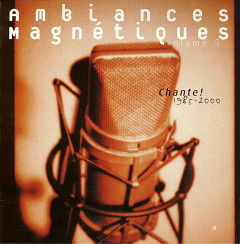
  • volume 5: Chante! 1985-2000, Ambiances Magnétiques dans Mouton Noir

    «Le Noir compact», Annie Landreville, Mouton Noir, 1 juin 2001
    vendredi 1 juin 2001 Presse

    Cinquième compilation pour le regroupement de musiciens d’Ambiances Magnétiques, cet opus est composé de 18 chansons pigées dans le répertoire des enregistrements parus ces quinze dernières années. C’est éclectique, ludique, jamais banal et souvent très drôle. La plupart des musiciens qu’on entend ici ont fait partie de plusieurs formations au fil de ces années: les Jean Derome, Pierre Tanguay, Joane Hétu, René Lussier, Diane Labrosse et plusieurs autres se retrouvent ici, dans quelques instantanés glanés dans le catalogue d’une étiquette qui est devenue au fil des ans la référence la plus importante en musique actuelle au pays. Abordée par la chanson, cette musique qu’on n’entend à peu près jamais à la radio pourra amadouer les plus timides; les autres auront envie d’entendre la suite sur les albums originaux. On y retrouve des accents country, avec La Bombe, des Granules, beaucoup de sensualité avec Nathalie Derome et Geneviève Letarte, ou avec l’impudique Ah! les beaux jours, de Joane Hétu et des chansons étonnantes, comme la Salade du chef de René Lussier et Pierre Tanguay ou la schizophrénique Liberté de Diane Labrosse. Une rétrospective délirante de chansons inconnues.

    … une étiquette qui est devenue au fil des ans la référence la plus importante en musique actuelle…

    Tricotage dans Musicworks

    «Dynamic duo Mix it up in Montréal», Fabio Rojas, Musicworks, no 80, 1 juin 2001
    vendredi 1 juin 2001 Presse

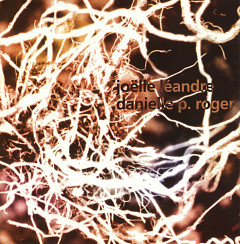
    New-musicians have taught us the valuable lesson that good music can be made with any sound, even those that were never meant to be made on a musical instrument. It might be argued that new genres of music are born when musicians take an object and make it produce new-musical sounds; witness hiphop and the advent of turntablism, or the multiphonic saxo phone playing of the ’60s American jaz avant-garde. Joëlle Léandre and Danielle Roger show that this tradition of innovation is alive and well, and Tricotage documents their recent effort Fans of Léandre won’t be disappointed Recordings like Tricotage show why she is and will continue to be one of the most outstanding contrabass players in any style of music. She consistently displays a well-developed personal vocabulary on the contrabass and puts it to good use.

    The album is rather short, at fortyone minutes of free improvisation between Léandre and Roger. Léandre-ites will immediately recognize her style pizzicato, voice-like attacks mixed with often gritty arco work. Roger takes a complementary approach—she chooses to avoid loud, disruptive events like rim-shots and squeaking snare drumheads, and instead uses small bells, a lot of brush work, very occasional cymbals, and a constant trickle of mezzo-piano chatter on the middle drums. This approach is successful because it allows Roger to evoke rich textures without overwhelming the acoustic contrabass.

    The flrst seconds of the recording will give the listener a teste of what is to come. Roger uses brushes to create tension by playing a sort of drum roll for a few moments, and then the release comes when Léandre enters with her sig nature chattering bass. The highlight for me is track three, Come on on on on, where it all comes together in a delicate five-minute conversation between snare drum and bass.

    Each track features a different side of Léandre and Roger’s playing. Track four might be called “squeaky and plucky” and track five “nice classical bowing. “ The sixth track seems dedicated to the evocation of anxiety and its release, and the seventh to a jarring rhythmic theme. The CD ends with a brief vocalese discourse by Léandre, framed by Roger drumming.

    This CD contains some good moments, and I think that any fan of this music would be happy to own a copy. Among works by Léandre, I would definitely rate it as one of the better recordings because of the role that texture plays. Roger’s restraint allows for a great deal of artistry and joy to come out. The best thing for me was to discover Danielle Roger. Not being familiar with the creative music scene in Canada, I have never heard Roger play and after hearing Tricotage, I hope to hear more of her.

    This CD contains some good moments, and I think that any fan of this music would be happy to own a copy.

    Mouth Pieces dans Musicworks

    «Soundsinger Extraordinare», Mark Sutherland, Musicworks, no 80, 1 juin 2001
    vendredi 1 juin 2001 Presse

    Mouth, tongue, larynx, nasal passages, lungs, and diaphragm — these are the delicate mechanisms that control the most sensitive and unpredictable instrument at our immediate disposal. The inherent difficulties found in mastering the human voice, and in turn, the body, through the differing manifestations of speech, song, and sound, should be self-evident, if not daunting. Few artists are privileged to achieve mastery of this finicky instrument; fewer still are granted the discipline, technical ability, and creative acumen necessary for broad-based innovation in its application.

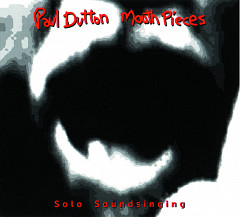
    Canadian soundsinger (his term) Paul Dutton is an exception, and with the recent release of his first solo CD, Mouth Pieces, he takes his righfful place at the forefront of those pushing the very limits of human utterance, while simultaneously redefining the accepted parameters of poetry and music. The duality of Dutton’s achievement, namely, situating his creative practice along the boundaries of two disciplines, is indicative of the dichotomy of his creative process. What might appear on first listening to be a catalogue of vocal effects is, in fact, the very basis of Dutton compositional prowess. By isolating one component of our sound-making apparatus, or simply using a word or a short phrase, he establishes a formal constraint, a position from which he can improvise or construct set pieces, thus analyzing and distilling the subtle nuances of the body’s sonic potential.

    The hybridity of Dutton’s æsthetic accomplishments is readily apparent on this CD’s opening track, Reverberations. Framing the words “gong” and “going” with the use of vowel-generated overtones, Dutton crystallizes form and content in a perfectly balanced musical and literary mantra. On track two, entitled /nex, Dutton probes his inhalation and exhalation with nasal rhythm patterns and glottic tonal clusters. Superlative is an apt description of the other nineteen cuts on this CD, which includes a thoughtfuf mix of new improvs and perennial performance favourites, such as Little Sound 1: A Sonnet, Vive le (for Henri Chopin), and Hiding.

    Culturally, Dutton’s erudition and technical skills range far and wide, encompassing the musical traditions of the former Soviet republic of Tuva, European sound poetry, and such popular North American genres as jazz, blues, and even C & W. On the track called For The Johnsons, Dutton improvises a fitting tribute to the blues artists Robert Johnson and Blind Willie Johnson. Glissandos, loosely based on a blues triad, are slowly transformed into an anguished howl, clearly reminiscent of the late, great blues musicians’ most expressive works. The rhythmic freedom of improvisational jazz and the natural percussive qualities of language coalesce on Snare, Kick, Rack, and Floor. Fricatives and plosives found in the phrases “combustible compatibility” and “compatible combustibility” are the sole linguistic sources on which this energetic, verbal drum solo is based. By chanting the words “soma haoma,” the Avestan language’s name for the sacred mushroom, Dutton creates an outstanding homage to radical British verbovocovisual poet Bob Cobbing on Nod To Bob. Duration and amplitude buttress a tour de force of invention and virtuosity, as Dutton pulls out all the stops in his sonic vocabulary, with vocables, multiphonics, overtones, and speech particles coloured by texture and pitch all stretched to the breaking point, then suddenly resolved in a leisurely, aspirational diminuendo.

    It shouid be noted that all the gem-like performances on Mouth Pieces are acoustic, recorded live in the recording studio. No electronic effects, overdubs or fades are used to enhance Dutton’s impressive performative capabilities. The physical demands of such a rigorous constraint should not be dismissed as an act of sheer athleticism, for in challenging himself, Dutton challenges the listener, exceeding expectations and defying categories, while transforming our perceptions and sonic sensibilities with his intelligence, imagination, and extraordinary inventiveness.

    Paul Dutton… takes his righfful place at the forefront of those pushing the very limits of human utterance, while simultaneously redefining the accepted parameters of poetry and music.

    Do dans Revue & Corrigée

    «Disques», Pierre Durr, Revue & Corrigée, no 48, 1 juin 2001
    vendredi 1 juin 2001 Presse

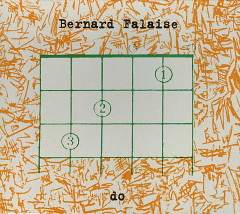
    Bernard Falaise me semble agir davantage dans un registre plus narratif. Certes, l’écoute d’un seul titre est possible, mais chez lui, la quinzaine de pièces semble davantage former un tout cohérent donnant un sens à la continuité des morceaux. Son approche globale par l’auditeur en est donc plus accrocheuse.

    Les deux se rejoignent dans l’humour des intitulés. C’est secondaire? Certainement pas, cela traduit un état d’esprit que l’on partage.

    Do

    Solos de guitare électrique dans Revue & Corrigée

    «Disques», Pierre Durr, Revue & Corrigée, no 48, 1 juin 2001
    vendredi 1 juin 2001 Presse

    Autre tir — presque groupé! — du collectif montréalais. Autour de la guitare brute. Non pas sans effets quelconques, mais sans interventions extérieures (autres instruments, électroniques…)

    On connait Lussier et sa guitare depuis près de vingt ans et pourtant, c’est la premiere fois qu’il offre un enregistrement le proposant en soliste. Bernard Falaise, moins connu, n’est pas un nouveau venu: il participe à Klaxon Gueule, trio tantôt bavard, tantôt muet, se love dans Papa Boa et a jongler avec Miriodor. Le travail de René Lussier apparait plus varié, les approches de l’instrument aussi. La petite quinzaine de pièces de son recueil s’apparente à des études: chacune constitue une cellule autonome et s’écoute aisément indépendamment des autres.

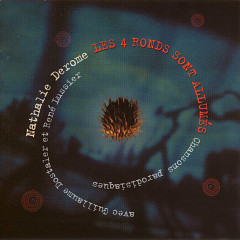
    Les 4 ronds sont allumés, Chansons d’un jour dans Revue & Corrigée

    «Disques», Pierre Durr, Revue & Corrigée, no 48, 1 juin 2001
    vendredi 1 juin 2001 Presse

    Il y a bientôt deux ans le collectif québécois éditait d’un seul coup plusieurs enregistrements qui se caractérisaient par un contenu artistique similaire: l’improvisation bruitiste déclinée de multiples manières (Lussier / Tétreault, Île Bizarre)

    Cet hiver est marqué par un autre tir groupe autour du chant. Tout d’abord une compilation (la 5e) qui resitue certaines pièces dans cet environnement thématique sous toutes ses formes (Chante! 1985-2000). Certes, elle ne comprend pas d’inédits, mais permet de redécouvrir en compact quelques titres issus des productions vinyliques des années 80’ comme celles de Wondeur Brass ou des débuts du duo Lussier/Derome avant qu’il ne devienne les Granules.

  • 3
  • 4
  • 5
  • 6
  • 7
  • 8
  • 9
  • 10
  • 11