Sauter au contenu principal
actuellecd
  • This website is also available in English.

Blogue

109 résultats
  • 4
  • 5
  • 6
  • 7
  • 8
  • 9
  • 10
  • 11
  • 12
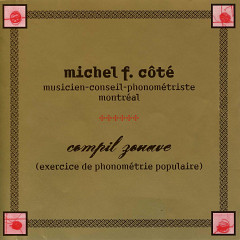
  • Compil zouave dans AllMusic

    «Review», François Couture, AllMusic, 1 juin 1999
    mardi 1 juin 1999 Presse

    Michel F Côté’s most known projects are Bruire and Klaxon Gueule, but he participates in many other musical ventures and collaborates with every avant-garde musician in Montréal. He also writes a lot for the stage and the screen. A drummer in essence, he is nonetheless very versatile both in playing and writing, and that’s what Compil zouave is proving with its eclectic contents dominated by a candid and irreverent mood. On this record, Côté is surrounded by an impressive number of musicians, including his usual Ambiances Magnétiques pals, plus some less regulars like Éric Bernier, Serge Boisvert, Luc Bonin, Normand Guilbeault, Emiko Toguchi and even actor Julien Poulin. Some jazz standards can be spotted, including “Let’s Get Lost,” tastefully mutated, but overall the music is rooted in avant-gardist pop/rock following the Montréal musique actuelle approach. The whole thing takes the form of a musical phantasm, a journey through Côté’s hallucinosis, taking us from one influence to the next without ever clearly defining any of them. The listener goes from the unstable reggae of Verschwinde and Toubab to the collage You’ve Changed (Remix) (nine minutes during which Guy Trifiro samples Côté’s earlier records to show his evolution), to Encore un peu de saké?, taken from the soundtrack to Robert Lepage’s movie Nô.

    Compil zouave, even with its many musical tendencies, remains a cohesive record of broad appeal, reminiscent of Robert Marcel Lepage’s Les clarinettes ont-elles un escalier de secours? Destabilizing, less delicate and profound than Bruire, less immediate and challenging than Klaxon Gueule, but quite enjoyable. Recommended.

    … a cohesive record of broad appeal… Recommended.

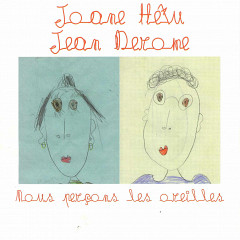
    Nous perçons les oreilles dans Resonance

    «Review», Caroline Kraabel, Resonance, no 7:2, 1 juin 1999
    mardi 1 juin 1999 Presse

    The combination of sax and voice is a hard one, particularly in a duo — it reminds me of something Raymond Chandler had Philip Marlow say about a client’s interior decoration “The curtains were white and the carpet was cream — the curtains made the carpet look dirty and the carpet made the curtains look washed out” Nous perçons les oreilles is a duo CD with both musicians playing alto sax and voice (Derome also plays various small instruments) and consists of a series of live improvisations recorded mostly in 1996, some as long ago as 1994 — and it is a brave attempt at something quite difficult Hétu and Derome use interesing and diverse techniques, and lots of humour, but rarely transcend the impression of an eclecuc series of varied sounds with uansinons often accomplished via mimicry Jonquille is an exception to this, with both musicians gently and soberly reciting a list of unconnected words, but even then, just as I relax into the weird hypnotic simplicity of it, a jaw harp breaks the spell and introduces an instrumental and vocal improvisation — which diminishes, rather than enhances, the preceding section. Perhaps the fact that Hétu and Derome have been or are a couple is part of the reason for a shamelessness about sounds which works better with the vocals: a playful intimacy that allows all sorts of silly voices to come out — on Léa, a vocal duet this is paracularly effective they seem to be playing a game of verbal tag and mockery. This impression of a kind of mocking recurs often elsewhere when Derome breaks off and plays kazoo or whist e or other petits instruments a vent, but is less successful in these cases, because the transitions are too marked and seem kitsch without being genuinely funny. The eclectic and fast-changing nature of many of the rest of these improvisations, and the fact that some were recorded in 1994, made me wonder whether a pertinent question about improvising now is no longer so much. “How to change as quickly as possible?“ and include as much as possible?“ as “How to improvise without changing?“ Listening to this CD I often wished that the players would stick a bit instead of twisong.

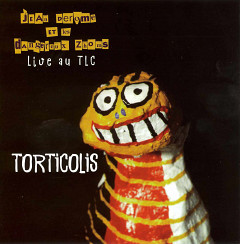
    Torticolis, Jean Derome et les Dangereux Zhoms, Jean Derome dans Octopus

    «Critique», Octopus, 1 juin 1999
    mardi 1 juin 1999 Presse

    Aprés Navré et Carnets de voyage,Torticolis est le troisième album de Jean Derome et ses Dangereux Zhoms (René Lussier au saxophone et à la guitare, Tom Walsh, etc)enregistré live au Théâtre La Chapelle à Montréal. Fortement rythmées, les cadences infernales de ses improvisations sont celles d’une avant-gardiste et festive fanfare hissant très haut les couleurs d’un «jazz» canadien dont les représentants les plus caractéristiques seraient Joane Hétu, Diane Labrosse, Robert Marcel Lepage et Martin Tétreault.

    … ses improvisations sont celles d’une avant-gardiste et festive fanfare hissant très haut les couleurs d’un «jazz» canadien…

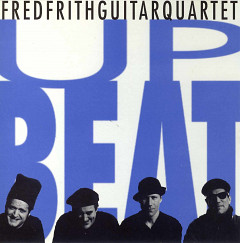
    Upbeat dans Jazz Notes

    «Critique», Jazz Notes, no 30, 1 juin 1999
    mardi 1 juin 1999 Presse

    Le leader étant une espèce d’aventurier génial de l’instrument, qui a tout essayé, et continue toujours d’animer son monde musical imaginaire. A eux quatre, ils déboulent dans un univers impitoyable, où tout est bouleversé, saccagé, mis en pièces, mais en même temps drôlatique, surprenant, où le côté inventif, déroutant, possède un climat fascinant. Musique inclassable, mais d’une actualité brûlante.

    Musique inclassable mais d’une actualité brûlante.

    Upbeat dans Vibrations

    «Critique», Jean-François Brosse, Vibrations, 1 juin 1999
    mardi 1 juin 1999 Presse

    Depuis maintenant trente ans, Fred Frith règne en maître-guitariste sur cette scène motivante dite des musiques improvisées. Fort d’une production certes inégale mais marquée par quelques sommets comme Speechless ou Step Across The Border, l’Anglais aujourd’hui quinquagénaire n’a pas son pareil pour triturer sa guitare ou son violon avec la curiosité d’un apprenti sorcier. Alors que d’autres confrères sont parfois très très loin des préoccupations de leurs auditeurs, au premier rang desquelles le plaisir, le bonhomme lasse rarement. Car il ne se sépare jamais primo de son humour et secundo d’un canevas très personnel et vaguement folklorique, fil conducteur d’une vraie histoire qui évite les pièges et méandres de la recherche pure. La preuve est livrée avec ce deuxième album de son Guitar Quartet, avec René Lussier, Nick Didkovsky et Mark Stewart. Mélange d’enregistrements studio et de morceaux live, Upbeat est une exploration ludique de l’improvisation electrique sur quatre fois six cordes: ambiances distordues, ragtime foireux, énervement punky, et quelques grands moments comme Motormouth ou No Bones. A consommer sans modération, mais en toute connaissance de cause.

    À consommer sans modération mais en toute connaissance de cause. […] une exploration ludique de l’improvisation électrique sur quatre fois six cordes.

    Tout le monde, Monsieur Fauteux, m’entendez-vous? dans Ici Montréal

    «Critique», Catherine Perrey, Ici Montréal, 27 mai 1999
    jeudi 27 mai 1999 Presse

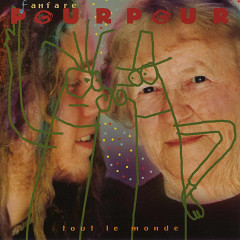
    Les 11 membres de cette fanfare n’ont qu’un seul but: nous donner le goût du plaisir de la vie et du sens de la fête. Les nostalgiques des Cabarets de l’incantation à la pleine lune retrouveront avec joie les pieces qui cristallisaient l’émotion collective de toute une salle et nous donnaient l’envie de danser avec tous nos amoureux à la fois. C’est frais, c’est beau, c’est simpie comme la musique de Nino Rota. Triste et gaie a la fois, sans superflu. La vie est un air de fanfare. Visa general. Pour tous. 8/10

    8
  • 4
  • 5
  • 6
  • 7
  • 8
  • 9
  • 10
  • 11
  • 12