Sauter au contenu principal
actuellecd

Blogue

109 résultats
  • 3
  • 4
  • 5
  • 6
  • 7
  • 8
  • 9
  • 10
  • 11
  • Chants cachés dans Vital

    «Review», Dolf Mulder, Vital, no 182, 19 juillet 1999
    lundi 19 juillet 1999 Presse

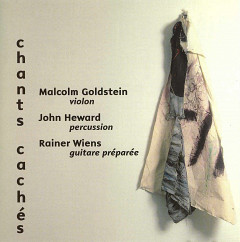
    With the cd by Goldstein, Heward and Wiens three new names appear on Ambiances Magnétiques. This happens not that often, as most releases carry the names of Lussier, Duchesne, Hétu, Derome and their many friends. This trio is also from Canada and as the included information tells they already exist a long time. Goldstein is known as a performer of new music since the 60s. John Cage and Ornette Coleman composed for him. Heward is also active in painting and sculpture. Wiens works a lot in theatre. Wiens, Heward and Goldstein on guitar, drums and violin respectively present their first album here. It’s the result of playing together several years now. Their type of improvisation reminds me a lot of the european way of improvising as this came up since the mid sixties, when european jazz musicians started to develop their own idiom of jazz and impro music. It is hard to judge whether new territory is discovered here. Everybody who is into this kind of music and is curious to what new names make of it, should check this one out, as it is an example of good collective playing.
    Everybody who is into this kind of music and is curious to what new names make of it, should check this one out, as it is an example of good collective playing.
    21 situations dans Vital

    «Review», Dolf Mulder, Vital, no 182, 19 juillet 1999
    lundi 19 juillet 1999 Presse

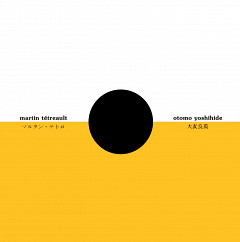
    Three new releases from the never resting Ambiances magnétiques label (Québec, Canada). The first one is a meeting between two turntable wizzards. It’s the first meeting between Martin Tétreault and Otomo Yoshihide. On 3 days in december 1997 they recorded 21 situations in a studio in Montréal. Through scratching records, manupaliting turntables and associated techniques they work out their ideas in pieces that only in two cases takes more than 3 minutes. Well done.

    Well done.

    Muets dans AllMusic

    «Review», François Couture, AllMusic, 1 juillet 1999
    jeudi 1 juillet 1999 Presse

    One must compare the title of this second album (“Silent”) to Klaxon Gueule’s first, Bavards (“Talkative”), to fully understand the importance of the transformation the trio underwent in-between. Once a jazz-based free improv outfit, Michel F Côté (drums), Bernard Falaise (electric guitar) and Alexandre St-Onge (electronics, electric bass) changed the direction to an electronics-based improvisational trio in the vein of what is produced on the cutting-edge Austrian and German scenes. While the music on the previous effort could relate, through the apparition of occasional riffs, the use of funny titles, and more conventional free jazz stylings, to the music of René Lussier, Jean Derome or even previous Côté projects (like Bruire), Muets belongs to the experiments of Kevin Drumm, Martin Siewert, Werner Dafeldecker and Burkhard Stangl. No-one tries to impose his chops here: the main part of the work is textural. Layers of electric and electronic-derived sounds are put on top of one another to create short pieces (between two and six minutes) that should be listened to like as many scenes from the same movie. Titles are meaningless two-letters combinations, bringing the focus back to the music. The dark, quiet, and subtle textures of SO make one end of the album’s dynamic spectrum, the other one being the harsh, brutal jaggedness of TN. A stunningly mature work, Muets will confuse anyone acquainted with Côté’s previous albums and please the avant-garde aficionados looking for a very convincing aural journey into the dark corners of the human psyche. Strongly recommended.

    A stunningly mature work, Muets will please the avant-garde aficionados looking for a very convincing aural journey into the dark corners of the human psyche. Strongly recommended.

    Tête à queue dans AllMusic

    «Review», François Couture, AllMusic, 1 juillet 1999
    jeudi 1 juillet 1999 Presse

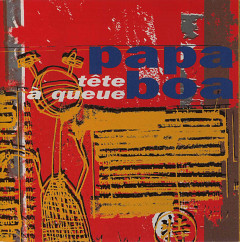
    The first album from the avant-rock quartet Papa Boa, Tête à Queue (“Tailspin”) is a rollercoaster of energy and surprises. The group featured Bernard Falaise on guitars, Pierre Labbé on saxophone and flute, Rémi Leclerc on drums and Frédéric Roverselli on bass. This CD presents twelve short songs (nothing over six minutes), twelve examples of twisted, deconstructed, revisited rock, twelve anthems dominated by Falaise’s screaming guitar and Leclerc’s octopusian rhythms. Papa Boa benefited from guests on this record. Acadian singer Marie-Jo Thério lends her voice and exaggerates her accent on Un lutin, while storyteller Michel Faubert screams the story of Jean Baribeau. Song structures and melodies recall Miriodor’s album Elastic Juggling (Falaise and Leclerc make two thirds of that band) and bands like Etron Fou Leloublan and Volapük, but going beyond the cliches and further integrating improvisation in compositional and interpretational processes. Tête à Queue delivered a strong punch and reminded us all that the song format is also a field for avant-garde exploration. It also marked the arrival at Ambiances Magnétiques of Bernard Falaise, a new creative force to reckon with.

    Bernard Falaise, a new creative force to reckon with.

    Upbeat dans Coda Magazine

    «Dynamics Of The Impromptu», James Hale, Coda Magazine, no 286, 1 juillet 1999
    jeudi 1 juillet 1999 Presse

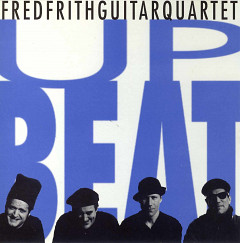
    In addition to their ability to compose memorable lines of music (and song titles), the members of the Fred Frith Guitar Quartet—Frith, Nick Didkovsky, Mark Stewart and René Lussier—share a passion for exploring the sonic possibilities of the amplified guitar. Indeed, Up Beat is characterized in equal parts by catchy phrases and speaker-shredding sound. Recorded in Europe, live and in the studio during 1997, Up Beat gives each of the members a solo spot along with the close, if discordant, harmony of the quartet. Thereal power of the band is that none of the players seem to have forgotten the fun of plugging in an electric guitar for the first time. When they all pick up on an idea and begin extrapolating —as ln the middle of Stewart’s Manic Speedy Feety —it’s a guitar-lover’s dream come true.

    … it’s a guitar-lover’s dream come true.

    Compil zouave dans Ici Montréal

    «Critique», Catherine Perrey, Ici Montréal, 24 juin 1999
    jeudi 24 juin 1999 Presse

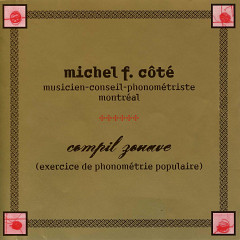
    Sur la pochette de l’album, Michel F Côté, batteur-percussionniste et compositeur, se définit comme musicien-conseil-phonométriste. On ajouterait volontiers installateur-conseil en climats sonores, tant les pièces rassemblées sur cette compile témoignent du talent manifeste de Côté à créer des atmosphères délicates pour la danse, le cinéma et le théâtre, sans parler de sa propension polissonne à la rigolade bon enfant et au pastiche. On notera quelques beaux spécimens tissés reggae, que l’on balancerait bien plein pot sur les ondes radiophoniques pour une cure estivale, Miles Davis revisité par Pierre Bastien et Martin Tétreault, et de petites coquetteries de salon délurées bien senties.

    On notera quelques beaux spécimens tissés reggae, que l’on balancerait bien plein pot sur les ondes radiophoniques pour une cure estivale…
  • 3
  • 4
  • 5
  • 6
  • 7
  • 8
  • 9
  • 10
  • 11