Sauter au contenu principal
actuellecd

Blogue

109 résultats
  • 11
  • 12
  • 13
  • 14
  • 15
  • 16
  • 17
  • 18
  • 19
  • Callas: La diva et le vinyle, Dur Noyau Dur, Martin Tétreault dans The Wire

    «Broken music maker», Art Lange, The Wire, no 180, 1 février 1999
    lundi 1 février 1999 Presse

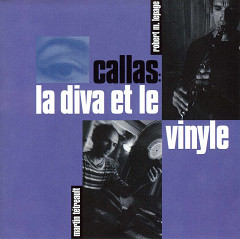
    New Music is where you find it, but for heavy electroacoustics and crosscultural blends of free improvisation and song. Montréal is presently the place to be. Turntablist Martin Tétreault works at the centre of the city’s beehive of musical activity, alongslide a bevy of inquisitive, explorative artists, such as guitarist René Lussier, saxophonist Jean Derome, vocalist/multi-intrumentalist Joane Hétu, keyboardist Diane Labrosse and percussionist Michel F Côté. A mix of studied intuition and wild experimentation, Tétreault’s hands-on approach to turntables is doubtless unlike any other you’ve heard. He collaborated tow of last year’s most engaging CDs Dur noyau dur with René Lussier (my vote for the best free Improv disc of the year) and Callas:La diva et le vinyle, a tongue-in-cheek deconstructivist homage to opera legend Maria Callas, recorded with clarinettist Robert Marcel Lepage. Tétreault didn’t come up throught the usual musical channels, wich might account for why he’s so different. As he relates in his fluent French-accented English, “I began in 1984, switching from fine art to music. To make it short, I was doing things in visual art, very minimalist stuff, cutting paper and things like that, and one day I decided to cut a record. At first it was not for music, it was only to cut something other than paper. But I put it on a turntable and thought, ‘Wow, it works’ It was not something I planned, to become a musician, but just this very simple action completely changed my artistic direction. “Though he hadn’t heard any of HipHop’s pathbreaking turntablists, he immediatly jumped into the fray. A predilection for skewered stylistic juxtapositions and intensely textural, rather than rhythmical, effects asserted itself. “I was completely into New Music when I began,” he says. “More recently I’ve listened to new DJ stuff like DJ Spooky, DJ Shadow— a little more commercial, but I think it’s interesting, very important for pop music. People want to introduce me to DJs that are more HipHop here in Montréal, but I know more about the work of Otomo Yoshihide, Christian Marclay, David Shea, that generation Christian Marclay and I played together in Montréal in 89, for a Broken Music exhibition. I met Otomo in that same period, I think it was 1991. He sent me tapes and asked me if I wanted to work with him. But he’s a very busy person. So last year I was in Japan to play with him and then he came to Canada and we did a tour. “

    Working with so many different musicians and in so many varied settings, at home and on the road, challenges Tétreault to invent new sounds for each context. Yet he rarely includes random radio play among his sound effects, and eschews samplers or other electronic devices. He still concentrates on vinyl LPs and the turntable machinery itself as sound sources. “ I consider the turntable to be a music instrument,” he asserts. “Take the electric guitar, for instance. There’s no two guitars that sound the same, and it’s the same with turntables. I have some customised turntables with modified motors and speeds and so on, and more than 3000 records in my collection. Each record is classified by musical instrument—percussion, strings, electronics. spoken words, things like that When I work with panticular records, I go and make a kind of composition—let’s try this percussion sound with these strings if it’s for an improvising concert, I will work in that way, but other times it must be more precise. For example, Jean Derome’s Hommage à Georges Perec /Je me souviens) is a composition for big band, 13 musicians playing a kind of intentionally cliched 1950s music, and every part was written out except for mine. I was the only person who was free. So I created my part at home, and put stickers on the records for visual cueing, so that it’s very controlled, and I can repeat it at exactly the same way, the same speed, every time. On another project with René Lussier and Diane Labrosse, I played with prepared records and prepared needles—no musical quotations, only surface noise from the LP and things stuck on the record to make rhythmic effects. But that’s different from what I normally do, it’s more “musique d’objet”. And I just completed a new solo CD done with only parasite noise from turntables—no scratching, only the sound of motors and things like that. Every project is different, because there are a lot of possibilities, and every time I say to myself I will try to do something different than before.
    My vote for best improv disc of the year.

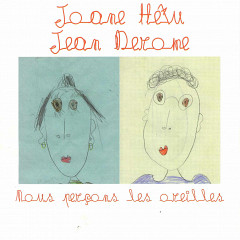
    Nous perçons les oreilles dans Splendid E-Zine

    «Review», Noah Wane, Splendid E-Zine, 31 janvier 1999
    dimanche 31 janvier 1999 Presse

    Two crazy saxophone-players from Montréal, Joane Hétu and Jean Derome, do their crazy thing on Nous perçons les oreilles. What their crazy thing is, is free improvisation that slants in an insane direction. Imagine music therapy for psychotics or for rabid dogs and then say to yourself, “Nous perçons les oreilles goes beyond even this!” In a very energetic, but clearly crazy way, Jean and Joane pour out their souls through shrieking, scratching, shouting, whistling and pouting. There are actual saxophones involved, but not in the Charlie Parker or Ravel kind of way (not even in the John Coltrane/Ornette Coleman way!). It’s more in the really wild experimental music kind of way (sort of the John Zorn way).

    In a very energetic, but clearly crazy way, Jean and Joane pour out their souls through shrieking, scratching, shouting, whistling and pouting.

    Torticolis dans Ottawa Citizen

    «Review», James Hale, Ottawa Citizen, 30 janvier 1999
    samedi 30 janvier 1999 Presse

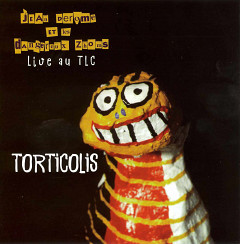
    Montréal saxophonist Jean Derome’s raucous sextet makes a perfect case for the theory that jazz influence runs east-west rather than northsouth, at least as far as Québécois musicians are concerned. Les dangereux zhoms (trombonist Tom Walsh, guitarist René Lussier, keyboardist Guillaume Dostaler, bassist Pierre Cartier and percussionist Pierre Tanguay) sound nothing like an American band. In their madcap humour and love of noise for its own sake, there is a clear line to the European sensibility of musicians like Willem Breuker and Han Bennink.

    More than once on this live recording you can hear laughter coming from either the audience or the musicians; this is clearly not a band that takes itself too seriously. There is an evident sense of joy in many of Derome’s themes — a singsong quality that makes for extremely infectious melodies.

    Walsh, with his growling, swooping style, gets much of the solo space on Torticolis, though Derome’s longtime sidekick, Lussier, is constantly colouring the music with his broad palette of sounds. This band has a wonderful, open approach to music, and it’s a shame they haven’t received far greater exposure outside Québec. 4/5

    This band has a wonderful, open approach to music…

    Castor et compagnie: Mets ta langue dans Splendid E-Zine

    «Review», George Zahora, Splendid E-Zine, 11 janvier 1999
    lundi 11 janvier 1999 Presse

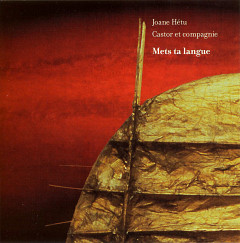
    Compared to many other Ambiances Magnétiques releases, there’s a good deal more content on Mets ta langue that could fall under the mainstream definition of “music” — this is an ensemble (which counts Jean Derome, Diane Labrosse and Pierre Tanguay among its other members) that creates songs. It might also surprise listeners that rather than being, let’s say, complex aural meditations on the sonic interactions between certain rare gases that meet every few hundred years during odd phases of planetary orbits, the lyrics (they’re more poems, really, but who’s counting?) here are about love, sex and human interaction — they’re earthy and passionate, sometimes almost explicit, full of life and love and lust and human energy. Those of you who read enough French to realize that the title translates as “Put your tongue” might get some advance notice of this — otherwise, it’ll have to be a pleasant surprise. There’s still a lot of non-traditional soundplay — dischordant wind instruments, for instance, in the three movements of Beauté, an assortment of imitated animal sounds on Le travail des animaux, all manner of oddities on the exceptionally evocative Mes odeurs préférées — but likewise witness the more musical, thoroughly rousing Un bout de papier, which sounds like it was torn directly from a Brecht/Weill performance. After a few listens — especially when armed with the translated liner notes — you’ll not only appreciate Mets ta langue, but become increasingly immersed in the warmly human sensory aura it creates. In other words, this is a good recording to connect to.

    … a good recording to connect to.

    Torticolis dans Muzik etc

    «Critique», LP, Muzik etc, no 10:1, 1 janvier 1999
    vendredi 1 janvier 1999 Presse

    Ce n’est définitivement pas le genre d’album qui s’enlise dans la redite ou que l’on écoute comme musique d’ambiance pour le souper. Torticoli mérite que l’on tende l’oreille attentivement. Le saxophoniste montréalais Jean Derome ouvre les portes du jazz actuel à qui veut tenter l’aventure. Ses pièces sont bien structurées, bien équilibrées dans les effets de contrastes et il nous amène souvent un élément thématique auquel on peut se raccrocher. Mais c’est vraiment l’énergie et l’imagination qui priment par-dessus tout.

    Les instrumentiste qui l’accompagnent sont de grosses pointures associées au courant jazz actuel: Pierre Cartier, Guillaume Dostaler René Lussier, Tom Walsh et Pierre Tanguay prennent un malin plaisir a pousser leur instrument en dehors des sentiers battus. C’est le genre d’album que tout musicien devrait écouter, ne serait-ce que pour élargir ses horizons. Regarder autour de soi ne donne pas nécessairement un torticolis.

    Ses pièces sont bien structurées, bien équilibrées dans les effets de contrastes et il nous amène souvent un élément thématique auquel on peut se raccrocher.
  • 11
  • 12
  • 13
  • 14
  • 15
  • 16
  • 17
  • 18
  • 19