actuellecd

Blog

3585 results
  • 1
  • 2
  • 3
  • 4
  • 5
  • 6
  • 7
  • 8
  • 9
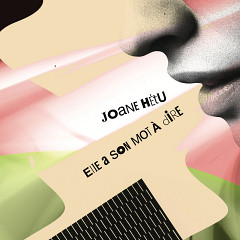
  • Elle a son mot à dire in Bad Alchemy

    “Kritik”, Rigobert Dittmann, Bad Alchemy, December 1, 2025
    Thursday, August 6, 2026 Press

    Auch Elle a son mot à dire von Joane Hétu wird dargeboten mit dem Ensemble SuperMusiqueÉmilie Fortin, trompette, Luzio Altobelli, accordéon, Noam Bierstone, percussions, Michel F Côté, percussions & électronique und Hétu selber, als cheffe an saxophone alto. Als Sammlung kurioser Songs, angestimmt von Sarah Albu, mit ihrem Knowhow im Vokalensemble Phth, auf „According to the Moon“ (2023) als Interpretin von Gayle Young, auf „Voix Jetées“ (2024) von Nico Muhly, Missy Mazzoli, Keiko Devaux, Nicole Lizée und Jared Miller. Elle n’a pas de mot noch wortlos zu Whirliesound. Mot elle a mit bedrücktem und insistentem Sang zu nur Drums & Percussion. Elle n’est pas un animal als anarchistische Babbelbande mit Akkordeon, Pfeifen, Spielzeug. Un idéal nur die Grrrls a cappella. Avoir le motton erst nur Altosax und Trompetengrowls, dann mit Albu und Drums. Bis sie als zarathustrische SuperWoman der Schlange den Kopf abbeißt und ausspuckt. Vivante erklingt mit Sprechgesang, der zu Simpelgroove ins Delirium abzweigt. Lumière folgt mit verstopfter Trompete, Akkordeon, mondstichigem Singsang. Chant à elle singt Hétu feierlich allein. Jojo dit nur Männer-nonsense zu Elektrononsense und ein Paar Zügen des Akkordeons. Elle n’est pas un animal bringt bruitistisch-surreal verspielte Tierporträts à la „Ceci n’est pas une pipe.“ Bei Elle a dit oui lallen, haspeln, jaulen alle und verlangen dit oui a elle, di wi a L. Elle a son mot à dire schießt mit Vogelpfeifen den Vogel ab. Und Elle qui est-elle? kratzt die Federn zusammen, alle miteinander melancholisch, mit Trübsal blasender Tuba (Julie Houle), wonnigem Akkordeon, der phantastischen Sarah Albu im Tanz um Elle, Zapfenstreich der Trompete. Als kollektive Huldigung der Sphinx. Als toller Streich von Hétu. Und die Entdeckung einer extraordinären Vokalistin.

    … a stroke of genius from Hétu.

    Je suis calme et enragé·e in Bad Alchemy

    “Kritik”, Rigobert Dittmann, Bad Alchemy, December 1, 2025
    Thursday, August 6, 2026 Press

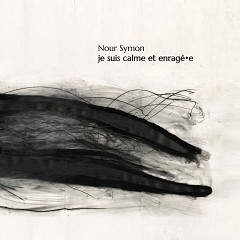
    Symon Henry? Nour Symon? ’They’ sind ein Egypto-québécois Composer, Soundpainter und Poet, ’deren’ Graphic Score „Voir dans le vent qui hurle les étoiles rire, et rire“ das Ensemble SuperMusique unter Leitung von Danielle Palardy Roger auf „ Voir dans le vent… “ (AM 251) zu Gehör brachte. Und ebenso Je suis calme et enragé·e (AM 281), zu siebt intoniert mit Flûtes, Trompette, Violon, Violoncelle, Contrebasse & Percussions, zusammen mit dem Collectif Ad Lib als Stimmquartett, verstärkt mit Synthétiseurs & Harmonica. Um in bruitistischer Dramatisierung sechs tableaux sonores mit Poesie von Roxane Desjardins zu performen: Nous étions masques, miracles, empêtrées dans l’enthousiasmeJ’espère être absouteAffalée sur le solIls ont dit que le ciel se couvrirait d’aiguillesJe mourrai dans une pièce ferméeIl n’y a rien à dire sur l’humanité. Zu einem auf Leinwand (→youtube) graphisch durchlaufenden ’Klang’-Faden und Texten von Desjardins zur Klimakrise und zum ’Ahornfrühling’, dem Studentenstreik in Quebec 2012. Die handgeschriebenen Zeilen werden gesprochen, deklamiert, Emotionen werden vokalisiert. Diagonale und vertikale Striche lösen wütende Schreie aus und entsetztes Ersticken. Farbige Verdichtung und Verdunkelung in der twomblyesken Graphik stoßen zu crescendierender Emphase an. Daneben Katzenjammer, leise Trauer zu verblassten Aquarellen, triste Sätze über trübe Aussichten. Und wieder, mit schmetternder Trompete, Dramatik und Zorn. Mit bitterem Fazit, von Baritonstimme, Rezitation, fauchenden Lauten. Die Zukunft verbrannt, erstickt, das Überleben in Frage gestellt. Ein absolut packendes Statement!

    An absolutely gripping statement!

    Platanus in PAN M 360

    “Review”, Frédéric Cardin, PAN M 360, August 1, 2026
    Tuesday, August 4, 2026 Press

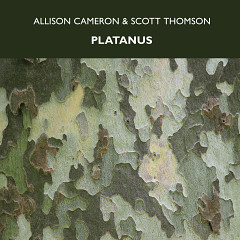
    Trombone and “homemade” synthesizer, this is the improbable duo that Platanus showcases for the most discerning music lovers. It is indeed ultra-free music, noise-driven but playful most of the time, featuring wacky sounds from the two instrumentalists present, Scott Thomson on trombone and Allison Cameron on synthesizer. The Montréaler and the Torontonian shatter all imaginable systems over the course of three long, largely improvised pieces. Squeaks, breaths, clicks, white noise, sometimes vaguely “melodic” lines, all the possibilities generated by extended techniques on the trombone and the particular timbres of Cameron’s synthesizer (an instrument built by a friend and colleague of both artists, which Thomson calls the “Cadillac Cracklebox”), intertwine in atomistic settings traversed by waves and some more or less vehement eruptions.

    A music that is as contemporary and demanding as it gets, but satisfying, for receptive and adventurous ears.

    A music that is as contemporary and demanding as it gets, but satisfying, for receptive and adventurous ears.

    Platanus in All That Jazz

    “Review”, Greg Drygala, All That Jazz, April 12, 2026
    Tuesday, August 4, 2026 Press

    Montréal’s Ambiances Magnétiques label, one of many imprints distributed by the venerable DAME is announcing two exciting new releases due out on April 17th, 2026 on CD and digital formats. First of them, the near-hour’s worth of music, Platanus, contained on the first duo recording from multifaceted artists Scott Thomson (trombone) and Allison Cameron (crackle synthesiser, keyboards, tapes) pulls listeners into a uniquely disorienting topography.

    Their exchanges are neither deliberate and delicate nor assertively gestural and mostly evade typical markers of directionality. Instead, Thomson and Cameron collectively paint a confounding scenery—a place that feels perched precariously on the cusp between dreaming and wakefulness. Within this wobbly frame, their interplay variously foats, wafts, gurgles, and drifts, a curious assortment of textures and murky hues. It leaves an indelible impression yet without actively articulating or resisting form.

    Platanus is dedicated to the memory of Nobuo Kubota, the extraordinary Canadian improviser and intermedia artist who passed away in September of 2025 at the age of 93. Kubota’s connection to the strange and inventive music-making that unfolds here may be indirect but it’s also substantial. In the liner notes, Thomson recalls a 2009 residency that Cameron held at his erstwhile Toronto venue Somewhere There, where “Allison proposed a trio with me and the inspiring polymath, Nobuo Kubota, whose syllable-spitting vocals almost demanded to be called shamanic. It was an eye-opening experience, one of many that I lived during those heady, music-drenched days.”

    Additionally, one of the key (and rarest) elements in what Thomson calls the “quirky kaleidoscopy of [Cameron’s] instrumentation” here was a gift from Kubota. The Crackle Synthesiser is a deluxe variation on the more common STEIM Cracklebox/ Kraakdoos where the Cracklebox’s metal contacts (which actually place the variability of the human body within its circuitry) are augmented with many additional controls.

    Cameron is noted for her unusual sonics in both her written-out music and her improvisational practice. Thomson’s commendable palette on the trombone makes him an ideal co-conspirator, and their chemistry is only compounded by their mutual willingness to inhabit the restless, engrossing quasi-stasis unfurled here. Platanus is a quietly potent recording that doesn’t so much defy conventions as slide between them.

    Cameron is noted for her unusual sonics in both her written-out music and her improvisational practice. Thomson’s commendable palette on the trombone makes him an ideal co-conspirator, and their chemistry is only compounded by their mutual willingness to inhabit the restless, engrossing quasi-stasis unfurled here. Platanus is a quietly potent recording that doesn’t so much defy conventions as slide between them.

    Dream of Heat in The WholeNote

    “Review”, Cheryl Ockrant, The WholeNote, no. 31:6, July 1, 2026
    Thursday, July 30, 2026 Press

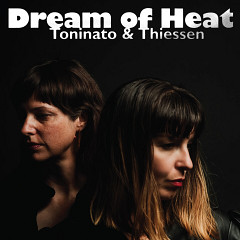
    In the depths of winter and the icy isolation of the pandemic lockdown “sonic post-cards” were exchan ged between composers Ida Toninato, on baritone saxo-phone, and Jennifer Thiessen, on viola and viola d’amore. These instruments share many acoustic ranges and qualities, enabling the duo to enjoy and expand their balanced intersecting relationship. Continuing the musical collaboration begun in their JUNO-nominated The Space Between Us, Dream of Heat continues their close conversational style to create a meditation on death and rebirth through allusions of ice and warmth. Beginning with a spare, acoustic duet between viola and saxophone, the opening track I need warmth sneaks in a cold wind and spoken word; both artists plead for heat as their instruments intertwine. The intimacy of is immediate. The layers of voices thread and expand throughout the album, grounding the humanness that draws the listener in, and expertly layered synths and occasional beats by Jason Sharp swell and morph the album from the early acoustic seeds to ambient, jazz, folk and rock. The strong arc of the album maintains the core of the cycle of death and rebirth, despite each track being a singular style, distinct from the next. The lyrics are beautifully and cleanly delivered in both English and French, keeping the intimacy at its core.

    The running saxophone ostinato on Bear builds toward On a tellement rêvé, a gorgeously indescribable track combining ambient, noise and rock. I am suffocating describes anxiety with bow scrapes and low-end pulsing under vocals, becoming almost punk in its urgency to become Change, a restful, water-borne intensity that brings us home with both tonality and lyrics. Dream of Heat is a truly beautiful and authentic story of the time for these two artists.

    … both artists plead for heat as their instruments intertwine. The intimacy of is immediate. The layers of voices thread and expand throughout the album, grounding the humanness that draws the listener in, and expertly layered synths and occasional beats by Jason Sharp swell and morph the album from the early acoustic seeds to ambient, jazz, folk and rock… Dream of Heat is a truly beautiful and authentic story of the time for these two artists.

    21st-Century Canadian Snare Drum in The WholeNote

    “Review”, David Olds, The WholeNote, no. 31:6, July 1, 2026
    Thursday, July 30, 2026 Press

    A number of decades ago my wife and I attended a fabulous concert by superlative percussionist (now Dame) Evelyn Glennie at the George Weston Recital Hall. The piece that has stuck with me for all these years was PRIM by Icelandic composer Áskell Másson, a ten-minute composition using only one snare drum.

    The result was transfixing (you can see a performance on YouTube). I would never have imagined that a single drum could be so compelling.

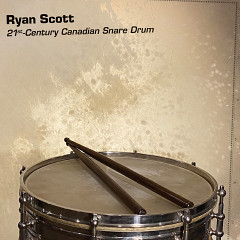
    That being said I was a little daunted when I encountered Ryan Scott new double CD 21st-Century Canadian Snare Drum. Any qualms I had were quickly put to rest as I began to listen. While the snare drum does indeed figure prominently in the 14 works, almost all of them include additional resources, be it spoken word, electronic processing, prerecorded soundtracks, or requiring Scott to perform in other ways. One notable exception is Michael Oesterle’s brilliant, ironically titled hush (2022) with its seven minutes of just sticks on skin.

    Anna Höstman’s pebbles also uses the unadorned drum in a piece inspired by the words of artist Rockwell Kent, while Scott whistles and hums fragments of melodic material.

    Andrew Staniland’s ANTIGRAVITYDRUM begins with the drum alone, its snare springs disconnected. Two and a half minutes later an engaging soundtrack begins, filled with electronic effects and MIDI-instruments in counterpoint with the still snare-less drum. Bekah SimmsSkinscape IV involves Scott’s interaction with an electronic, disembodied version of the snare drum, transforming “something intimately familiar into something processed and alien.” Christina Volpini’s only ghosts finds Scott producing a harmonica drone over a soundtrack reminiscent of waves upon a shore. FOMO (Fear of Missing Out) by Kati Agócs is scored for snare drum, kick drum and two large metal plates. It is a sparse piece in which “the soloist enacts a kind of stream-of-consciousness pantomime, searching for something inchoate, elusive, and potentially unreachable.”

    Perhaps the most idiosyncratic work is Brian Current’s abrasive Infantry which delves into the militaristic implications of the snare, with pre-recorded texts by soldiers from different backgrounds and periods of history and percussive interjections. The set concludes with Nicole Lizée’s The Dark Night.fm, in which “analogue synths and slowed-down voice smears… wrap themselves around Scott’s nimble percussion and vocal interjections.”

    All of the above, plus works from Amy Brandon, Monica Pearce, Vincent Ho, Emilie Cecilia LeBel, Jason Doell and Hiroki Tsurumoto ensure that these dises never devolve into “too much of a much-ness.” They provide a welcome showcase for the diversity of Canadian composition at this point in time and a stunning platform for the many talents of Ryan Scott (principal percussionist of Esprit Orchestra, artistic director of Continuum Contemporary Music and a member of the Canadian Opera Company Orchestra).

    All of the above… ensure that these discs never devolve into “too much of a much-ness.” They provide a welcome showcase for the diversity of Canadian composition at this point in time and a stunning platform for the many talents of Ryan Scott.
  • 1
  • 2
  • 3
  • 4
  • 5
  • 6
  • 7
  • 8
  • 9