actuellecd
  • This website is also available in English.

Blog

276 results
  • 5
  • 6
  • 7
  • 8
  • 9
  • 10
  • 11
  • 12
  • 13
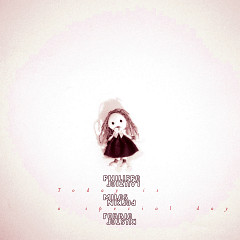
  • Today is a Special Day in Musica Jazz

    “Le influenze francesi di certo jazz canadese”, Alberto Bazzurro, Musica Jazz, no. 62:11, November 1, 2006
    Wednesday, November 1, 2006 Press

    Il Canada francofono ha ormai da tempo un occhio sul jazz ben più prossimo a quello dei cugini francesi che non dei dirimpettai americani. […] Il più felice è senz’altro Today Is A Special Day, con Philippe Lauzier alle ance, Miles Perkin al basso e Robbie Kuster alla batteria. Vi si respira un’aria squisitamente francese (appunto), una preziosità suadente, non di rado danzante, un tono soffice, colloquiale, cameristico, molto attento alle timbriche e a non scostarsi troppo da una cantabilità che di rado cede il passo ad angolosità, le quali non fanno poi che ampliare lo spettro climatico del lavoro, valorizzandone le sfaccettature. […]

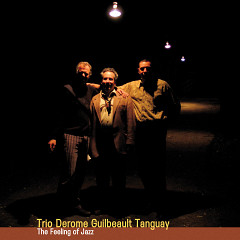
    The Feeling of Jazz in Jazzman

    “Critique”, Franck Bergerot, Jazzman, no. 130, November 1, 2006
    Wednesday, November 1, 2006 Press

    Quoi de commun entre cette batterie, cette contrebasse, ces saxophones, cette flûte ou même cette voix qui proclame autant qu’elle chante? La truculence des timbres et des débits, des mélodies et des tempos. Une hâte joyeuse, jamais précipitée. Un enracinement qui est sève et bourgeonnement plutôt que sclérose. On pense à la graisse sonore d’un Hamiett Bluiett ou à la pensée zigzagante d’un John Tchicai, à la rondeur d’un Charles Mingus, à l’eclectisme et au bonheur de battre d’un Joey Baron. Dans son texte de présentation, Jean Derome s’excuse presque de ne rien inventer mais se réclame de la nécessité pour la musique de s’incarner. On l’excuse, lui et ses comparses, parce qu’ils nous font partager l’urgence brûlante qu’ils ont de rejouer Ellington, Sonny Clark, Cole Porter, Fats Waller, Jerome Kern, Lee Konitz ou Misha Mengelberg. La brutalité de la formule à trois est habillée d’arrangements discrets mais qui font la différence, ou parfois d’un simple élan straight-ahead qui n’appartient pourtant qu’à eux. (Roboratif)

    Une hâte joyeuse, jamais précipitée. Un enracinement qui est sève et bourgeonnement plutôt que sclérose.

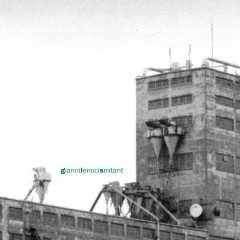
    Sextant in Panpot

    “Jazz Italia can be proud of this strange little egg.”, Jay Jay Erickson, Panpot, November 1, 2006
    Wednesday, November 1, 2006 Press

    Montréal’s Ambiances Magnétiques has been busy with releases as of late — see new outings by Tim Brady, Lori Freedman, as well Arthur Bull & Daniel Heïkalo for evidence. Now you can enter Gianni Lenoci: an Italian pianist with an impressive touch.

    The piano leader has recruited some finely plucked Italian musicians for this oeuvre, which travels nine selections of extremely diverse territory. As the story has it, these tracks were born out of the new teaching methodologies’ workshops given by Lenoci at Nino Rota Conservatory in Monopoli. But just when you start to think most of this collection is centered around Lenoci’s subtle piano meanderings, a track like Intersezione, or better yet Notturno frattale, neatly tuck away those pre-conceptions with nearly 6 minutes of electronic-based shrieks and tonalities, both far away from conventional jazz instrumentation.

    Sextant (which I can only guess signifies the number of musicians involved) is Lenoci’s follow-up to Sur une balançoire, also released on Ambiances Magnétiques back in 2004. And this new album takes a lateral sprint from its predecessor.

    For lack of better expression, Sextant is “all over the place” — and without a real unified vibe (except, of course, for the “everywhere” factor). The open-minded combination of electric and synthesized keys, electronic blasts, soprano & alt saxophones, double bass and drums results in some fairly eccentric flourishes though. For example, a subtle piano jazz moment can suddenly become intercepted by some manic energy — where various instruments seemingly bubble for distinctive air.

    Created with purpose and intent, this is a rather interesting headphone / full sound system experience (though the high-pitched shrieks scared the lights out of me, as they always do). It’s up to you whether or not its disjointed visions merit repeat listening.

    Sextant in Jazz Word

    “Review”, Ken Waxman, Jazz Word, November 1, 2006
    Wednesday, November 1, 2006 Press

    Mixing modal, minimalist and avant-garde impulses, the pieces on this CD stem from teaching methodologies workshops Italian pianist Gianni Lenoci leads in his hometown of Monopoli. But there’s nothing fussy or academic about the date.

    Taking jazzman Eric Dolphy’s buoyant intensity and composer Morton Feldman’s horizontal sound development as its contrasting boundries, the Lenoci sextet not only plays a composition by each man, but also original tunes that bound from one extremity to the other, sonically coloring in the often elusive middle distances.

    Playing piano, electric piano, synthesizer and electronics, Lenoci – who has recorded with French bassist Joëlle Léandre – is especially noteworthy on Sestante, where his sprinting glissandi and flashing octaves simultaneoulsy reference legato fantasia and tremolo improvisation. Buoyed by the hocketing undulations of saxophonists Fabrizio Scarafile and Francesco Massaro, his keyboard note clusters still leave space for distorted guitar reverb from Adolfo La Volpe.

    Louder and more boppish, Punto showcases Massaro’s swaggering baritone saxophone growls on top of organic keybaord comping, while Rothko flirts with electronics. Except for an occasiomal cymbal clap from Marcello Magliocchi and slurping chirps from the saxes, this piece is all Lenoci, who outputs broken chord cadenzas and cascading arpeggios that expose internal string slides and ring modulator- triggered gongs.

    With bassist Francesco Angiuli on side to keep the band grounded during the more traditionally jazzy and electronic compositions, the composer/pianist confirms that fluent improvisations can arise from cerebral forethought as well as in-the-moment playing.

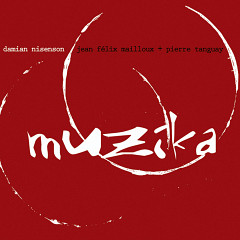
    Muzika, Aurores boréales in Vital

    “Review”, Dolf Mulder, Vital, no. 550, October 31, 2006
    Tuesday, October 31, 2006 Press

    You may have noticed that the canadian Ambiances Magnétiques label concentrated on new jazz in the last few years with there series of jazz releases. This trend is continued with the new associated label Malasartes. Although this label welcomes any new music, the first two releases are definitely jazz. The label is founded by Damian Nisenson, an argentinian born musician and actor who came from Europe to Montréal in 2005. He assimilated quickly it seems, as he presents now his own record on his own label. Not bad. Under the wings of DAME distribution his music will now also attract international attention, which was not the case for his musical activities in Argentina with Dosaxos 2 and the Nisenson Kabusacki Dawidowicz Trio. Except for one traditionel tune, Nisenson composed the rest of the music on Muzika. Performers are Jean Félix Mailloux on bass, Pierre Tanguay on drums and Nisenson on tenor, alt and sopranino saxes. If I’m not mistaken I hear klezmer-like influences in some the compositions. Also in his phrasing Nisenson I hear the influence of jewish music at some moments. These and other influences are melted succesfully in a music that in the end is very jazzy in nature. Nisenson proves himself as a disciplined and devoted player who knows what atmosphere he wants to create. The very experienced Tanguay delivers wonderfull contributions.

    On Jean Félix Mailloux I can say more listening to the cd of his trio. With Arden Arapyan on piano and Jonathan Racine-Ménard on drums and Mailloux himself on bass this trio brings to life nine compositions of Mailloux. All three of them are young musicians of Montréal, active in miscellaneous musical contexts, which is the modus operandi nowadays for so many musicians that are open to what is happening. In the combination of this trio they met each other for their love for a very lyrical — nightclubbish — kind of jazz. The drummer shuffles his way almost timidly, as does the bass with its warm sound. This way both give room to the pianoplayer, who with his nice touch, plays wonderfull melodies. The compositions are ok, but also very conform the rules of this standarised kind of music. Nothing wrong with it, as it is very well done, but not my piece of cake. Allthough, I have to admit that this cd did tremble my prejudices on their feet, wanting to surrender to the swing.

    These and other influences are melted succesfully in a music that in the end is very jazzy in nature.

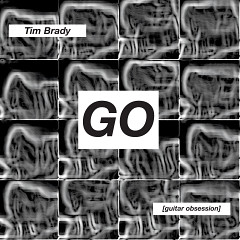
    GO [Guitar Obsession] in Ici Montréal

    “Sélection CD”, François Nadon, Ici Montréal, October 26, 2006
    Thursday, October 26, 2006 Press

    L’émérite compositeur montréalais récidive avec un album solo de guitare électrique. Ces cinq dernières années, Tim Brady a fait paraître sur l’étiquette Ambainces Magnétiques, cinq disques qui vont de compositions pour petits ensembles à l’opéra. Ici, outre ses propres compositions, le musicien nous propose celles de Jean-François Laporte, d’Alexandre Burton, de Laurence Crane et de Tristan Murail. La musique y est largement écrite et le traitement de la guitare va du son épuré à la très virile distorsion. Avec cet opus, Brady nous démontre encore une fois que sa polyvalence le propulse au-delà de toute convention. 3,5/5

    Avec cet opus, Brady nous démontre encore une fois que sa polyvalence le propulse au-delà de toute convention.
    ★★★½
  • 5
  • 6
  • 7
  • 8
  • 9
  • 10
  • 11
  • 12
  • 13