actuellecd
  • This website is also available in English.

Blog

276 results
  • 36
  • 37
  • 38
  • 39
  • 40
  • 41
  • 42
  • 43
  • 44
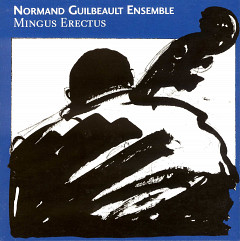
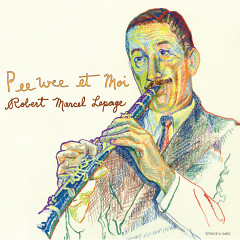
  • Mingus Erectus, Pee Wee et moi, The Feeling of Jazz, Ambiances Magnétiques Jazz in Coda Magazine

    “Label Spotlight: Ambiances Magnétiques Jazz, Jazz becomes Actuelle”, Ken Waxman, Coda Magazine, no. 326, March 1, 2006
    Wednesday, March 1, 2006 Press

    Need further proof that Quebec is a province pas comme des autres? At a time when jazz record labels and musicians lament lack of acceptance and opportunities, Ambiances Magnétiques, the longestablished, Montréal-based musique actuelle label has just set up a specific jazz imprint.

    The reason is partially artistic and partially marketing, explains Joane Hétu, founder member of the AM collective, and artistic director of DAME, its distribution and marketing wing.

    Musique actuelle as defined by our community implies that the composer is also performer of his music,” she says, elaborating the philosophy that has guided AM since its inception in 1983. Yet with many of AM’s founders recently involved with projects honoring the compositions of jazz icons, such as bassist Normand Guilbeault’s new CD, Mingus Erectus, the need for a specific jazz label became apparent.

    “Montréal’s jazz community is active all year long,” she notes. “With l’Off Festival de jazz de Montréal, a new Regroupement des artistes de jazz et de musique actuelle du Québec and a new interest in jazz from many musicians, now seemed as good a time as ever to support these artists.”

    However, after having released more than 150 CDs, AM has established a certain reputation and market, the couple of jazz sessions previously released by the label “often ended up in the wrong sections in stores or in the hands of reviewers more interested in musique actuelle,” she adds. “Ambiances Magnétiques Jazz (AMJ) allows our jazz releases to be clearly identified, categorized, reviewed and marketed in the jazz family.”

    Although AMJ’s first CDs — clarinetist Robert Marcel Lepage’s Pee Wee et Moi and reeds-bass-drums Trio Derome Guilbeault Tanguay’s The Feeling of Jazz are the others — came out at the same time as Mingus Erectus in late 2005, this clustering was “just luck,” she concedes. Each artist, an AM founding member, happened to have a project ready, although Hétu adds “having many releases over a short time period should help put our jazz label on the map.”

    It’s too early to gauge AMJ sales, but like most of the label’s product, there’s a close correlation between live performance and a CD’s popularity. “It’s all about playing live,” she declares. “The more concerts the more sales.”

    Among the 10 or so CDs AM releases each year, she expects that two to four will be jazz. But since AM is designed to give artists mastery over their work, it depends on what projects are offered to the label. Already scheduled for spring release is a trio disc by Quebec guitarist Antoine Berthiaume with bassist Michel Donato and drummer Pierre Tanguay and another by Italian pianist Gianni Lenoci’s Ensemble. Lenoci’s CD will be AMJ’s first disc by a nonCanadian. However since the parent label’s releases aren’t limited by geography, Hétu suspects AMJ will follow the same policy.

    Again though, Hétu cautions that AM’s overriding raison d’être is to release, distribute and market CDs by its founding members or those recommended by a member committee. Busy with its own projects, AMJ won’t go out of its way to seek out new jazz talent. “We’ll leave the creation of a Canadian Jazz Idol to someone else,” she jokes.

    … Montréal-based musique actuelle label has just set up a specific jazz imprint.

    Atlas Epileptic, Oralizations in Musicworks

    “Two Extremes of Oral Sound Art”, René Van Peer, Musicworks, no. 94, March 1, 2006
    Wednesday, March 1, 2006 Press

    These recent CDs of Canadian sound poets Paul Dutton and Pierre-André Arcand show two artists operating in the same field, but at virtually opposite ends. While Dutton’s work is basically acoustic, being rooted primarily in the amazingly virtuosic command he has of his speech organ and the cavities directly connected to it, Arcand squeezes his voice through all manner of electronics for his pieces. Dutton’s work is as pure and austere as you can get. On Arcand’s Atlas Epileptic the voice is not the be-all and end-all as on Dutton’s album, but rather a starting point for hypnotic sonic excursions.

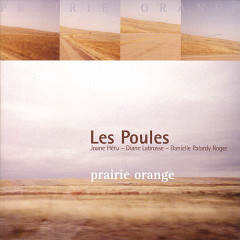
    Prairie orange in Musicworks

    “Both Disturbing and Comforting”, Randy Raine-Reusch, Musicworks, no. 94, March 1, 2006
    Wednesday, March 1, 2006 Press

    This is the second CD from Les PoulesJoane Hétu on alto sax, Diane Labrosse on motion sampler and Danielle Palardy Roger on percussion, all three artists using their voices to create this highly organic sonic exploration. This CD rustles and sighs its way through a series of complex emotional soundscapes that reach deep into the listener’s subconscious to awaken long-forgotten sensations. It is powerful and disturbing, yet somehow familiar and comforting at the same time — perfect listening with a cup of hot tea, when trapped by a dark snowy night.

    It is powerful and disturbing, yet somehow familiar and comforting at the same time…

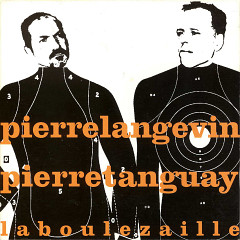
    La boulezaille in Musicworks

    “Playful Québécois Innovation”, Randy Raine-Reusch, Musicworks, no. 94, March 1, 2006
    Wednesday, March 1, 2006 Press

    This CD reminds me that some of the most innovative and playfully experimental music in Canada regularly comes from Quebec. Here, two seasoned multi-instrumentalists draw on their vast experiences in musique actuelle, jazz, folk, early, new, and world music to create a playground for the ears. Their creativity is nonstop, quickly moving from instrument to instrument and style to style, creating a form of twenty-first-century folk music. Fascinating!

    Their creativity is nonstop, quickly moving from instrument to instrument and style to style, creating a form of twenty-first-century folk music.

    Pee Wee et moi in Jazzman

    “Critique”, Pascal Anquetil, Jazzman, no. 122, March 1, 2006
    Wednesday, March 1, 2006 Press

    Compositeur à succès de musiques de films et de séries télévisées (Urgences), ce Québécois hyperactif s’affirme comme un touche-à-tout ironique qui pratique l’autodérision avec un sérieux magnifiquement imperturbable. Sa grande passion, c’est la clarinette. Dans un précédent album, il s’était posé cette question cruciale: «Les clarinettes ont-elles une âme?» Dans ce nouvel opus dédié à la ‘danseuse d’ébène’, il tente cette fois d’éclaircir sa relation arnoureuse avec Pee Wee Russell. Génie célibataire sans filiation ni descendance, ce clarinettiste hors catégorie a côtoyé tous les styles et toutes les époques. Au crépuscule de sa vie, il pouvait sans mentir se vanter d’avoir joué avec Bix Beiderbecke et Thelonious Monk. Qu’est-ce qui peut donc réunir ces deux individus aussi différents l’un de l’autre? Ce blanc de peau de Pee Wee a passé toute son existence à se noircir systématiquement, sans aucune modération, pour avoir le droit dans un monde très straight de jouer le blues de façon excentrique. «Moi, précise Robert Marcel Lepage, je ne bois jamais et je joue de la clarinette de façon plutôt straight entouré de musiciens excentriques.» lls étaient donc faits pour se rencontrer. Le résultat: ce disque en forme d’hommage décalé pour lequel Robert Marcel Lepage a écrit une douzaine de blues habilement tordus, une suite savante et désinvolte qui se veut une invitation à explorer un aspect particulier du phrasé de Pee Wee. Pour ce faire, il s’est entouré de toute une confrérie d’oiseleurs, une fanfare richement boisée. Au final, cela donne un agréable divertissement, une fantaisie très distinguée. Il y manque sans doute l’essentiel de ce qui fait le génie de Pee Wee Russell: le swing de la titubation et le lyrisme du gémissement. Personne n’est parfait.

    Au final, cela donne un agréable divertissement, une fantaisie très distinguée.

    4. Hmmm in Blow Up

    “Recensione”, Stefano Isidoro Bianchi, Blow Up, no. 94, March 1, 2006
    Wednesday, March 1, 2006 Press

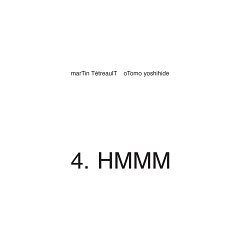
    Il trittico formato da 1. Grrr, 2. Tok e 3. Ahhh si arricchisce di un nuovo capitolo, l’ultirno, pubblicato da solo in edizione limitata o in un box che raccoglie l’opera per intero. Per ricapitolare, si tratta di registrazioni che Tétreault e Yoshihide hannoeffettuato durante i loro set per soli giradischi e poi ricompattato nelle diverse uscite in modo da dare ai CD un senso unitario: il primo era quello dell’attacco brutalmente ‘rock’, il secondo quello dell’abbassamento del volume in favore di una maggior attenzione alla ‘geometria’, il terzo quello della riduzione al grado zero della polpa sonora. E questo? Essendo, in pratica, un bonus CD inizialmente non previsto, va a finire che è quello più vario perché pesca in ognuno dei diversi umori che animano gli altri. Innanzi tutto, come già osservato, faticherete non poco a imanaginare che tutto ciò che si ascolta nasca da semplici giradischi, e quindi da dischi ‘altri’: nessuno avrebbe dubbi nell’inserire questo catalogo di angeliche abrasività nella musica elettronica. Immaginatela quindi come tale, in fin dei conti non ha alcuna importanza: l’evoluzione a grappolo di Brest no 4 / Le Vauban 22.04.03, il malinconico rimuginare di Genève no 5 / Cave 12 30.04.03, i satanici grugniti di Nijmegen no 3 / Extrapool 25.04.03, le distorsioni hendrixiane a dir poco di Lyon no 4 / Kafe Mysik 28.04.03, le improvvisazioni di Genève no 2 / Cave 12 30.04.03 o i rimbombi minacciosi di Grenoble no 4 / Le 102 29.04.03 non assomigliano neanche lontanamente ai virtuosismi da dj in fregola divistica, anzi ne sono la negazione stessa, stanno allo scratching da gare di velocità esattamente come il punk stava al prog, stanno ai tanti piccoli DJ Shadow che hanno infestato il djing nell’ultimo decennio esattamente come i Germs stavano ai Genesis. Non è una questione di palatabilità o commerciabilità del risultato finale (ognuno solletica le proprie orecchie come preferisce), è una questione di atteggiamento, di sensibilità, di stile di vita e persino di politica della musica. Questa è l’arte del giradischi ‘punk’ e Tétreault e Yoshihide sono i suoi profeti liberatori. Fate vostro il cofanetto e tenetelo a futura memoria.

  • 36
  • 37
  • 38
  • 39
  • 40
  • 41
  • 42
  • 43
  • 44