actuellecd

Blog

276 results
  • 29
  • 30
  • 31
  • 32
  • 33
  • 34
  • 35
  • 36
  • 37
  • Sautons ce repas de midi in La Galère

    “Critique”, La Galère, April 1, 2006
    Saturday, April 1, 2006 Press

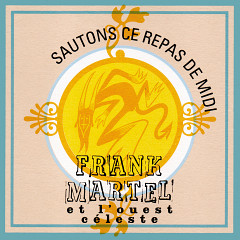
    Après avoir publié trois recueils de poèmes dans les années 1980-90, Frank Martel se lance enfin dans la chanson avec un premier album en 2001, intitulé Enjambons le désert, malheureusement épuisé aujourd’hui. Son deuxième album, Sautons ce repas de midi paru en 2003, est marqué par l’intrusion du merveilleux dans le quotidien. Le voyage est un thème récurent, mais c’est «le genre de voyages qu’on fait nous autres!» comme dit Martel en spectacle pour présenter certaines chansons plutôt oniriques, à mi-chemin entre le récit de rêves et le manuel de zoologie, parsemé de détails d’un quotidien pittoresque à souhait. Célébration du quotidien donc, mais pas de n’importe lequel: celui des voyages immobiles, de la magie inspirée des ruelles, des fruits et des légumes aux noms qui font rêver dans des contextes pas possibles; on comprend bien que tout est affaire d’attitude face à la vie. «Je suis toujours dans tes jambes, pis jamais dans tes bras!» Voilà une des perles qu’on retrouve sur ce disque minimaliste et sans prétention, oscillant entre rock garage, musique actuelle et chanson. Inspiré du western québécois dans la façon de chanter, mais aussi dans les textes, qu’il parodie parfois d’une façon tout à fait convaincante avec des phrases courtes, parfois à double sens, souvent pleines d’esprit. «C’est du creux de ses vertèbres que provient la bonne humeur du zèbre!»

    Musicalement, outre la batterie, la basse et les guitares, on trouve de la mandoline, du ukulélé, de l’harmonica, et même un theremin, un instrument rare et particulièrement inusité dans la chanson québécoise. À noter également la présence de l’excellent guitariste Bernard Falaise, une figure bien connue du milieu jazz et expérimental québécois. En conclusion, c’est un bon disque de char, ce qui est une grande qualité en soi, qu’on pourrait dire fait sur mesure pour ceux qui n’ont pas de char, ce qui est une plus grande qualité encore. On n’a qu’à regarder défiler les paysages beaux et absurdes de ce poète à la folie douce et sincère. Cet album est certainement l’un des plus intéressants des dix dernières années au Québec, et cela malgré une diffusion plutôt confidentielle. Il ne faut pas manquer de sauter sur l’occasion pour savourer cette galette sans pareille!

    Cet album est certainement l’un des plus intéressants des dix dernières années au Québec…

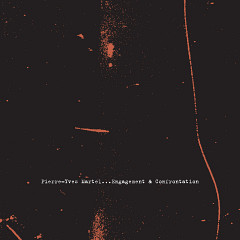
    Engagement & Confrontation, Pierre-Yves Martel in La Scena Musicale

    “Regards sur la relève, Bassman Research: Pierre-Yves Martel”, Paul Serralheiro, La Scena Musicale, no. 11:7, April 1, 2006
    Saturday, April 1, 2006 Press

    Finding your voice as a musician is no easy task, nor is finding your place in the music community at large. With remarkable ease and confidence, however, Ottawa native double bassist and composer Pierre-Yves Martel has found a niche for himself in the thriving Montréal scene. Most surprising is that this 27 year-old player has done so with a solo album, Engagement & Confrontation, to be released very soon on the local Ambiances Magnétiques label. But if one judges by his concert schedule, this is only the tip of the iceberg. Just last month, he headed south for performances in both Boston and New York and will perform two concerts in Toronto with guitarist Antoine Berthiaume on the 21 and 23 of this month. Here in town, he will spar with drummer Isaiah Ceccarelli on May 3 at Casa del Popolo as part of the Improvising Montréal Series. What’s more, Martel is active in both the contemporary and baroque music scene (he also plays viola de gamba) and has composed for classical and jazz ensembles alike. Barely out of music school, Martel is now a full-fledged working musician. Despite the risks of a solo album, the choice seemed natural to him. Inspired by the work of John Cage, fellow bassist Michael Formanek and René Lussier, Martel considered the potential for the “prepared” acoustic bass. “The research for the album,” he explained, “took place in my apartment where I just investigated the instrument’s sound possibilities. I built a kind of recorded library of musical miniatures and challenged myself to discover different sounds. It was like viewing the instrument from different perspectives.” Heartened by the results of his explorations, Martel applied successfully for a Canada Council grant last year. Recorded over a three-day span last October, the session was captured by no less than ten microphones. “The actual material is improvised,” Martel notes, “but stems from 35 very well-defined preparations.” Martel sees this process as similar to playing the melodies and changes of jazz standards. “Each track has one preparation. These include things like an open D tuning, rubbing the bass, using sympathetic vibrations, moveable bridges, and various clips on the strings.” “The prepared bass is a whole new instrument,” Martel sums up. “I’d like to work with other sound artists and try to bring prepared bass into group settings.” To this end, you will surely find Martel busy at work around town in one group or another, digging into the adventure of creative music.

    To this end, you will surely find Martel busy at work around town in one group or another, digging into the adventure of creative music.

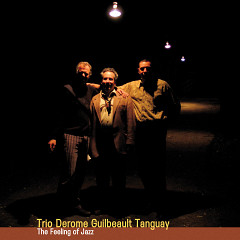
    The Feeling of Jazz in The WholeNote

    “Review”, Margles, The WholeNote, no. 11:7, April 1, 2006
    Saturday, April 1, 2006 Press

    […] The Feeling of Jazz showcases the work of 3 pillars of the Quebec musique actuelle scene (Normand Guilbeault on bass, Pierre Tanguay on drums and reedman Jean Derome) in a set of swing jazz standards with a modern twist. Derome attacks Ellington, Cole Porter and Fats Waller with a gritty tone and adventurous angular lines while the rhythm section swings freely underneath. The band draws an immediate comparison to Henry Threadgill’s 1980’s group Air, as the trio approaches the tradition with equal parts respect and irreverence. The energy is infectious, but Derome’s awkward swing feel over the prickly groove of the rhythm section starts to wear thin. The saving grace comes as the band gets down and dirty on a Misha Mengelberg cha cha called A Bit Nervous and when Derome switches to flute on Jitterbug Waltz, but then defeat is snatched from the jaws of victory when Derome sings, adding high camp to the already full dance card.

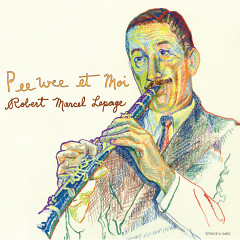
    Pee Wee et moi in The WholeNote

    “Review”, Margles, The WholeNote, no. 11:7, April 1, 2006
    Saturday, April 1, 2006 Press

    A far more effective take on the jazz tradition is Pee Wee et moi, Robert Marcel Lepage’s tribute to clarinetist Pee Wee Russell. The album features 12 wonderful originals and two Russell tunes arranged for no less than seven clarinets. And while that may sound like a jazz nightmare, Lepage’s quirky compositions and the fine rhythm section playing of Normand Guibeault, Pierre Tanguay and René Lussier make for a moody and interesting album that paints a vivid tapestry of Russell’s eccentric character. The songs are densely orchestrated often using rhythmically inventive shout choruses to evoke a 50’s swing feel, while harmonic and melodic shifts pull the work into the present. Ironically, the clarinet solos often begged for the restatement of an intricately arranged melody and René Lussier is underused on guitar, with quick glimpses of his amazing talent often drowned in a sea of reeds. But these are minor quibbles on what is a truly original tribute to an idiosyncratic clarinet pioneer.

    … a truly original tribute to an idiosyncratic clarinet pioneer.
  • 29
  • 30
  • 31
  • 32
  • 33
  • 34
  • 35
  • 36
  • 37