actuellecd

Blog

304 results
  • 20
  • 21
  • 22
  • 23
  • 24
  • 25
  • 26
  • 27
  • 28
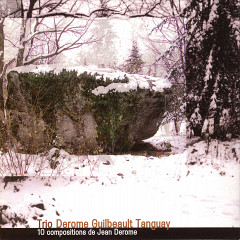
  • 10 compositions in Coda Magazine

    “Reviews”, Mike Chamberlain, Coda Magazine, no. 316, July 1, 2004
    Thursday, July 1, 2004 Press

    Saxophonist Jean Derome, bassist Normand Guilbeault, and drummer Pierre Tanguay are mainstays of Montréal’s musique actuelle scene, as likely to be found working in the chamber atmosphere of Pierre Cartier’s work as in the rock-tinged Fred Frith zone. However, all three are very fond of jazz and blues, viz. Pierre Tanguay’s neo-swing quintet Reunion or Guilbeault’s Hommage à Mingus sextet.

    This recording, which features compositions by Derome going back some thirty years, is squarely within the jazz tradition. The tunes are catchy without sacrificing harmonic and rhythmic complexity. Guilbeault and Tanguay provide a sure-footed, swinging bottom end for Derome’s improvisations. On most tunes Derome plays alto, altering histone according to mood, from the round sound of Marcher sur des braises to the acidic Verone. Pangolin is a slow blues, this time with Derome on baritone digging deep in the bottom end, and on La baignade he switches to flute, with a light-but not precious-feel. Typically, Derome, Guilbeault, and Tanguay work out variations on what appear to be relatively simple themes. The great joy is in hearing three old friends digging into music that means so much to them and discovering the new in the familiar. This album is going to make a few “best of” lists this year, I’m quite sure.
    The great joy is in hearing three old friends digging into music that means so much to them and discovering the new in the familiar.

    Soshin in Coda Magazine

    “Reviews”, Nate Dorward, Coda Magazine, no. 316, July 1, 2004
    Thursday, July 1, 2004 Press

    The title track of Soshin, the first release by Montréal guitarist Berthiaume, is a solo piece composed in collaboration with Denis Gougeon. Beginning as a languorously paced collage, it gradually draws the listener into a hazy, throbbing electronic soundscape: the effect is rather like getting sucked into a computer’s innards. The rest of the album is devoted to improvised duets with two veteran guitarists. The encounter with Derek Bailey is brief and rather slight — there simply isn’t much common ground between Bailey’s briskly acerbic style and Berthiaume’s dreamy, unhurried playing. (Another track from the same session has been released on the Incus CD-ROM compilation Visitors Book). The meat of the album is the three encounters with Fred Frith: big, droning soundscapes that spread out as far as the eye can see, interrupted by the occasional outcrop of sonic violence (most notably on Wolf’s Wood, whose opening minutes sound like a junkyard combat between a bedspring and an autoharp). It’s highly evocative music, the kind you can float away in if you’re in the right mood.

    It’s highly evocative music, the kind you can float away in if you’re in the right mood.

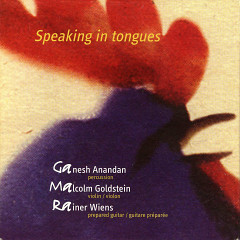
    Speaking in Tongues, Risque et pendule in Coda Magazine

    “Montreal Recordings”, Mike Chamberlain, Coda Magazine, no. 316, July 1, 2004
    Thursday, July 1, 2004 Press

    Montréal’s very active local music scene is characterized by an independence of spirit and a penchant for experimentation, epitomized best by the Ambiances Magnétiques label.

    Two recent recordings on Ambiances manifest the variety of music that falls under the heading of musique actuelle. The first is Risque et pendule by l’Ensemble Pierre Labbé. Labbé himself plays the tenor saxophone and flute, but his sextet is really a string band that features the violin and cello of Nathalie Bonin and Julie Trudeau respectively, the electric guitar of Bernard Falaise, and the rhythm section of Frédéric Alarie (bass) and Claude Lavergne (drums). The music has a cinematic feel — the compositions move from episode to episode, and the instruments seem to “talk” against one another. Labbé uses all the colors that his instrumental palette allows, and the musicians pull off the whole thing with panache.

    Ga Ma Ra is the trio of percussionist Ganesh Anandan, violinist Malcolm Goldstein, and guitarist Rainer Wiens, and their first album is Speaking in Tongnes. The interest here is in the interplay among these three mature voices. While the liner notes do not say so, the music appears to be mostly improvised. Firmly rooted in their respective traditions — South Asian, contemporary classical, jazz — Anandan, Goldstein, and Wiens are nonetheless able to communicate quite effectively with music that speaks to the possibility of an organic fusion of voices.

    … music that speaks to the possibility of an organic fusion of voices.

    The Unexpected One in La Scena Musicale

    “Review”, Paul Serralheiro, La Scena Musicale, no. 9:10, July 1, 2004
    Thursday, July 1, 2004 Press

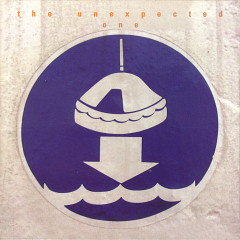
    The improvised music scenes in Vancouver and Montréal are thriving, a fact well reflected in this new release, which showcases musicians active in both cities. What’s more, it has the added virtue of pairing two guitar and drum duo — the first being Bernard Falaise and Pierre Tanguay of Montréal, the second consisting of Ron Samworth and Dylan van der Schyff of Vancouver. For those who already know the work of these players, the “unexpected” of the title doesn’t quite ring true, since this kind of exploration of sound textures via acoustic instruments and electronics, in an aleatoric intermeshing of aural pastiches, is just what one would expect. From the percussive clatterings of the opening track Damn the Pique through the industrial buzzings and urban hullabaloo of Oh My, from the groove that is not a groove of Corned Oliphant to the lyricism in Cinq six boîtes de tomates vertes we get very eclectic aural experiences, as every means necessary is used to create the evolving interactions that make up all eight improvised cuts of this disc. The pièce de résistance Pink Crimson evolves through a wide range of moods over the 18 minutes it takes for these creative minds to have done with it, thus making it emblematic of what improvised music is all about. Rather than recreating, the musicians seek to invent, but to do so requires active listening on their part, and demands the same from the listener if he or she wishes to fully appreciate the rewarding musical gestures captured. No doubt about it — the music will keep lingering in your mind’s ear, a little longer at each listen.

    the music will keep lingering in your mind’s ear, a little longer at each listen.

    Canevas «+» in The WholeNote

    “Review”, Tiina Kiik, The WholeNote, no. 9:10, July 1, 2004
    Thursday, July 1, 2004 Press

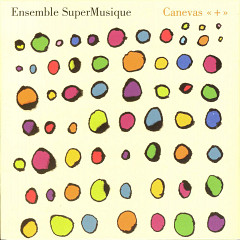
    Ensemble SuperMusique’s Canevas «+» could be described as a free improvisation sampler with some composed works thrown in for good measure. Featuring excerpts from four multi-thematic Montréal concerts which took place from 1998-2004, this is a great CD for both new and frequent listeners of these genres. The group employs some of the best improvisers around with numerous personnel configurations on the improvisational tracks resulting in illuminating creations. Great improvisational ideas abound here! Of note is the feisty Impro2 by Jean Derome[, Diane Labrosse] and Martin Tétreault — everything I’ve ever hoped for in an improv can be found on this 1:59 minute track. If you are going to listen to just one CD this summer, let it be this one! Great!

    If you are going to listen to just one CD this summer, let it be this one! Great!
  • 20
  • 21
  • 22
  • 23
  • 24
  • 25
  • 26
  • 27
  • 28