actuellecd
  • This website is also available in English.

Blog

255 results
  • 35
  • 36
  • 37
  • 38
  • 39
  • 40
  • 41
  • 42
  • 43
  • La spirale de l’escargot in AllMusic

    “Review”, François Couture, AllMusic, February 1, 2002
    Friday, February 1, 2002 Press

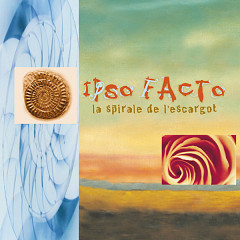
    La Spirale de l’Escargot (“The snail’s spiral”) introduced this young instrumental band from Quebec. An acoustic quartet of guitar, violin, double bass and drums/percussion, Ipso Facto cooks up an interesting recipe of world jazz fusion. Elements of Klezmer, tango, folk and fusion jazz are blended in simple but colorful compositions. The unchanging instrumentation ensures a cohesion from piece to piece that the wide palette of styles used could not provide. In terms of influences, one hears the progressive folk of Conventum (in a piece like Volapük in particular) and Art Zoyd in their acoustic beginnings (and without the bleak atmospheres), but also Astor Piazzolla and Jesse Cook. If most of the pieces have good rhythm, sometimes the melodies are thin, giving an impression of hollowness (De temps en temps, Les bleus). Through the creative countrapuntal voices and cross-stylistic arrangements one also finds something mechanical in the interpretation — as if the musicians were still prisoners of their parts, not completely comfortable. But when things click, they do marvelously: Yiddish meshugass is a great take at neo-Klezmer, the violin melody in Soleil rouge gives you something to dance to, and the aforementioned Volapük shows how the group can tastefully tackle more complex compositions, leaning toward the avant-garde — they should actually try more of that, it gives their music a more precise identity. A good debut.

    A good debut.

    Ohmix in The Wire

    “Soundcheck Review”, Julian Cowley, The Wire, no. 216, February 1, 2002
    Friday, February 1, 2002 Press

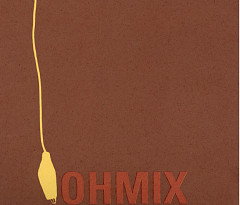
    For Ohmix the Quebec based Avatar Foundation invited eight composers to plunder the back catalogue of its OHM Éditions imprint and produce new work through their remixes and transformations. German recyclist Ralf Wehowsky, of P16.D4, kicks things off with a steadily building shimmer that peaks in a flurry of samples followed by a gentle, pulsing decline. Montréal turntablist Martin Tetreault’s brief contribution collapses muitiple sources into a jittery flux, music and voice sped up and whisked into an agitated state. French composer Christian Calon produces a tense dystopian piece in which an impoverished and seemingly distressed human voice is hemmed in by shadowy electroacoustic forms. Terre Thaemlitz contributes Transit(ional Edit) a clicking gridlock of synthetic horn sounds, an angry and terminally immobile jam. There are two pieces from arch plunderer John Oswald. Ohmigone (re)constructs a radio phone conversation, empty words drifting amongst inhuman sounds in a communication vacuum. Ridge builds from ripples to waves to a breaker of lush piano music. Spikier piano runs through an animated piece by Diane Labrosse, who has played with the groups Wondeur Brass and Justine. Tinkling bells, organ chords and reedy blasts, cartoon squeaks and distorted human voices are among the other elements in this soundtrack to some enigmatic narrative. Ambient technician David Kristian spins out an enigma of another kind. His Ohmite gradually intensifies from pinpoint to full glare without ever revealing the source of its luminous throb. Finally Alexandre St-Onge, an improvising associate of Kristian, drains the remaining air from the Ohmix atmosphere, mimicking the micro rhythms of a puncture or a gas cylinder with an open valve. A long, measured breath out. The OHM policy of taking risks often results in albums that include arresting episodes yet are uneven overall. A more selective project, Ohmix is consistently worthwhile.

    Ohmix is consistently worthwhile.

    Copie zéro in Voir

    “Hommes-orchestre”, Réjean Beaucage, Voir, January 31, 2002
    Thursday, January 31, 2002 Press

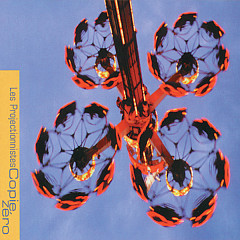
    Sacré début d’année pour le tromboniste Claude St-Jean, en “tournée montréalaise” avec les deux ensembles qu’il dirige, soit Les Projectionnistes et l’Orkestre des Pas Perdus. Il y avait un bout de temps que l’on n’avait vu Les Projectionnistes et ça faisait du bien de les retrouver à la Casa del Popolo, vendredi dernier. Et en format augmenté avec ça. Roberto Murray (sax alto) et Jean Sabourin (sousaphone), deux transfuges de l’O.P.P., se joignant au quintette habituel pour enrichir les arrangements de St-Jean. Le sousaphone couplé à la contrebasse de Tommy Babin, on peut dire que ça donne de la présence dans les graves! C’est sur cette base solide, chauffée par le jeu toujours précis et inventif de Rémi Leclerc à la batterie, que St-Jean construit ses fanfaronnades éclectiques et déjantées. Avec Pierre Labbé au sax ténor et Bernard Falaise à la guitare, les échanges de solos sont nombreux et jamais ennuyeux. Falaise est un joueur important dans la musique en technicolor des Projectionnistes; expert dans la manipulation des traitements du son, il ajuste celui de sa guitare à chaque situation et procure à l’ensemble de la profondeur de champ.

    L’Orkestre des Pas Perdus, c’est en quelque sorte la version marching band des Projectionnistes. Les deux ensembles partagent d’ailleurs quelques pièces, Claude St-Jean s’amusant à transcrire ses arrangements pour l’une ou l’autre formation. Que des cuivres cette fois-ci devant la batterie de Rémi Leclerc. Trombone, trompette, sousaphone et saxophones. Roberto Murray prend ici le sax ténor, laissant à Jean-Denis Levasseur le soin de réchauffer l’alto, et c’est Maxime St-Pierre qui pistonne la trompette. Une soufflerie qui décoiffe. Oscillant entre le jazz et le funk, ces cuivres-là donnent une nouvelle définition au terme heavy métal. Ils tournaient aux États-Unis l’année dernière et dans l’Ouest l’année d’avant, et on ne les a pas vus à Montréal depuis le Festival de Jazz de 1998. Faudrait peut-être ajouter quelques chaises…

    C’est sur cette base solide… que St-Jean construit ses fanfaronnades éclectiques et déjantées.

    February 22, 2002: Soi-même / Priser à deux, A Côté Tardif Duo

    Tuesday, January 29, 2002 In concert

    During the “Mois Multi” events, musician Michel F Côté and choregrapher Catherine Tardif presents “Soi-même / Priser à deux,” a minimalist duo that delicately blurs the frontier between music and body. The evening also proposes a sonic installation by Jean-Pierre Gauthier, “Piézoom,” and an audio performance by Steve Heimbecker, “What is not Babylone.” A Recto-Verso presentation, held at the Multi hall of Méduse (Québec City), Friday February 22, 2002.

    February 23, 2002: “Machines”: No Type performances in Québec City

    Tuesday, January 29, 2002 In concert

    The second edition of the “Machines” concerts will be held in Québec City during the Mois Multi event. A joint presentation by No Type, Avatar and Recto-Verso, this night of audio performances proposes to the public a meeting of four hardened improvisers. First, a duo by Magali Babin (amplified objects) and Guillaume Théroux (4-track tape recorder) presents a “musique concrète” improvisation. Secondly, the Martin Tétreault (turntables) and Érick Dorion (computer) duo offers a maximalist and dynamic noise performance. The four musicians will then complete the night with a collective improvsation. Salle Multi of Méduse (Québec City), Saturday February 23, 2002, 8pm.

    2nd CD by Interférence Sardines

    Tuesday, January 29, 2002 New releases

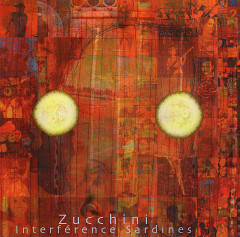
    “… listening to Interférence Sardines it became clear to me that we have a new creative outburst here.” (Vital, The Netherlands) Four years after their first album, Mare Crisium, Québec City based group Interférence sardines offers a new album filled with surprising musical crossbreedings, Zucchini. Intrumental pieces and wild songs, dynamic and varied arrangements, Zucchini will seduce both the curious and the converted.

  • 35
  • 36
  • 37
  • 38
  • 39
  • 40
  • 41
  • 42
  • 43