actuellecd

Blog

132 results
  • 4
  • 5
  • 6
  • 7
  • 8
  • 9
  • 10
  • 11
  • 12
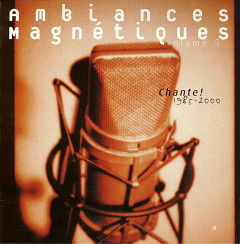
  • volume 5: Chante! 1985-2000, Ambiances Magnétiques in Revue & Corrigée

    “Disques”, Pierre Durr, Revue & Corrigée, no. 48, June 1, 2001
    Friday, June 1, 2001 Press

    Geneviève Letarte présente son deuxième opus, dix ans après le premier, tandis qu’une nouvelle venue, Nathalie Derome, offre à nos oreilles ses chansons parodisiaques. N’étant en général que peu sensible aux chansons proprement dites — tout en étant en mesure de les apprécier pour elles-mêmes mais sans forcément chercher à les réécouter — j’y cherche d’autres points d’appui: une voix, un accompagnement, des arrangements susceptibles de motiver une réécoute. À l’évidence, et au-delà des textes eux-mêmes qui méritent dans les deux cas d’être entendus, ce sont les chansons parodisiaques de Nathalie Derome qui m’accrochent. Alors que l’accompagnement des Chansons d’un jour reste délicieusement sans surprise, celui de Les 4 ronds sont allumés fourmille d’effets, de trouvailles, enrobant le texte d’un halo un peu mystérieux suscitant une interactivité renouvelée pour chaque pièce entre les instrumentistes (René Lussier, Guillaume Dostaler) et l’accent si typique de la chanteuse.

    … ce sont les chansons parodisiaques de Nathalie Derome qui m’accrochent.

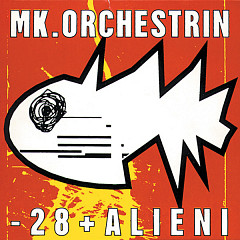
    -28+Alieni in Space City Rock

    “Music reviews”, Doug Dillaman, Space City Rock, no. 4, June 1, 2001
    Friday, June 1, 2001 Press

    So this is really confusing — two CD’s from Québec, both consisting of short avant-garde pieces, borth in this really strange cardboard packaging (apparently the Opak box — imagine if a jewel box was made of cardboard and opened like a matchbox and you’re getting there), but different labels. But the same street address. Odd. I guess I should have kept the press kit.

    Of the two, I think I prefer the Ambiances Magnétiques collection. Focused on composers and performers, it gives you an opportunity to sample the works of nine different Québec composers, working in different idioms (from jazz-ish to classical to turntablism). It doesn’t all make sense to me, but it’s intriguing and varied, kind of like listening to a good avant-garde radio show.

    The Miniatures Concrètes, meanwhile, is a collection of short musique concrète pieces. If you have no idea what that means well, basically, it s all assemblage and processing of found sounds, with the results typically sounding like somebody threw 100 source tapes in a blender and spliced them together arbitrarily. For those looking for sounds to expand their ears, this is a good place to find it. For those whose ears have alteady been expanded, there may not be a whole lot of new ground covered here. Which is not so much criticism of the artists as of the genre: for me, musique concrète is kind of a dead-end genre after a while, for reasons that I dont feel like getting into here, since 99% of you wont care and 1% will virulently disagree and never be convinced otherwise.

    Regardless, both of these records are interesting pieces of work, and worth taking a listen to if you get the chance.

    … interesting pieces of work, and worth taking a listen to…

    Musique d’hiver in SOCAN — Paroles & Musique

    “Lancements”, Julie Tassé, SOCAN — Paroles & Musique, no. 8:2, June 1, 2001
    Friday, June 1, 2001 Press

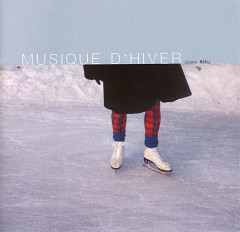
    Les Scandinaves ont leur étiquette de Jazz ECM pour rendre hommage à l’hiver, ici nous avons Joane Hétu avec Musique d’hiver. Son plus récent album présente une seule pièce comprenant quatre mouvements (La chute, On s’les gèles, Lumière de février, Perdu l’nord). Joane Hétu s’y est entourée d’excellents collaborateurs qui ont fait la marque de l’étiquette Ambiances Magnétiques, soit Jean Derome, Pierre Tanguay et Guillaume Dostaler. Des compositions signées Joane Hétu qui nous rappellent les rafales de neige, entremêlées de sa poésie hivernale, à déguster maintenant qu’il fait chaud.

    … à déguster maintenant qu’il fait chaud.

    Dérapages à cordes in Signal to Noise

    “Review”, Steve Vickery, Signal to Noise, no. 22, June 1, 2001
    Friday, June 1, 2001 Press

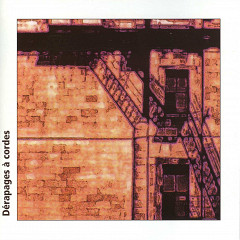
    I wish I had four or five copies of this release to send to my guitarist friends around the country. It is the type of CD that could easily serve as a dadaist resource guide to playing the twentieth century’s most important invention, one that legions of string fanatics ought to be listening to instead of the new (insert name of current guitar god here). Bull and Heikalo mine a free improvising territory that recalLs the venerabLe Derek Bailey and the good Doctor Chadbourne though this duo’s approach is certainLy colored by interests in the music of the far east. This could be the blues as seen from the Sudan, Guatamala, or Beijing, a music that has escaped the harmonic straibacket of north american culture though its influences (blues, noise, breton music, flamenco, ritual music) has soaked through the artful percussive dialogues present here. Heikalo and Bull live on the far east side of Canada in Nova Scotia, an area that is removed enough from big city living that the two can conjure a unique sound, one that builds on their combined histories (for Heikalo, years of radio and electroacoustic work: for Bull, half a lifetime spent touring and pLaying with master improvisers of music, language and theatre). If you’re ever bored with what a guitar can do in the conventional sense, consider the alternatives these two have found.

    … the type of CD that could easily serve as a dadaist resource guide to playing the twentieth century’s most important invention, one that legions of string fanatics ought to be listening to…

    21 situations in Incursion Music Review

    “Review”, Richard di Santo, Incursion Music Review, June 1, 2001
    Friday, June 1, 2001 Press

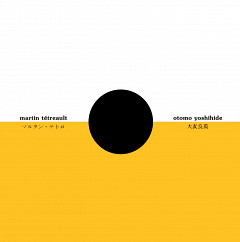
    Released in 1999, Martin Tétrault and Otomo Yoshihide’s 21 situations documents 21 short improvisations for turntables (with and without treatments on the needles and vinyl), sampler and CD. Both Tétrault and Yoshihide are quite well known for both their innovation and daring in the improvisational community, and especially so when it comes to the turntable. Recorded in 1997, these 21 short (never much longer than 4 minutes, but most between 1-2 minutes long) deal with various themes that determine their titles: cartoon, science-fiction, conflagration, chant, jungle, chaos, tension, etc. Satellite, for example, has an eerie cosmic-like sound; cartoon is playful; and chant contains a strange human-made squawking. The mood of this disc is really quite playful, and even though there are some dips into darker themes and sounds, the over-all feeling is one of spontaneous experimentalism. Scratches, scrapings, loops, sharp cut-ups and collage work, grating textures of the needles on treated vinyl, and short glimpses of what the original records may have sounded like are the elements that keep you on your toes throughout the entire recording. Keeping the tracks short is a wonderful exercise for improvisers since it enforces a constraint on their process, an artificial compulsion to compress their language down to its essential elements, charged with meaning and energy. The effects on the listener of this compressed language is another matter, though. An immensely energetic and frantic release, and in spite of the unease it causes in my temperament, it still captures by interest and curiosity.

    … the over-all feeling is one of spontaneous experimentalism.

    L’âme de l’objet, Bruire, Michel F Côté in Musicworks

    “Critique”, Éric Boulé, Musicworks, no. 65, June 1, 2001
    Friday, June 1, 2001 Press

    De toutes ces parutions j’avoue avoir été particulièrement séduit par celle du collectif Bruire. Après Le Barman a tort de sourire et Les fleurs de Léo, voici L’âme de l’objet. À l’exception de Michel F Côté qui en est le principal animateur, Bruire est une formation au visage changeant. Sur ce dernier-né on retrouve toujours Côté aux percussions qui, cette fois, s’est entouré de Serge Boisvert au chant et à la trompette, de Jean Derome aux instruments à vent, de Claude Fradette à la guitare et à la basse et de Martin Tétreault aux tourne-disques. Cette heureuse réunion a donc tout ce qu’il faut pour surprendre. Les percussions de Côté offrent des sonorités riches et sont employées de subtile façon. Messieurs Boisvert et Derome sont ici les auteurs de mélodies et de ritournelles des plus joyeuses. La basse et la guitare de Claude Fradette supportent d’intéressante manière cet ensemble devenant encore plus fou lors des interventions insoupçonnées d’un Martin Tétreault dont on savoure toujours l’inventivité. Le travail de Bruire s’inscrit à mon sens dans une tradition d’ensemble désireuse de mettre à l’avant-scène ce travail d’écoute et de dialogue poussant la musique vers un devenir se définissant dans l’acte même de l’exécution (peut témoigner de tout ceci la première plage du disque intitulée Les deux mégots). Résultat: des envolées rythmiques se dessinant comme des courses folles vers on ne sait où, des embarquées très prenantes sur fond de folklore (Prières), ambiances chaudes et ce je-ne-sais-quoi donnant à cette musique un air de fête. Le jeu des musiciens est tout simplement efficace, plein de ces surprises et de ces instants fous laissant apprécier toutes sortes d’agencements sonores d’un très grand intérêt. À noter également la beauté de certaines mélodies rappelant le monde du cirque (Gelsomina). Aussi, l’imaginaire propre au jeu émanant de la musique de Bruire reste tout de même d’une proximité étonnante avec le travail des Residents. À se procurer absolument lorsque vient le moment de rompre un tant soit peu avec les états d’âme trop objectifs. Animisme médicamenté que ce petit disque.

    À se procurer absolument…
  • 4
  • 5
  • 6
  • 7
  • 8
  • 9
  • 10
  • 11
  • 12