actuellecd
  • This website is also available in English.

Blog

109 results
  • 2
  • 3
  • 4
  • 5
  • 6
  • 7
  • 8
  • 9
  • 10
  • Maison douce maison in Revue & Corrigée

    “Critique”, Pierre Durr, Revue & Corrigée, no. 41, September 1, 1999
    Wednesday, September 1, 1999 Press

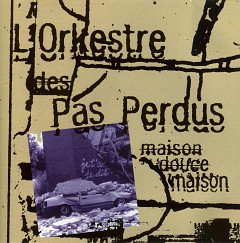
    A côté des figures emblématiques du collectif québècois, Lussier, Derome, Joane Hétu, Diane Labrosse, Robert Marcel Lepage, et désormais Martin Tétreault, gravitent quelques musiciens, rencontrés au hasard des enregistrements des surnommés, tels Rémi Leclerc («Locomotive» et «Les Quatre Guitaristes» de Duchesne) ou Bernard Falaise («Klaxon Gueule» avec Michel F Côté), partenaires d’autres formations. L’Orkestre des pas perdus en est ainsi a sa deuxième réalisation et il cultive toujours son goût pour la fanfare.

    Tête à queue in emoRAGEi

    “Critique”, Jeff Bugz, emoRAGEi, no. 8, September 1, 1999
    Wednesday, September 1, 1999 Press

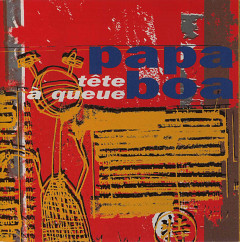
    “Considérer le studio non pas comme un instrument de production mais aussi comme un instrument de création” est un petit paragraphe que l’on peut lire à l’intérieur de la pochette colorée. Quelques lignes expliquent les directions de Papa Boa, un groupe improvisateur, expérimentale qui mélange mélodie et son spontané et qui remodelle le tout par la suite. En plus de jouer avec Ies effets sonores Papa Boa joue avec la voix. Le résultat est très intéressant pour les oreilles curieuses, qui aiment être surprises. 9/10

    21 situations in Chicago Reader

    “Review”, Peter Margasak, Chicago Reader, August 27, 1999
    Friday, August 27, 1999 Press

    These days it’s not so strange to think of the DJ as a musician, and between hip-hop-related artists DJ Shadow and DJ Spooky there’s been enough ink spilled on the subject to fill a few books. But it’s been a iong time coming: In the early 80s, long before the term turntablist came into being, a guy named Christian Marclay was conducting wild experiments with vinyl records that had nothing to do with breakbeats. Physically gluing pieces of different John Cage records together or layering sounds from unrelated records to form jarring collages, Marclay was as important as any hip-hopper in elevating the turntable from playback device to artistic tool. Montréal’s Martin Tétreault, once an experimental visual artist, began working in a similar vein in 1984, and in the last few years he’s released a flurry of fascinating recordings that go well beyond using the record player as a substitute for the sampler—a machine that, by the way, he dismisses because it lacks the serendipitous possibilities of a turntoble, whose output can be radically altered by something as random as a heavy footstep across the room. On Callas: la diva et le vinyle (like most of his work, on Ambiances MagnetiquesI, a duet with Robert Marcel Lepage, he actually plays some discernible passages from recordings by the eponymous opera great and engages in a genuine musical dialogue with the clarinetist, but most of his other recent stuHf is more abstract. He’s screwed with both records and record players, affixing objects to the vinyl or altering the design of the cartridge; he’s even made use of the sound of a turntable’s motor. And he’s a versatile performer: On Dur noyau dur, a duet with René Lussier, he meets the guitarist’s fractured, noisy Derek Bailey-like outbursts with equally disjointed and perpetually surprising eruptions; on 21 situations he answers the slippery electronic fuckery of Otomo Yoshihide with streams of unidentifiable gray sound. And on Île bizarre he counters the drum-machine improvisations of Ikue Mori and the broken-down samples of Diane Labrosse with lowkey noise bursts that eventually make it hard to tell who’s doing what. For his Chicago debut, he’ll improvise with local tabletop guitarist Kevin Drumm, whose recent Second (Perdition Plastics) further develops a unique musical language that no one’s likely to decode soon.

    “… in the last few years [Martin Tétreault]’s released a flurry of fascinating recordings…”

    21 situations in Splendid E-Zine

    “Review”, Irving Bellemead, Splendid E-Zine, August 9, 1999
    Monday, August 9, 1999 Press

    So, you think you’re a DJ? You think you can spin? You’re a vinyl superhero, spinning 19 discs at once, dropping needles like a clumsy junkie, matching beats like a… um, a really good beat matcher? Ha! Think again. It’s time for school…

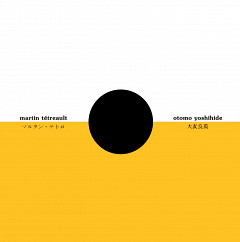
    On 21 situations, Québec’s Martin Tétreault and Japan’s Otomo Yoshihide lay down 21 tracks of beautiful improvised noise, all coaxed from an array of prepared records (broken, scratched, taped together, who knows what!), altered record players, screwy needles, samplers and CDs. With the exception of a few voice samples, there are almost no recoginizable sounds, and there are definitely no beats (there’s not a Funky Drummer in the house!)

    Even without beats, each of the 21 situations has a terrific energy, a real momentum driving it along as Tétreault and Yoshihide spin and squirt all manner fuzz, bleeps and bloops, tinkles, rumbles, buzzes and pops out into the sonic landscape. If you’re a noise-improv connoisseur you’re probably already all over this one. And if you’re not a noise-improve connoisseur, well, what are you waiting for?

    Tête à queue, Papa Boa in Splendid E-Zine

    “Review”, George Zahora, Splendid E-Zine, July 19, 1999
    Monday, July 19, 1999 Press

    If your listening tastes run to punk rock or wilder jazz, Tête à queue will be the best and most enjoyable opportunity to get your foot in the Ambiances Magnétiques door, figuratively speaking. This musique-actuelle ensemble, based in Montréal, deals heavily in improvisation; material is created and recorded on the fly, then dismantled, reassembled, sampled, manipulated and augmented by further improvisation. While such a process could easily produce compositions that sound less like music and more like a brain-damaged giraffe loose in a cookware shop, Papa Boa’s recognizable use of rock and jazz trappings — conventional applications of guitar, bass, keyboards, sax, flute, etc. — should make it easier for new listeners to understand and appreciate the creative methodology involved in the bi-directional transition from chaos to order. Tête à queue frequently rocks, albeit in a lurching, chaotic and exhilarating fashion (and isn’t that the best way?), as on the frenzied Champêtre or the syncopated seether La mer à boire. There are quieter and more esoteric moments, too, but the overall approachability of the disc makes even its less distinctly musical elements seem far more immediate. If you’ve ever been curious about musique actuelle, electro-acoustic composition or Ambiances Magnetiques, you’ll find Tête à queue to be a perfect diving board, plunging you into a deep and fascinating pool of music and ideas.

    Strand, Under the Dark Cloth in Vital

    “Review”, Dolf Mulder, Vital, no. 182, July 19, 1999
    Monday, July 19, 1999 Press

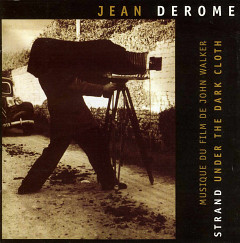
    Derome who composed for dance and theatre in the past, here presents his first soundtrack. A first soundtrack by known musician makes me always curious. Will it show the artist from a totally other side or not, as making filmmusic has its own possibilities and restrictions? The following quote gives a little insight into how Derome copes with this: “To compose music for a film is to translate a film into music. […] When I compose a soundtrack, I start by listening closely to the sounds that are already there. I listen to the texture of the voices, ambient noises, extraneous sounds, snatches of music that are already there, I observe how the actors move, how they dance on the screen; I ask myself if they really mean what they say. ” Orchestrated for a large ensemble of strings, winds, percussion and voice, this cd presents 18 compositions that show the range of Derome’s compositional work. It’s a soundtrack to the film Strand under the Dark Cloth by John Walker. It’s a film on the work of the famous photographrer Paul Strand. The film has many and long sequences of photographs. The included booklet gives some info on this photographer and some of his photos’ are printed here.

  • 2
  • 3
  • 4
  • 5
  • 6
  • 7
  • 8
  • 9
  • 10