actuellecd

Blog

109 results
  • 10
  • 11
  • 12
  • 13
  • 14
  • 15
  • 16
  • 17
  • 18
  • Upbeat in Splendid E-Zine

    “Review”, George Zahora, Splendid E-Zine, March 22, 1999
    Monday, March 22, 1999 Press

    Just about anyone with some degree of musical awareness has heard of Fred Frith, right? Mention his name to someone who’s bought something less accessible than the Titanic soundtrack, and he or she will probably offer a glimmer of recognition, however slight. Anyway, on Ayaya Moses, Frith and the other three quarters of his quartet (René Lussier, Nick Didkovsky and Mark Stewart) once again remind the listening public that that the guitar is an instrument with six discrete strings (sometimes twelve) that can be tapped, plucked and scraped as well as strummed. The results can be beautiful (the first half of the title cut), harrowing (the second half of the title cut), fascinating (“Trummings”, “Geco Rettile Mialgico”), orchestral (“Pulau Dewata”) and downright confrontational (“The Stinky Boy Suite”). Since a lot of neophyte listeners expect nothing but dischord from “avant-guitar” compositions, Ayaya Moses is an effective tool for displaying the sheer range of both the instrument and the genre; yes, there are tracks that sound like the guitar is being thrown down a flight of stairs, but there are far more instances where Frith et al coax astonishingly varied and innovative tones from their instruments. Everyone should own at least one FFGQ album — it’s useful deprogramming after too much 3-chord punk rock, and it’s fun to taunt Teen Punk Rockers with it by confronting them with the fact that Frith is an “old guy” whose music is too challenging for them.

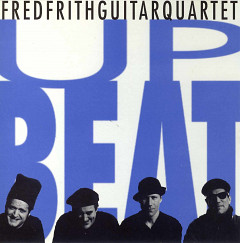
    Upbeat in Splendid E-Zine

    “Review”, Andrew Magilow, Splendid E-Zine, March 8, 1999
    Monday, March 8, 1999 Press

    If you’re a fan of avant-garde music from the last 25 years, progressive cross-genre performer and composer Fred Frith has most assuredly wowed you in one form or another. Combining guitar forces, this quartet engages in a variety of styles, from intricately delicate, lush compositions, to noisy, experimental beasts that seem barely tamed by the axes of Stewart, Lussier, Didkovsky and Frith. You practically have to wipe Spitty Boy off of your face, as its quick-tempered excitement sprays forth in a mere 52 seconds. No Bones is a noisy concoction that presents several layers of riffs and leads that smartly intertwine, manifesting in a composition that’s on the verge of a nervous breakdown, and comparable to, dare I say, Naked City’s most sparkling, definitive moments. However, the FFGQ also harnesses space, as it guides several tunes through periods of tranquility and fragility that are sure signs of musical maturity. Frith’s considerable creativity and tenure are apt guides, as the variety and complexity of these 13 tracks show that you’re not dealing with some flippant “nuvo-guitar-artiste” but rather the exalted Fred Frith, with guitar surgically attached to hand and creative juices that are always simmering with fresh ideas.

    … you’re not dealing with some flippant “nuvo-guitar-artiste” but rather the exalted Fred Frith, with guitar surgically attached to hand and creative juices that are always simmering with fresh ideas.

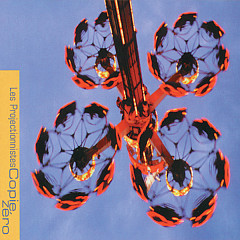
    Copie zéro in AllMusic

    “Review”, François Couture, AllMusic, March 6, 1999
    Saturday, March 6, 1999 Press

    In 1998-1999, the Montréal label Ambiances Magnétiques recruited a handful of new artists to update its roaster. Les Projectionnistes (“The Projectionists”) belong to this second generation. Lead by trombonist Claude St-Jean (of the Orkestre des Pas Perdus), this band also features the core of Papa Boa (Pierre Labbé on saxophones and flutes, Bernard Falaise on guitars, Rémi Leclerc on drums), along with bassist Tommy Babin. The name of the band comes from its first concerts, back when it improvised over projections of silent surrealist films from the 1920s-1930s. But the band quickly mutated into a strange hybrid. Is this St-Jean writing tunes for Papa Boa? Or the Orkestre des Pas Perdus adding Falaise’s avant-rock guitar crunch? Or even the avant-prog band Miriodor (in which Falaise and Leclerc are), without keyboards, plus trombone? One thing is sure, the result is strikingly fresh and energy-driven. Rock, funk, Rock In Opposition, jazz, all of it blended with a pinch of humor and delivered with big blows of hot brass and screaming electric guitar. Fans of the above-mentioned groups will feel at home. Les Projectionnistes’ music has an “in your face” quality (a constant feature in St-Jean’s projects) while remaining quite easy to listen to, thanks to inventive melodic lines and devilish rhythms. The opening track Hiboux (“Owls”), very OPP-ish in nature, 7e Balcon (“7th Balcony”) and Falaise’s Cacao Chaos, rank among the best tracks on this CD. The album closes with the only improvisation of the disc, Ballet Mécanique, recorded live in October 1997 at one of the band’s early shows, with Nicolas Masino (of Miriodor) on bass. Copie Zéro is the kind of album that can turn jazz-rock heads toward more avant-gardist directions. Recommended.

    Copie Zéro is the kind of album that can turn jazz-rock heads toward more avant-gardist directions. Recommended.

    Upbeat in Montreal Mirror

    “Review”, Cummins Johnson, Montreal Mirror, March 4, 1999
    Thursday, March 4, 1999 Press

    Experimental legend Fred Frith once again combines the talents of guitarists Nick Didkovsky, René Lussier and Mark Stewart and comes up with 13 pieces that manage to breath new life into the six string. Repetitive lines play underneath free guitar noise as experimentation and discipline are comfortably intertwined. 8,5/10

    8,5/10

    Diane Labrosse in The Link

    “Beyond Girl Power”, Lemy Tran, The Link, March 3, 1999
    Wednesday, March 3, 1999 Press

    Women have always been a recognizable force in the music scene-even before Sarah McLachlan, Lilith Fair, Celine Dion and the revamped Alanis Morisette.

    For women in music, 1998 marked a phenomenal year; they snatched up the Grammys, dominated the concert scene and topped their male counterparts in record sales.

    All these achievements have pushed the artists into what is now labeled as the “women’s music” category. The strong emergence of females in the music industry means that, like it or not, women are all slowly being shuffled into this one specific category.

    For some, this is a trend that is not going to vanish anytime scon, considering the popularity of female musicians and the influx of copycat artists waiting to jump on the band wagon. While men once overpopulated the scene, some consider the rise of women in the music business as a new balance in pop culture.

    In Montréal, there are many home-grown talents with their own distinctive sounds and different opinions when It comes to women m music.…

    … When discussing audience reception to their performances, most female artists said there have been very few negative responses.

    Castelli noted that most of the female acts he has booked for his club have generally been very well-received. Diane Labrosse, a musician and artistic director of Productions Super Mémé, does not see a diffference in response when a woman is performing.

    «If the music is good, if it has something special to it,” she said, then it must go on and be seen by as many people as possible [regardless of gender].»

    … Women’s music is as good as men’s music and it should be not perceived as women’s music. It is universal,” Labrosse said.

    Housego plainly stated that it does not matter whether a musician is male or female (or even a cat or a dog!) as long as they can play music. She said the whole concept of gender-categorizing is unnecessary.

    Ambiances Magnétiques in Blow Up

    “Recensione”, Roberto Municchi, Blow Up, no. 10, March 1, 1999
    Monday, March 1, 1999 Press

    All’entrata nel nostro quinto anno di vita ci accorgiamo, con disappunto, di non aver mai parlato di Ambiances Magnétiques, covo di cervelli in fermento di stanza a Montreal, nel Quebec, zona francofona del Canada. Vogliamo riparare al torto facendo una rapida escursione tra i dischi più avvincenti prodotti negli ultimi mesi da quelle parti, con la promessa, magari, di ritornarci sopra con interviste o articoli più dettagliati sui nomi più interessanti. Nomi e gruppi che hanno intrecciato, e intrecciano, di continuo le loro storie — in progetti spesso atipici dove si incontrano musica colta e rock, jazz e avanguardia — dando vita a gruppi quali Justine, Bruire, Les Granules, Evidence, Klaxon Gueve…, a combinazioni in duo o in trio nonchè alle più svariate collaborazioni. Una sfida alle convenzioni lanciata più di due decenni orsono dai Conventum (guidati da André Duchesne e René Lussier, e nei quali è transitato nell’ultimo periodo anche Jean Derome, tutti artisti che ritroveremo nel nostro cammino), articolato combo di progressive eretico i cui fermenti sono sfociati, appunto, nella creazione di Ambiances Magnétiques. Più che un’etichetta, un punto di riferimento per menti musicali estreme.

    Il personaggio più conosciuto al di fuori dei confini canadesi, grazie soprattutto alle sue collaborazioni con i vari Cutler, Frith, Cassiber, Reichel, Mori, è sicuramente René Lussier. Chitarrista (e bassista) estroso, originale e innovativo ha girovagato in largo e in lungo per il pentagramma sia con varie bande (oltre a Conventum, Les 4 Guitaristes De L’Apocalypso Bar, Les Granules, State Of War…) che con dischi solisti o in coppia con altre personalità eccelse (indimenticabile almeno il Nous Autres con Fred Frith). Qui lo troviamo nei panni di compositore di colonne sonore affiancato, nell’esecuzione, da alcuni fedeli del giro: Robert Lepage al clarinetto, Jean Derome al flauto, Tom Walsh al trombone, Céline Arcand al violino, Jean René alla viola, Vincent Bernard al violoncello, Pierre Tanguay alla batteria e alle percussioni. Chronique D’un Génocide Annoncé è il titolo dello sconcertante documentario girato da Danièle Lacourse e Yvan Patry sulla tragedia che ha attraversato il Rwanda con il feroce conflitto interno tra le etnie degli hutu e dei tutsi. Nonostante i limiti imposti dalle immagini, l’album mette in evidenza la grande capacità da parte di Lussier di far convivere musica “alta” e musica popolare. La scelta degli strumenti infonde fascino e mistero, la scrittura è sovente intrisa di drammaticità, il risultato finale — pur nell’eccessiva eterogeneità — interessante. Conquistano soprattutto gli arcani suoni quartomondisti in Chronique ècrite I, l’indovinata alternanza tra gli incantevoli fiati e le eccentriche percussioni in Les Dix Commandaments, l’atmosfera liturgioca che si respira in … Des Choses Indicibles…

    Tra i più accreditati candidati al “giradischi d’oro” dell’anno prossimo non dovrebbe mancare il nome di Martin Tétreault, uno dei manipolatori più estrosi (e sottovalutati) in circolazione. E in quanto a ironia — vi assicuriamo — non è secondo a nessuno. Un tipo che usa le sue armi in modo rivoluzionario oppure, se preferite, un rumorista che utilizza il giradischi in maniera quasi percussiva. In Dur Noyau Dur, primo dei tre dischi di questa minirassegna in cui è coinvolto da titolare, lo troviamo a duettare con le chitarre di René Lussier. Un album molto concettuale, che soltanto a tratti produce quelle scintille che sono nelle capacità dei due; una musica probabilmente più consona ad altre dimensioni, nelle quali il rapporto/contatto musicista-ascoltatore è più stretto. Registrato nel marzo del 1997, in tempo reale, senza alcuna sovraincisione, Dur Noyau Dur è composto da 21 titoli, tutti di una sola parola alla quale corrisponde un tema musicale. Quindi se Cyanure si può definire velenosa, Mercure risulterà variabile (di questi tempi tendente al freddo), Azur serena, Dictature dispotica, Sépolture funerea, e così via.

    Le scintille il giradischi di Tétreault le fa in compagnia di due graziose signore, Ikue Mori alla batteria elettronica e Diane Labrosse al campionatore, nel CD-capolavoro Île Bizarre. Un insieme di suoni meravigliosi e diversi. Un mosaico sperimentale ed anticonformista dove trovano spazio disposizioni minimali, ambient post-apocalittico, rumori, atmosfere rarefatte e bizzarrie varie. Non manca la dovuta energia: Belli machina, traccia di apertura, evoca le sonorità plumbee e oppressive contigue a band metalindustriali. Percussioni violente e claustrofobiche che in Ad Ventury Capere Grandes Machinae lasciano il campo a sibili, fruscii, e schegge di metallo impazzite con echi di Death Ambient (d’altronde Ikue Mori è della partita). I brani seguenti vagano in bilico tra arie più rarefatte (Marinae Creaturae) e piogge percussive (Subterraneus Labyrinthus e Monopodii Et Cyclopes), talvolta anche in convivenza tra di loro (Magneticum Phaenomenon). Quantomai apprezzabili pure lo spirito ludico/stravagante di Diurna Et Nocturna Insecta, l’equilibrio tra rumore e silenzio di Fossiles Et Extra Tempum e Sacri Et Profani Ritus, le delizie orientali di Simplicia Animales, il crescendo siderurgico di Lactea Via. Conviene ribadirlo: disco imperdibile.

    Una qualità che non si può negare agli inglesi è il proverbiale sense of humour. La classica eccezione che conferma la regola sembra essere il serioso recensore che dalle pagine di The Wire ha pesantemente stroncato Callas: La Diva Et Le Vinyle, omaggio all’arte della cantante lirica Maria Callas da parte della coppia formata da Robert Marcel Lepage (clarinetto) e Martin Tétreault (giradischi), rei probabilmente di poca deferenza nei confronti del mito. In realtà — come sottolinea il critico Phil Ehrensaft nelle note interne rammentando anche l’alta considerazione di cui godeva la cantante presso la gente del Quebec — Lepage e Tétreault omaggiano la Callas in modo molto sentito e sincero attraverso un melange musicale che è allo stesso tempo sia lirico che umoristico. Particolarmente divertente è la stretta connessione — così come nell’albo dello stesso Tétreault insieme a Lussier — tra il titolo e il tema musicale di ogni brano: A’ L’Opéra è un montaggio di voci di persone che si recano a teatro mentre il motivo intonato dal clarinetto dà una sensazione di movimento; in Les Caniches i gorgheggi si mischiano a simulazioni di guaiti canini; l’atmosfera exotica di Yma Callas liquida in un sol colpo due grandi; Le Systeme d’Alarme Callas imita il suono di una sirena manipolando quella voce… Un disco che vive del contrasto tra le folli scorribande tra i dischi della Diva da parte di Tétreault e i caldi fraseggi tipicamente jazz di Lepage.

    “Traforiamo le orecchie” minacciano dal titolo Joane Hétu e Jean Derome, collaudata coppia sia nella musica che nella vita. Due sassofoni e due voci più percussioni assortite e svariati piccoli strumenti a fiato (richiami per animali che colleziona lo stesso Derome), questi i ferri del mestiere usati in Nous Perçons Les Oreilles. Cinquanta minuti di musica improvvisata, debitrice sia del jazz che della contemporanea, a tratti arricchita da inserti folk. Musica frantumata, dove il singolo suono ha la medesima importanza dell’insieme. Una raccolta di attimi, di momenti, che alterna dialoghi vocali, dialoghi strumentali, dialoghi vocali/strumentali. Julie Tippett, Maggie Nichols, Evan Parker i maggiori referenti per un disco buono ma un po’ scontato nell’impostazione.

    In lotta (insieme a Île Bizarre del trio Labrosse-Tétreault-Mori) per la palma del migliore in campo vi è anche Midi Tapant, eccellente fatica del binomio Pierre Tanguay — Tom Walsh, batterista e percussionista il primo, diviso tra trombone e campionatore il secondo: un CD molto più ricco, dal punto di vista armonico, di quanto la formula percussioni+trombone+campionatore possa far immaginare. Pur essendo un batterista quantomai scarno, infatti, Tanguay riesce ad estrarre una infinita varietà di suoni dai suoi strumenti, e senza mai peccare di autoindulgenza; mentre Walsh opera un lavoro di montaggio di scampoli sonori (sopra quei ritmi) che concettualmente rimanda più agli archetipi del collagismo in campo rock (Wyatt, Henry Cow, Zappa…) che non agli attuali campionatoristi. Midi Tapant mette in mostra luoghi dove si rincorrono suggestioni etnoavantgarde — talvolta al confine con la possible music di hasselliana memoria — e mistero, tamburi africaneggianti e voci fuori campo, interferenze e pathos, serenità e frenesia. Un album davvero straordinario.

    Per coloro che si fidano poco dei nostri consigli e vogliono saggiare di persona, infine, ecco pronto Inédits 3, esauriente selezione di materiali magnetici doc. Una passerella di (quasi) tutti i pezzi forti dell’etichetta apprezzabile sia per il valore prettamente musicale che per l’eccellente opera di assemblaggio dei brani. Ventiquattro acquarelli musicali, attaversati da una vena surreale e dadaista, che scorrono senza eccessivi sbalzi di temperatura quasi che il disco fosse opera di un unico autore. Parecchi i passaggi degni di attenzione: dai raffinati abbozzi per il film Retour Au Blanc che vedono schierato il trio Derome-Tétreault-Hétu ai settanta secondi etnoambientali di Trinette (di Michel Côté); dai profumi orientali de La Rumelar Trébuche di René Lussier (con i sospiri di Tenko…) alla fragorosa filastrocca Jours Heureux (Côté meet Labrosse); dall’atmosfera solenne di Les Barrages (André Duchesne) che ne rimarca i tratti bandistico-tradizionali a L’Appel, omaggio di Joane Hétu a Roscoe Mitchell. Due su tutti: Sauvage Feu, nella quale la fisarmonica di Diane Labrosse insegue profondi segnali tra rumore e silenzio, e Les Toasts Brulées dei Diesel di Duchesne, una contagiosa aria popolare che riporta, dopo tanti tuffi nel futuro, le lancette sul presente.

  • 10
  • 11
  • 12
  • 13
  • 14
  • 15
  • 16
  • 17
  • 18