actuellecd

Joane Hétu

133 results
  • 13
  • 14
  • 15
  • 16
  • 17
  • 18
  • 19
  • 20
  • 21
  • La légende de la pluie, Musique d’hiver, Seule dans les chants, Langages fantastiques, Face cachée des choses, Tricotage, Les contes de l’amère loi, Prairie orange, Ravir, Simoneda, reine des esclaves, Joane Hétu, Diane Labrosse, Les Poules, Danielle Palardy Roger in actuellecd.com

    “Chicks and Other Barnyard Fauna”, François Couture, actuellecd.com, September 16, 2003
    Tuesday, September 16, 2003 Press

    With the notable exception of sugary pop, all music styles are dominated by the male. Whether he’s grunting into the microphone, strumming his guitar, or blowing his lungs out on the saxophone, the manly man monopolizes the image of the musician, be it in corporate rock or on the new music scene. When women venture into his domain, they are often coerced into fitting the mold of the industry.

    That’s why it is so surprising to find this many creative, challenging, talented women in DAME’s catalog. But one should not forget that early in its lifetime the collective Ambiances Magnétiques welcomed three artists whose musical activities, organizing minds and determination provided a force of attraction for other women. Of course, I am talking about Joane Hétu, Diane Labrosse and Danielle Palardy Roger.

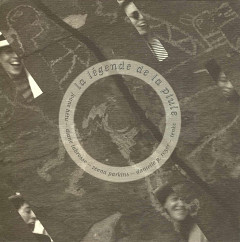
    Our three protagonists met at the turn of the ‘80s in Wondeur Brass and pursued their association into Les Poules and Justine. First an anarchist/feminist big band, Wondeur Brass was a laboratory to Joane, Diane and Danielle. They honed their skills — Joane, self-taught, literally learned to play music while playing music in it. Their own blend of modern poetry, free jazz and rock-in-opposition already took center stage on the LP Ravir. From the sextet featured on this first effort, the group scaled down to a quartet (with bassist Marie Trudeau as the fourth member) by the time of Simoneda, reine des esclaves. This line-up soon took the name Justine for three more albums (credited to the name of the individual musicians, La légende de la pluie can be seen as a collaboration between Justine, Zeena Parkins and Tenko) and the feminist discourse got gradually subsumed, making way for a growing playfulness that reached its peak on the phenomenal album Langages fantastiques.

    Soon after the release of Langages fantastiques, the three girls launched their solo careers. Linguistic marvel and a rough delivery keep singer and saxophonist Joane Hétu close to the field of outsider art. First she formed her own group Castor et compagnie (with Labrosse, Jean Derome and Pierre Tanguay) which has recorded two albums of sensual and twisted songs in direct relation to Justine’s music. Later she turned to improvisation, first in a duo with her life partner Jean Derome as Nous perçons les oreilles (We Pierce Ears) and later solo with the intensely intimate album Seule dans les chants. She recently proved her worth in large-scale composition with her marvelous Musique d’hiver.

    Toward the end of Justine’s life, Diane Labrosse traded in her keyboard for a sampler. After a solo album, Face cachée des choses, a duo album with percussionist Michel F Côté (Duo déconstructiviste) and a guest spot in the latter’s group Bruire (on Les Fleurs de Léo), she wrote a piece for improvisers (Petit traité de sagesse pratique) before devoting her time to improvisation. Parasites (her ongoing collaboration with Martin Tétreault) and Télépathie (with Aimé Dontigny) show how it is possible to handle a sampler with grace and sensibility.

    Since the disbanding of Justine, Danielle Palardy Roger’s discography has been growing slowly — she’s very busy organizing concerts as head of Productions SuperMusique. Her children’s tale L’oreille enflée (featuring the voices and instruments of Derome, Hétu and André Duchesne among others) speaks to a young audience with an intelligence too rarely found in such projects. And Tricotage, her improv session with French bassist Joëlle Léandre, reminds us how refined her drumming can be.

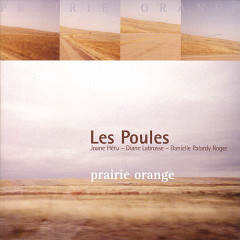
    In 1986, Joane, Diane and Danielle took a vacation away from Wondeur Brass to investigate the limits of the pop song format under the name Les Poules — The Chicks (Contes de l’amère loi, freshly reissued). Recently they reformed the trio, this time pushing the music toward a form of improvisation rich in subtle textures, blending quiet noise, active listening, and lyricism. Prairie orange is the first effort from this awaited return to collective work.

    The presence within Ambiances Magnétiques of these three creators has attracted to the label other female artists with similar interests. The first one to join the roaster was Geneviève Letarte, who has recorded two beautiful albums of poetic songs (Vous seriez un ange and Chansons d’un jour). Lately, DAME’s catalog has welcomed performer Nathalie Derome, guitarist Sylvie Chenard, pianist Pui Ming Lee, along with Queen Mab members Lori Freedman and Marilyn Lerner who each delivered a solo album (À un moment donné and Luminance).

    So, is musique actuelle a man’s world? Listen to these few hints and you’ll see for yourself.

    Who’s Playing, Joane Hétu, Lee Pui Ming in Splendid E-Zine

    “Review”, Jennifer Kelly, Splendid E-Zine, July 15, 2002
    Monday, July 15, 2002 Press

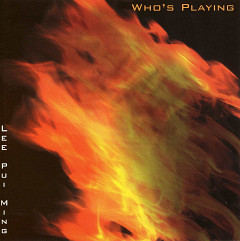
    Listening to this record of free improvisational piano is a little like watching a group of bored children on a swing set. They’ll spend a few minutes actually swinging, then the ringleader ventures to hang by his knees from the top. A few minutes later, they’re walking a hazardous tightrope across the top of the swing set, then building a fort underneath. If you leave them alone for the time it takes to drink a single cup of coffee, you will return to find them gathering firewood in preparation for burning the whole thing down.

    Like these kids, Lee Pui Ming applies her restless intelligence to devising ways of playing that the piano wasn’t designed for and probably wouldn’t survive on an extended basis. She plays, she bangs on the lid, she lifts the cover and runs her car keys (or something) along the exposed strings, she keeps the pedal down for most of a 10-minute track… and that’s just the piano parts. Lee and her partner Joane Hétu also use their bodies as instruments, breathing, speaking, moaning, slapping and thumping. In the process, they extract an extraordinary array of sounds from themselves and their instruments, and create a landscape of furious, questing, contentious beauty.

    Who’s Playing starts with Greetings, a half-minute interlude of slaps and moans and sing-song spoken word. Then we move to the demented, freeze-frame cakewalk of Steps, a prickly jazz improvisation that sounds more like music you’ve heard before than anything else on the album. Silica, the third track, finds us opening up the piano cover and discovering a slithery, metallic menu of sounds inside. Bones returns to the piano as it’s usually played, with a tentatively played conversation between high notes and low, but then Lee leaves the keys behind and drums insistently on the cover for Sinews. The thwacks and thumps continue in the dance rehearsal rhythms of Torso, and, in hearing it, I first began to think it would be more fun to watch Lee play than to listen to her. Belly of the Beast, the album’s best track, layers piano sounds by holding the pedal down. You hear a swirling cigarette smoke miasma — not just the note that’s being played, but the ones before it and the ones that weren’t played but have somehow been picked out of the ether. What follows, Uvula, is certainly the album’s oddest cut — a rhythmic blend of slaps and deep, fractured breathing, moans and tonally diverse nonsense syllables. I’m tempted to be flip and say that it sounds like two asthmatics having sex, but there is such a variety and multilayered texture of sounds that I can’t dismiss it so readily.

    The title of Who’s Playing comes from a short, unattributed poem in the liner notes, which asks “When one is completely present in the moment — / Playing, or listening / — Who, then, / in that moment, / is playing / and who / is listening?” I can’t recommend playing like Lee does — it sounds like it might be painful — but if you like to push the boundaries of what music is, then you should definitely try listening.

    … they extract an extraordinary array of sounds from themselves and their instruments, and create a landscape of furious, questing, contentious beauty.

    Joane Hétu, Justine, Diane Labrosse, Danielle Palardy Roger, Marie Trudeau, Ambiances Magnétiques in AllMusic

    “Portrait: Justine”, François Couture, AllMusic, June 15, 2002
    Saturday, June 15, 2002 Press

    Born out of the Montréal-based avant-rock group Wondeur Brass, Justine pushed further the ideals of challenging, thought-provoking feminist rock established in its previous incarnation for another ten years. The group released three albums during the 1990s and toured Canada, the United States,and visited Europe twice. Three of its musicians are members of the collective Ambiances Magnétiques, so the label released all their albums.

    Wondeur Brass started as a sextet in the early ’80s. By 1987 the group had been scaled down to a quartet. Bassist Marie Trudeau had joined the three original members saxophonist Joane Hétu, keyboardist Diane Labrosse and drummer Danielle Palardy Roger. That line-up released Simoneda, reine des esclaves in 1987.

    Upon starting work on a new opus in 1989, the girls decided it was time for a change. The new music taking shape was turning out to be more complex, intricate, and driven by a stronger will to improvise and make things interestingly dangerous. Thus Justine was born. The first album under the new name, (Suite), came out in 1990. It included guest appearances by Japanese singer Tenko and American harpist Zeena Parkins. In 1992, Hétu, Labrosse and Roger brought them back for a quintet project, La légende de la pluie. Although it doesn’t include Trudeau and sounds softer, more introspective, it can be considered as the second album by Justine. Around the same time the “real” quartet appeared on stage in an Ambiances Magnétiques showcase which yielded the live CD Une théorie des ensembles.

    In early 1994 Justine toured Europe, visiting many former communist countries. Back in Montréal in June they recorded Langages Fantastiques “live in the studio” — the recording of (Suite) had stretched over ten months. After its release later that year things slowed down as group members focused on individual projects: Roger on the children tale L’oreille enflée, Labrosse on a solo album (La face cachée des choses) and a duo with Michel F Côté, Hétu on a new group called Castor et Compagnie. Justine stayed together for another three years and performed at the 1997 Ring Ring festival in Belgrade (Yugoslavia) alongside Ground-Zero, Palinckx, and Kampec Dolores (a previously unreleased song was included on the commemorative compilation Ring Ring 1997). After that tour the group disbanded. Hétu, Labrosse and Roger have continued to contribute to one another’s projects.

    … Justine pushed further the ideals of challenging, thought-provoking feminist rock…
  • 13
  • 14
  • 15
  • 16
  • 17
  • 18
  • 19
  • 20
  • 21