actuellecd

More from the blog

23 results
  • 1
  • 2
  • 3
  • 4
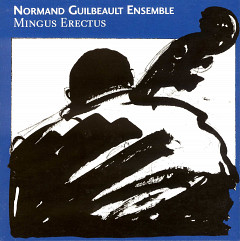
  • Mingus Erectus in All About Jazz Italy

    “Recensione”, Enrico Bettinello, All About Jazz Italy, December 1, 2005
    Thursday, December 1, 2005 Press

    Sono ormai parecchi anni che il Normand Guilbeault Ensemble lavora sul repertorio di Charles Mingus: come a ogni gruppo che si accosti alla musica — e ai meccanismi musicali — del grande compositore, all’immenso piacere che accompagna il suonare quelle pagine si affianca la non facile responsabilità di come farlo.

    Chiariamoci, non si tratta tanto di una questione di “rispetto” nei confronti dell’originale [che il materiale musicale del ’900 possa diventare “repertorio” per il solo fatto di esistere e di essere stato registrato è un fatto su cui non vale nemmeno la pena di soffermarsi più], ma di un problema personale, di come fare che meccanismi espressivi così intensi e evoluti entrino a fare parte del proprio lessico, di come la propria arte si relazioni con quella somma di Mingus [e altri].

    Spesso, quando ci sono tributi o riletture del repertorio di grandi jazzisti del ’900 [pensiamo a Monk o a Ellington], il punto non è tanto quello di “suonarli male” o “rovinarli”, quanto quello di immettere nel proprio percorso musicale degli elementi di cui talvolta non si è risolto il rapporto o non si è in grado di esplicitarlo.

    Non è questo il caso di Guilbeault e soci, che assommano alle capacità espressive personali un rapporto sempre vivo con la materia: risale al 1996 il disco Hommage à Mingus per la Justin Time e arriva ora questo ottimo Mingus Erectus per la Ambiances Magnétiques, lavoro in cui la band lavora su composizioni di medio/ampio respiro.

    Si apre con “Pythecantropus Erectus”, che vive su una bella tensione tra l’afflato collettivo e la linea analitica degli assoli, così come All the Things…, bruciante e capace di mettere in luce la grande versatilità del sassofono di Jean Derome.

    Oltre a Derome, anche gli altri componenti della band sono tutti ottimamente in sintonia, il trombettista Ivanhoe Jolicoeur, il clarinettista Mathieu Bélanger, il batterista Claude Lavergne ovviamente il leader al contrabbasso, Normand Guilbeault.

    Jazz suonato bene e pensato bene prima di essere suonato: solo cosî il quintetto può immergersi totalmente nelle atmosfere mingusiane [anche quelle meno frequentate e in fondo personali di Conversation o Tijuana Gift Shop], donando loro un suono denso e caldo, ma trasparente, pronto a fare risaltare i singoli contributi.

    Oltre a un aggiornamento della celebre Fables of Faubus alle tristi avventure odierne di George Dubya [oggetto delle critiche vocali del testo], il gruppo srotola una bella composizione di Derome, intitolata MDMD come omaggio mai banale all’ispirazione di riferimento. Gran finale con Moanin’. Mingus avrebbe apprezzato!

    Mingus avrebbe apprezzato!

    Mingus Erectus in Splendid E-Zine

    “Review”, Andrew Mal, Splendid E-Zine, June 13, 2005
    Monday, June 13, 2005 Press

    Known primarily for his post-bop and avant-garde/free jazz compositions, and for playing in the eclectic Montréal jazz scene, Normand Guilbeault competently leads his combo through the many twists and turns of Charles Mingus’s compositions on Mingus Erectus. This isn’t new to him, however — Guilbeault has included Mingus charts in his band’s live repertoire since its inception, recorded Mingus pieces for his previous albums, and even issued a previous tribute record, 1996’s Homage À Mingus.

    Mingus Erectus is a live document of a tight repertory band playing some of the last century’s most inventive jazz. As a composer, Mingus began with Duke Ellington’s lush orchestration, then added an extended harmonic and rhythmic sensibility. As a bassist, he redefined post-bop bass as a solo instrument to rival its rhythmic importance. Guilbeault’s homage stresses both of these sides — he holds down the ensemble with his own superior bass playing while drawing fantastic performances from his sidemen, most notably Jean Derome (saxophones and flute) and Ivanhoe Jolicoeur (trumpet and flugelhorn).

    The album’s track selection ranges from the immediately recognizable favorites Pithecanthropus Erectus and Tijuana Gift Shop to the more esoteric All The Things You Could Be By Now If Sigmond Freud’s Wife Was Your Mother. Fable of Faubus (a reference to the Arkansas governor who fought against the integration of Little Rock’s public schools) is re-imagined here as the lively Fable of (George Dubya) Faubus, with appropriate lyrics: “Why is he so sick and ridiculous? / He lied to the whole world about Iraq! / And he’s a fool!” The album’s only original track is Derome’s MDMD, and it fits surprisingly well among the older charts. Guilbeault and his Ensemble do Mingus’s music justice, and then some.

    Guilbeault and his Ensemble do Mingus’s music justice, and then some.

    Mingus Erectus in Revue & Corrigée

    “Critique”, Pierre Durr, Revue & Corrigée, no. 64, June 6, 2005
    Monday, June 6, 2005 Press

    Le contrebassiste canadien que le collectif Ambiances Magnétiques nous avait déjà fait découvrir avec Riel, Plaidoyer musical (AM 073) voue une véritable passion à Charles Mingus dont il explore depuis près de quinze ans le répertoire et Mingus Erectus est le second recueil de son ensemble à se consacrer — presque — totalement à son mentor. Avec une équipe légèrement remodelée (le batteur Claude Lavergne remplace Paul Léger) et réduite à un quintet (l’ensemble a perdu son tromboniste, Michel Ouellet), Normand Guilbeault propose une relecture de sept thèmes de Charles Mingus, dont Pithecanthropus Erectus, pour citer l’un des plus connus, mais aussi Fable of (George Dubya) Faubus, au texte revisité (George Dubya n’étant qu’autre que George W.). Cette relecture, si elle reste relativement fidèle à l’esprit du compositeur, en plaçant par exemple la contrebasse au centre du dispositif, offre quelques variantes, notamment au niveau instrumental, la clarinette de Mathieu Bélanger se substituant au piano de certaines formations tout en faisant référence à son travail avec Eric Dolphy. L’enregistrement, réalisé en public en février 2004, transmet sans problème à son auditoire la chaleur des thèmes, la fougue de ses interprètes.

    L’enregistrement […] transmet sans problème à son auditoire la chaleur des thèmes, la fougue de ses interprètes.

    Mingus Erectus in Blow Up

    “Recensione”, Nicola Catalano, Blow Up, no. 85, June 1, 2005
    Wednesday, June 1, 2005 Press

    Non nuovo a tributi nei confronti della vasta e composita opera mingusiana (si veda Hommage à Mingus del ‘96 su Justin Time), il contrabbassista Normand Guilbeault ha in pratica dedicato interamente questi ultimi anni della carriera al repertorio del maestro di Nogales. Accompagnato da altri nomi noti della scena quebecoise, su tutti Jean Derome (già sodale in Bruire, insieme a Martin Tétreault e Michel Coté), il nostro infonde tale grande ardore nella rilettura competente e appassionata di rinomate pagine del catalogo dell’autore di colore (i classici Pithecanthropus Erectus, Moanin’ e Fable of Faubus con titolo e testo riadattati per un attacco frontale al George W. più detestato del mondo…), passando per episodi più oscuri e aggiungendovi un po’ di crusca del proprio sacco (MDMD, per la verità firmata da Derome con perfetta grafia mingusiana). Data la complessità della scrittura originale, operazione non facile ma ottimamente riuscita.

    Mingus Erectus in Vital

    “Review”, Dolf Mulder, Vital, no. 475, May 18, 2005
    Wednesday, May 18, 2005 Press

    Canadian bassplayer and composer Norman Guilbeault offers an album of seven compositions by Charles Mingus. With his ensemble he already works some 15 years on the repertoire of this jazzlegend. His ensemble is a quintet consisting of the following musicians: Jean Derome (saxophones, flute), Ivanhoe Jolicoeur (trumpet, flugelhorn ), Mathieu Bélanger (clarinet), Claude Lavergne (drums, voice) and Guilbeault himself on doublebass and voice. All of them are top-players and feel very happy in the universe of Mingus as this CD shows.

    Earlier albums of this ensemble often contain one or two Mingus-compositions. In 1995 Guilbeault released his first album completely devoted to Charles Mingus and now he compiled another album of works by this famous bassplayer and play a few standards like Pithecanthropus Erectus and Moanin, but also some lesser known works, such as All the things you could be by now if Sigmund Freud’s wife was your mother and Conversation. Jean Derome contributes also with a composition on this album called MDMD.

    I’m not a dedicated listener of the jazz classics of Ellington, Parker, Mingus or any other. I do feel some affinity with the work of Sun Ra and Ornette Coleman, but in the end I must say jazz its not my thing. On the other hand I enjoy listening to — often European — free improvised music. So it’s from this perspective that I’m listening now to Mingus Erectus. I can’t judge whether this quintet stays close to the original and merely copies them, or whether they reinvent the compositions. I’m always a little suspicious when musicians play old jazz standards, as jazz is the art of improvising, which implies not merely repeating music from the past. But the marvelous playing of this quintet is tempting. Its done with soul and great energy. And this makes me forget the discussion I was just pointing at. For the piece Fable of (George Dubya) Faubus the lyrics have been changed and seem to concern president Bush, another sign of their up to date approach. All in all this is a very inspired live recording from 2004.

    Its done with soul and great energy.

    Mingus Erectus in Jazzman

    “Critique”, Franck Bergerot, Jazzman, no. 113, May 1, 2005
    Sunday, May 1, 2005 Press

    POURQUOI PAS? Le Canadien Normand Guilbeault fréquente le répertoire de Mingus depuis quinze ans. Une familiarité illustrée par ces captations en club. Elles restituent peut-être plus fidèlement que le Mingus Big Band la fièvre des interprétations mingusiennes, leurs dérapages rythmiques et harmoniques, collectives et solitaires, à la limite de la perte de contrôle, mais aussi la densité obtenue en petite formation. Le répertoire va du classique Pithecanthropus Erectus au plus rare Conversation en passant par Fables of Faubus (dont les interjections, hurlées sur l’exposé, s’adressent désormais à George Bush) et un original fort mingusien. On n’ouvrira pas la polémique du néoclassicisme et du répertoire mais ce disque méritera d’être versé au dossier (même si l’entreprise se justifie davantage sur scène que sur disque). 2

    Elles restituent peut-être plus fidèlement que le Mingus Big Band la fièvre des interprétations mingusiennes, leurs dérapages rythmiques et harmoniques, collectives et solitaires, à la limite de la perte de contrôle, mais aussi la densité obtenue en petite formation.
  • 1
  • 2
  • 3
  • 4