actuellecd

More from the blog

32 results
  • 1
  • 2
  • 3
  • 4
  • 5
  • 6
  • 10 compositions in La Presse

    “Ambiances jazzistiques”, Alain Brunet, La Presse, March 27, 2004
    Saturday, March 27, 2004 Press

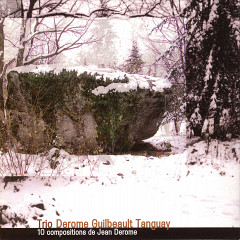
    Avant de faire éclater toutes les équations et mettre au point un langage incomparable, Jean Derome était jazzman —les mélomanes de mon âge se rappellent de Nébu. Trois décennies plus tard, le voIet jazz de ce compositeur exceptionnel s’ouvre moins souvent, mais la lumière de l’idiome pénètre encore régulièrement dans son laboratoire et celui de ses complices —dans le cas qui nous occupe, le contrebassiste Normand Guilbeault, le plus jazzman des trois, et le batteur Pierre Tanguay. Pour qui n’écoute que des musiciens dédiés à l’idiome, l’éclectisme de ce trio se ressent et s’entend. Pour qui le jazz représente une couleur du spectre musical, cette nuance est à peu près imperceptible. Pour tout mélomane, en fait, ce disque de musique improvisée entre vrais complices sur de solides échafauds mérite d’être dégusté. Dans les règles de l’art jazzistique, nos trois improvisateurs mènent ainsi les 10 pièces de Derome à un niveau plus que respectable, malgré les petites limites qu’on pourrait leur prêter. Limites surtout techniques, en fait. Un exemple? Flûtiste de haut niveau, improvisateur brillant, compositeur hors de pair, Derome a mis du temps à trouver le timbre idéal de ses saxos. Ce son autrefois trop mince n’est plus vraiment un irritant.

    Pour tout mélomane, en fait, ce disque de musique improvisée entre vrais complices sur de solides échafauds mérite d’être dégusté.

    10 compositions in Hour

    “Review”, Mike Chamberlain, Hour, March 25, 2004
    Thursday, March 25, 2004 Press

    At first listen, 10 Compositions comes off as a uncomplicated, straight-up jazz album, but closer inspection reveals many, many nuances in the music. Broadly speaking, there’s a lot of blues inside the jazz of Jean Derome (alto sax, baritone sax, flute), bassist Normand Guilbeault and erstwhile swingmaster Pierre languay (drums), with strong influences from Ornette Coleman, Eric Dolphy and the AACM. (Indeed, the album would not sound out of place on the Delmark label.) But thers’s a lot more than that going on; one can hear it in the tricky harmonies of Etymologie, and in the shiffing rhythms of a number of tunes, and in the timbre of Derome’s alto. Wonderful. (Mike Chamberlain)

    Wonderful.

    10 compositions in Montreal Mirror

    “Review”, Len Dobbin, Montreal Mirror, March 25, 2004
    Thursday, March 25, 2004 Press

    Two CDs that have in common both the playing and writing of two very different saxophonists, both always worth a serious listen. The first, as the title suggests, focuses on a cutting-edge local trio playing Jean’s music, music that spans the jazz spectrum. The other is by a 14-piece ensemble led by Masters, this time joined by altoman Lee Konitz on six of his renowned compositions including Palo Alto and 317 East 32nd plus Ram Ramirez’s Lover Man, all beautifilly arranged by Masters, abetted by solos from Lee, Celilia Coleman, Gary Foster, Steve Huffatetter, Bill Perkins and Jack Montrose. There’s lots to digest here. Both 9.5/10 (Len Dobbin)

    … music that spans the jazz spectrum.

    10 compositions in AllMusic

    “Review”, François Couture, AllMusic, March 18, 2004
    Thursday, March 18, 2004 Press

    Jean Derome is a prime mover on Montréal’s new music scene, but despite all his free improv units and large-scale projects, the man is first and foremost known in his native city as a jazzman. And the Trio Derome Guilbeault Tanguay he formed with his trusty sidemen Normand Guilbeault (bassist) and Pierre Tanguay (drums) is a regular fixture in the city’s modern jazz clubs. Yet, Derome’s jazziest side has rarely been documented on record (his two albums with the trio Évidence aside). For its first CD, the Trio DGT focuses on its leader’s compositions — the unit is also known for its sizzling tributes to many neglected jazz heroes. Derome has selected 10 pieces written between the mid-’70s and early 2000s. Those familiar with the saxophonist’s work will not be surprised to find a strong Thelonious Monk influence in many tracks (especially the opener Marcher sur des Braises), but several other names could be mentioned, from Lennie Tristanoto Ornette Coleman and Joe McPhee. The melodies are developed in unpredictable ways (Pangolin), the musicians fool around with polyrhythmical layers (Marcher sur des Braises again, where Tanguay plays a game of hide and seek with the beat) and are given a lot of freedom to weave their own voices into the written material. Highlights also include the tender Vérone, the spiky Étymologie, Guilbeault’s solo in Quek’un!, and Derome’s limping baritone sax in Pangolin, a track named after an anteater-like animal. This reviewer only has one complaint: a redoubtable flutist, Derome picks up the flute only once, for the closing Michka, which is a shame. 10 Compositions is by far Derome’s most accessible album to date. Fans of his more daring projects (his long-standing duo with Tanguay, for instance) may find this one a bit light in the offering, but the Trio DGT’s modern jazz still steers resolutely clear from the mainstream.

    … by far Derome’s most accessible album to date.

    10 compositions in Ici Montréal

    “Critique”, BB, Ici Montréal, March 11, 2004
    Thursday, March 11, 2004 Press

    Nonobstant la maison de disques, plus volontiers associée à la musique actuelle, c’est bel et bien d’un album de jazz (du free au third stream en passant par le post-bop, parfois pastoral, parfois presque sournois) qu’il est question ici. Les 10 compositions de Jean Derome se signalent par des thèmes très forts, vraiment accrocheurs (je vois très bien le No Name Jazz Sextet reprendre Pangolins, par exemple), et l’interaction entre Derome, le contrebassiste Nornand Guilbeault et le percussionniste Pierre Tanguay est tout à fait télépathique. Meilleur flash: Tanguay utilisant les bûches du poêle à bois sur L’Africaine. Ça chauffe!

    Les 10 compositions de Jean Derome se signalent par des thèmes très forts, vraiment accrocheurs…
  • 1
  • 2
  • 3
  • 4
  • 5
  • 6